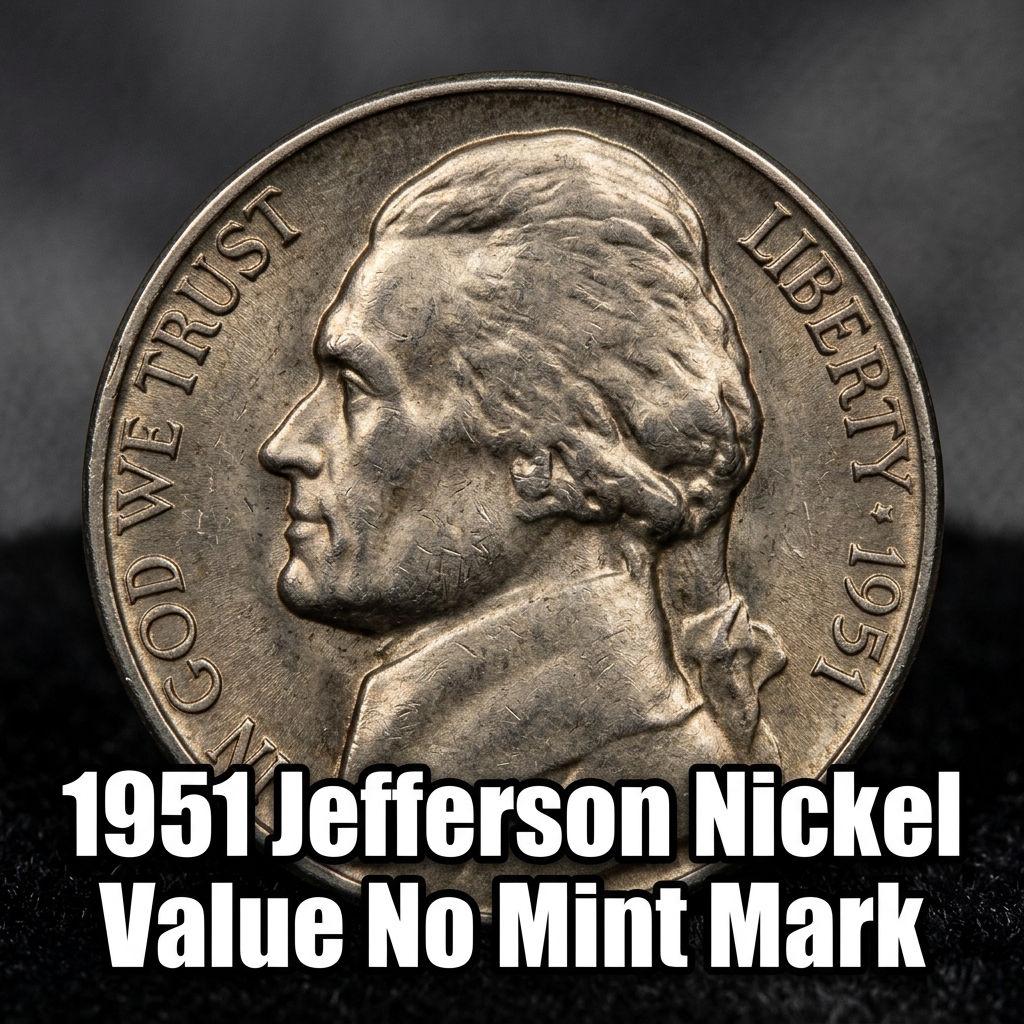
The 1951 Jefferson Nickel with no mint mark is worth anywhere from 10 cents in heavily worn condition to over $50 or more in top mint state grades — and a few exceptional examples have sold for hundreds at auction. If you found one of these coins in a jar, a drawer, or an old collection, you’re in the right place to find out exactly what you’ve got.
If you want a quick answer without doing all the research yourself, try a free coin identifier app — it can scan your coin and give you an instant estimate in seconds. That said, knowing the background of this coin will help you understand why some 1951 nickels are worth a nickel’s face value and others are worth real money.
A Quick History of the 1951 No Mint Mark Jefferson Nickel
The 1951 Jefferson Nickel was produced at the Philadelphia Mint, which is why it carries no mint mark — Philadelphia coins from this era didn’t use one. That year, the Philadelphia Mint struck over 28 million of these nickels, making them relatively common in lower grades but still desirable to collectors when found in sharp, uncirculated condition.
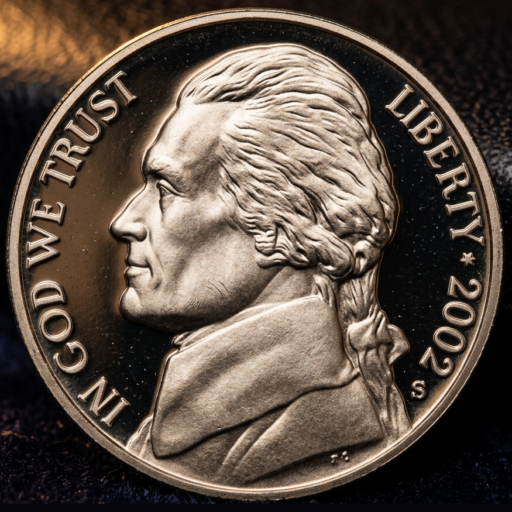
The Jefferson Nickel series began in 1938, replacing the Buffalo Nickel. The design features Thomas Jefferson on the obverse and his famous home, Monticello, on the reverse. Felix Schlag’s design became one of the most recognizable in American coinage.
By 1951, the nation was in the middle of the Korean War era, and coin production was steady but not massive. These nickels circulated widely, which is why most survivors today show heavy wear.
1951 Jefferson Nickel Value by Grade
The value of your 1951 nickel depends almost entirely on its condition, or grade. A coin that looks like it’s been through decades of pockets and piggy banks is worth very little above face value. But one that was saved fresh from the mint and never circulated? That’s a different story entirely.
Here’s a general value breakdown for the 1951 Jefferson Nickel (Philadelphia, no mint mark):
| Grade | Description | Estimated Value |
|---|---|---|
| Good (G-4) | Heavy wear, outlines visible | $0.10 – $0.25 |
| Fine (F-12) | Moderate wear, some detail | $0.50 – $1.00 |
| Extremely Fine (EF-40) | Light wear on high points | $1.50 – $3.00 |
| About Uncirculated (AU-55) | Slight wear, nearly full luster | $4.00 – $8.00 |
| MS-63 (Uncirculated) | No wear, minor marks | $12 – $20 |
| MS-65 (Gem Uncirculated) | Bright luster, few contact marks | $35 – $60 |
| MS-67+ (Superb Gem) | Near perfect, exceptional strike | $200+ |
For the most up-to-date auction results and certified coin prices, you can check 1951 Jefferson Nickel mint state price data on CoinHix — it tracks real sales so you know what collectors are actually paying right now.
What Makes a 1951 Nickel Worth More
Not all 1951 nickels are created equal. Several factors can push the value higher than the average figures above.
Full Steps (FS) is one of the biggest value drivers in Jefferson Nickels. On the reverse, Monticello’s steps should show five or six sharp, fully separated horizontal lines. Most coins came out of circulation with those steps worn flat. A coin with Full Steps designation from PCGS or NGC can be worth several times the normal price.
Strike quality also matters. Some 1951 Philadelphia nickels were weakly struck, especially on Jefferson’s cheekbone and the Monticello steps. A coin with a sharp, bold strike in high grade is a genuine find.
Luster and eye appeal round out what collectors look for. A coin with original, cartwheel-style luster — that shimmering effect you see when you tilt it under light — will always bring stronger bids than a coin that looks dull or cleaned.
You can explore detailed 1951 nickel value breakdowns including Full Steps premiums to see how much those factors matter in practice.
How to Check Your Coin at Home
You don’t need to be an expert to do a basic evaluation. Start by looking at the coin under good lighting and a magnifier if you have one.
Check Jefferson’s face — specifically the hair above his ear and the cheekbone. If those areas look flat and smooth, the coin has circulated and is probably a lower-grade piece. Then flip it over and examine Monticello’s steps. Count the horizontal lines — if you can see five or six sharp, separated lines, you might have a Full Steps coin worth chasing.
CoinHix is a great tool to help you at this stage. The app lets you photograph your coin and compare it against graded examples, so you can get a realistic sense of condition before spending money on professional grading.
Never clean your coin. Even a gentle wipe with a cloth can leave microscopic scratches that destroy the luster and drop the value significantly. Keep it as-is and store it in a soft flip or coin holder.
Is It Worth Getting Professionally Graded?
If your 1951 nickel looks uncirculated — no wear, original luster, clean surfaces — it may be worth submitting to a third-party grading service like PCGS or NGC.
Grading typically costs $20 to $40 per coin for basic service. That only makes financial sense if the coin could grade MS-65 or higher, ideally with Full Steps. In those cases, a certified coin can be worth $50 to $200 or more, making the submission fee worthwhile.
For most worn or circulated examples, professional grading isn’t necessary. Use CoinHix to get a quick read on whether your coin’s condition justifies the cost before you send it off.
Frequently Asked Questions
Q: How much is a 1951 nickel with no mint mark worth?
A: A circulated 1951 Jefferson Nickel (Philadelphia, no mint mark) is worth between 10 cents and a few dollars depending on wear. In uncirculated condition, values range from about $12 to $60 or more. Top-grade examples with Full Steps can sell for $200 and up at auction.
Q: What does “no mint mark” mean on a 1951 nickel?
A: No mint mark means the coin was struck at the Philadelphia Mint. During this era, Philadelphia didn’t add a mint mark to its coins. If you see a “D” on the coin, it came from Denver; an “S” means San Francisco. A blank space beneath the word “Monticello” on the reverse confirms it’s a Philadelphia coin.
Q: Should I clean my 1951 Jefferson Nickel before getting it appraised?
A: No — never clean a coin you think might be valuable. Cleaning removes the original surface and luster, which collectors and graders can easily detect. A cleaned coin is almost always worth less than an uncleaned one in the same condition. Leave it as-is and let a professional evaluate it first.