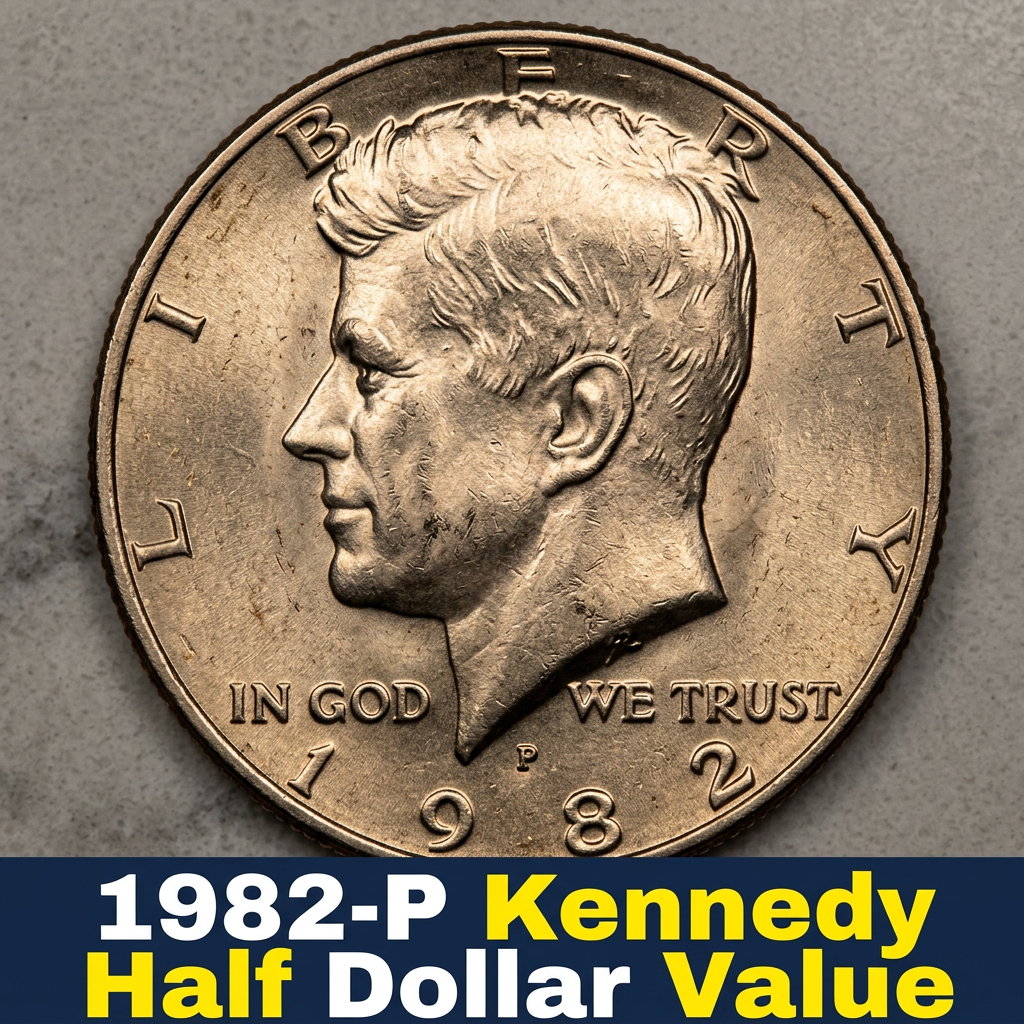
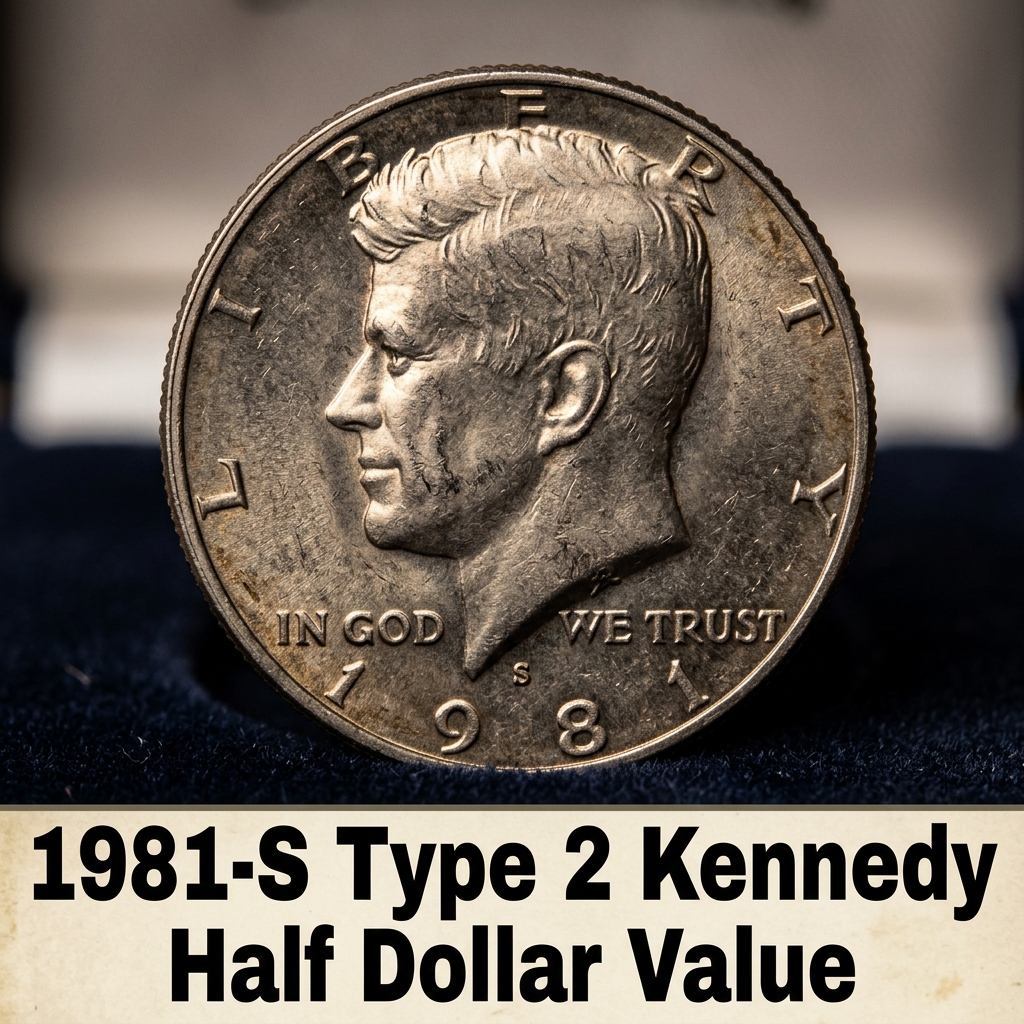
The 1981-S Type 2 Kennedy Half Dollar is worth anywhere from $3 in average condition to over $15 or more in pristine proof quality — and a few special specimens have sold for significantly higher at auction. If you found one of these coins in a collection or old box, you’re in the right place to find out exactly what you’re dealing with.
What Makes the 1981-S Type 2 Different from Type 1?
This is where things get interesting. In 1981, the San Francisco Mint produced proof Kennedy Half Dollars with two distinct mintmark styles. The Type 1 has a blobby, filled-in “S” mintmark, while the Type 2 features a cleaner, sharper, more defined “S.” That subtle difference might seem minor, but it matters quite a bit to collectors.
The Type 2 mintmark was introduced partway through 1981 production, making it less common than the Type 1. Fewer coins struck means more collector demand, and more demand generally means higher value. If you’re unsure which type you have, look closely at the “S” above the date — a crisp, clear letterform is your clue that you’ve got the Type 2.
Using a free coin identifier app can help you quickly confirm the mintmark style and get a baseline idea of what your coin might be worth before you dive deeper into research.
1981-S Type 2 Kennedy Half Dollar Value by Grade
Since these coins were struck as proof issues — meaning they were never meant for circulation — condition is evaluated on the proof grading scale. Most examples grade between PR65 and PR70, and the difference in value between those grades can be surprising.
Here’s a general look at current market values:
| Grade | Estimated Value | Notes |
|---|---|---|
| PR65 | $3 – $6 | Nice proof, minor hairlines |
| PR67 | $8 – $15 | Sharp mirrors, minimal flaws |
| PR68 | $15 – $35 | Near perfect surfaces |
| PR69 | $30 – $75 | Exceptional, rare imperfections |
| PR70 | $100 – $300+ | Flawless, premium for DCAM |
For the most up-to-date pricing based on recent sales, you can check out detailed 1981 Kennedy Half Dollar price data to see how the market is moving right now.
Deep Cameo Coins Are the Real Prize
Among proof coins, the Deep Cameo (DCAM) designation is what collectors really chase. A Deep Cameo coin has heavily frosted devices — the raised portrait and eagle — set against mirror-like, jet-black fields. The contrast is stunning, almost like a photo negative in metal.
The 1981-S Type 2 in PR70 Deep Cameo is one of the most desirable examples in the Kennedy Half Dollar proof series from this era. These coins have sold for well over $100 at major auction houses, with top-condition examples occasionally reaching $300 or more.
If your coin looks like it has that flashy, almost theatrical contrast between the frosted design and the reflective background, it may be worth getting it professionally graded by PCGS or NGC. A certified grade adds transparency and buyer confidence — and can make a real difference in resale value.
CoinHix is a great tool to quickly scan recent auction results and see how DCAM examples have performed, giving you a realistic picture of what the market will actually pay.
How to Know If Your Coin Is Worth Grading
Most 1981-S Type 2 Kennedy Half Dollars came in the standard US Mint proof sets sold to collectors. If yours is still in the original mint packaging, that’s a good sign it hasn’t been handled and may have retained its original luster.
Take it out carefully — or better yet, don’t take it out at all. Even fingerprints from bare hands can create hairline scratches that drop a coin’s grade from PR69 to PR67, and that difference can cost you real money.
You can get a solid overview of the 1981 Half Dollar’s value across different grades and conditions to help you decide if professional grading makes financial sense for your specific coin.
CoinHix also lets you photograph your coin and compare it against graded examples, making it easier to estimate where your coin might land on the scale before you spend money on a submission fee.
Is the 1981-S Type 2 Kennedy Half Dollar Worth Keeping?
If you’re asking whether to sell it or hold onto it — that depends on what you have. A raw PR65 in its original set might fetch $5 to $10. A certified PR70 DCAM could be worth $200 to $300. The spread is wide, so knowing exactly what you have before making a decision is key.
For everyday Americans who just found these coins in a family collection, the good news is that they’re legitimate collector coins with real numismatic interest — not just face value curiosities. Whether yours turns out to be a $5 coin or a $200 coin, it’s still a piece of American minting history worth understanding.
Use CoinHix or visit a local coin dealer to get a second opinion if you’re serious about selling or insuring what you have.
—
FAQ
Q: How do I tell if my 1981-S Kennedy Half Dollar is Type 1 or Type 2?
A: Look at the “S” mintmark located just above the date on the obverse. Type 1 has a rounded, somewhat blobby “S,” while Type 2 features a sharper, more clearly defined letterform. A magnifying glass or loupe makes this much easier to see.
Q: Were 1981-S Type 2 Kennedy Half Dollars ever used in circulation?
A: No. The 1981-S was a proof-only issue, struck at the San Francisco Mint exclusively for collector sets. They were never released for everyday use, which is why they typically survive in much better condition than regular business-strike coins.
Q: Is it worth having my 1981-S Type 2 professionally graded?
A: It depends on the coin’s condition. If it appears to be in PR68 or higher — especially with Deep Cameo contrast — professional grading by PCGS or NGC could significantly increase its resale value and buyer appeal. For lower-grade examples, the grading fee may outweigh the value added.