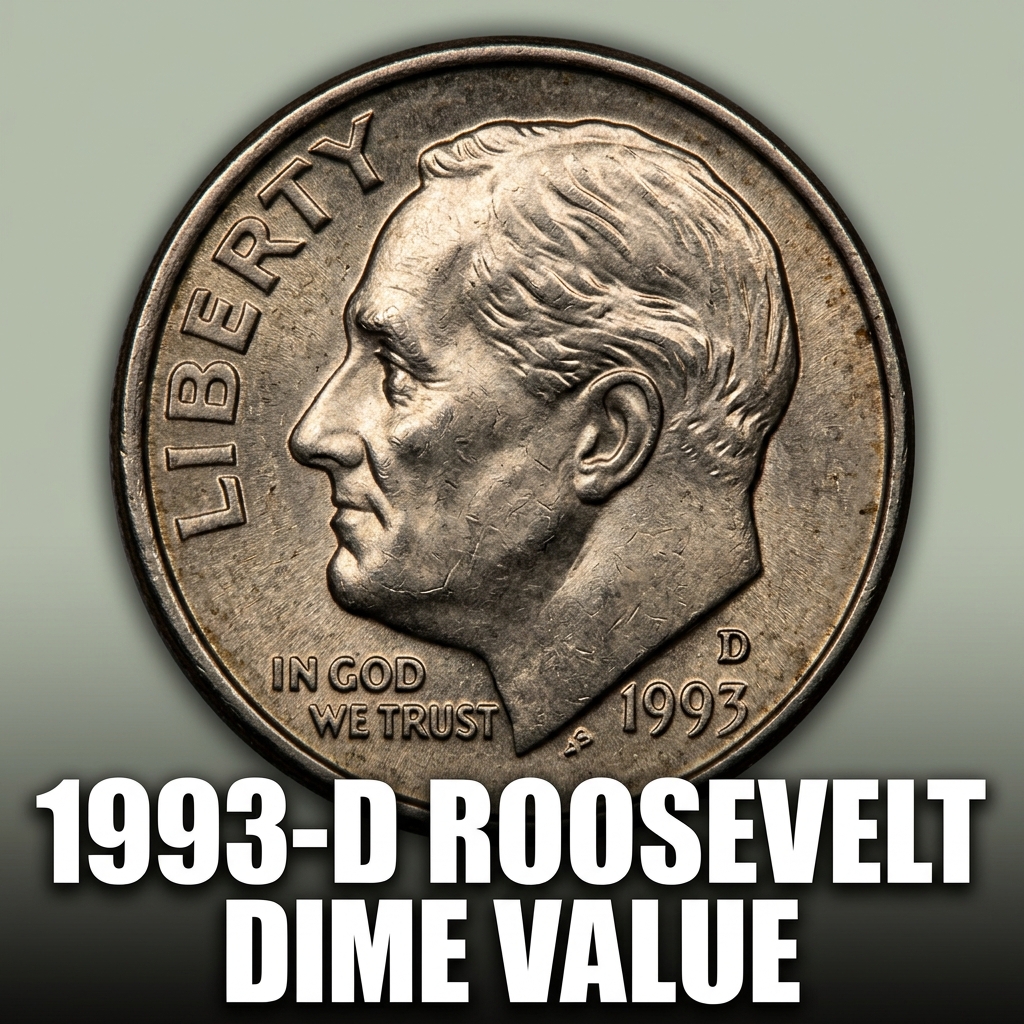
The 1993-D Roosevelt Dime is worth anywhere from face value (10 cents) in circulated condition to around $3–$10 or more in uncirculated mint state grades, with top-tier examples graded MS67 or higher fetching $50 to well over $100 at auction.
If you’ve come across one of these coins in a jar of old change or an inherited collection, you’re probably wondering whether it’s worth holding onto. The good news is that this guide will walk you through everything you need to know — from mintage numbers to grading, and whether your specific coin could be worth serious money.
What Is the 1993-D Roosevelt Dime?
The 1993-D Roosevelt Dime was struck at the Denver Mint and features the classic design that has appeared on the dime since 1946. The obverse shows a left-facing portrait of President Franklin D. Roosevelt, while the reverse displays a torch flanked by an olive branch and an oak branch — symbols of liberty, peace, and strength.
The “D” mintmark appears on the obverse, just above the date on the left side. In 1993, the Denver Mint struck a massive number of these coins for general circulation.
The coin is composed of a copper-nickel clad composition — 75% copper and 25% nickel — and weighs 2.268 grams with a diameter of 17.9 mm. There’s nothing exotic about the materials, but condition and rarity in high grades is what drives value for modern coins like this one.
If you want a quick and easy way to identify and value your coin, try a free coin identifier app that can do the heavy lifting for you.
1993-D Dime Mintage and Rarity
One of the key factors in determining any coin’s value is how many were minted. The 1993-D Roosevelt Dime had a mintage of approximately 1,397,022,400 — yes, over one billion coins. That’s a staggering number, which means circulated examples are extremely common and rarely worth more than face value.
However, rarity shifts dramatically when you move into the upper end of the grading scale. Coins graded MS66 or MS67 by professional grading services like PCGS or NGC are much harder to find in those pristine states, because most 1993-D dimes were handled, spent, and worn down through everyday use.
The population of coins certified at the highest grades is relatively small, and that scarcity at the top is what can push a regular dime into the $50–$150+ range for serious collectors. CoinHix tracks certified coin populations in real time, making it easy to see just how rare a top-grade example actually is.
How Much Is the 1993-D Roosevelt Dime Worth by Grade?
Here’s a general value breakdown based on condition:
| Grade | Condition Description | Estimated Value |
|---|---|---|
| Circulated (G–VF) | Worn, visible use | Face value ($0.10) |
| AU (About Uncirculated) | Slight wear on high points | $0.25–$0.75 |
| MS63–MS64 | Uncirculated, some bag marks | $1–$3 |
| MS65 | Gem uncirculated | $3–$8 |
| MS66 | Choice gem uncirculated | $10–$30 |
| MS67+ | Superb gem, near perfect | $50–$150+ |
For a deeper look at certified Roosevelt Dime price data across grades and auction records, numismatic databases offer detailed population reports and sale histories.
Errors and Varieties Worth Looking For
Most 1993-D dimes are completely ordinary, but errors do occasionally show up and can dramatically increase a coin’s value. Some errors to look for include:
Double Die Obverse (DDO) — Look closely at Roosevelt’s portrait or the lettering with a magnifying glass. If the details appear doubled, you might have a valuable variety.
Off-Center Strikes — These occur when the coin blank is not properly centered during striking. Even a 5–10% off-center error can add value, while dramatic off-center strikes (40%+) can fetch $25–$100 or more.
Die Caps and Broadstrikes — Rarer errors caused by mechanical failures during the minting process. These are uncommon but highly sought after by error coin collectors.
If you suspect you have an error coin, getting it professionally graded by PCGS or NGC is highly recommended. You can also use CoinHix to cross-reference known error values before deciding whether to submit for grading.
Should You Keep or Sell Your 1993-D Dime?
For most people, a circulated 1993-D Roosevelt Dime is simply worth 10 cents — spend it or save it for sentimental reasons. But if your coin looks exceptionally sharp, with no visible wear and bright original luster, it could be worth having it professionally evaluated.
Roll hunters and type collectors occasionally find MS66+ examples that have never been circulated, and those coins can sell for surprising amounts relative to their face value. The key is knowing what to look for.
For a comprehensive breakdown of 1993 Roosevelt Dime values across all mint marks and grades, dedicated coin value resources can help you figure out exactly where your coin falls on the spectrum.
And if you want instant results on the go, CoinHix lets you scan, identify, and get estimated values for coins right from your smartphone — no expertise required.
—
FAQ
Q: Is the 1993-D Roosevelt Dime silver?
A: No. The 1993-D dime is made from a copper-nickel clad composition. Roosevelt Dimes were only struck in 90% silver from 1946 to 1964. Any dime dated 1965 or later — including the 1993-D — contains no silver and has no precious metal value.
Q: What does the “D” mintmark mean on my 1993 dime?
A: The “D” mintmark indicates the coin was produced at the Denver Mint in Colorado. In 1993, the U.S. Mint also produced Roosevelt Dimes at the Philadelphia Mint (no mintmark or “P”) and Proof versions at the San Francisco Mint (“S”).
Q: How do I know if my 1993-D dime is uncirculated?
A: An uncirculated coin will have no signs of wear on the high points of the design — look at Roosevelt’s cheek, hair, and the flame at the top of the torch on the reverse. The coin should also have its original mint luster, which gives it a subtle shine or cartwheel effect when tilted under a light source. If it looks flat or dull, it’s likely been circulated.