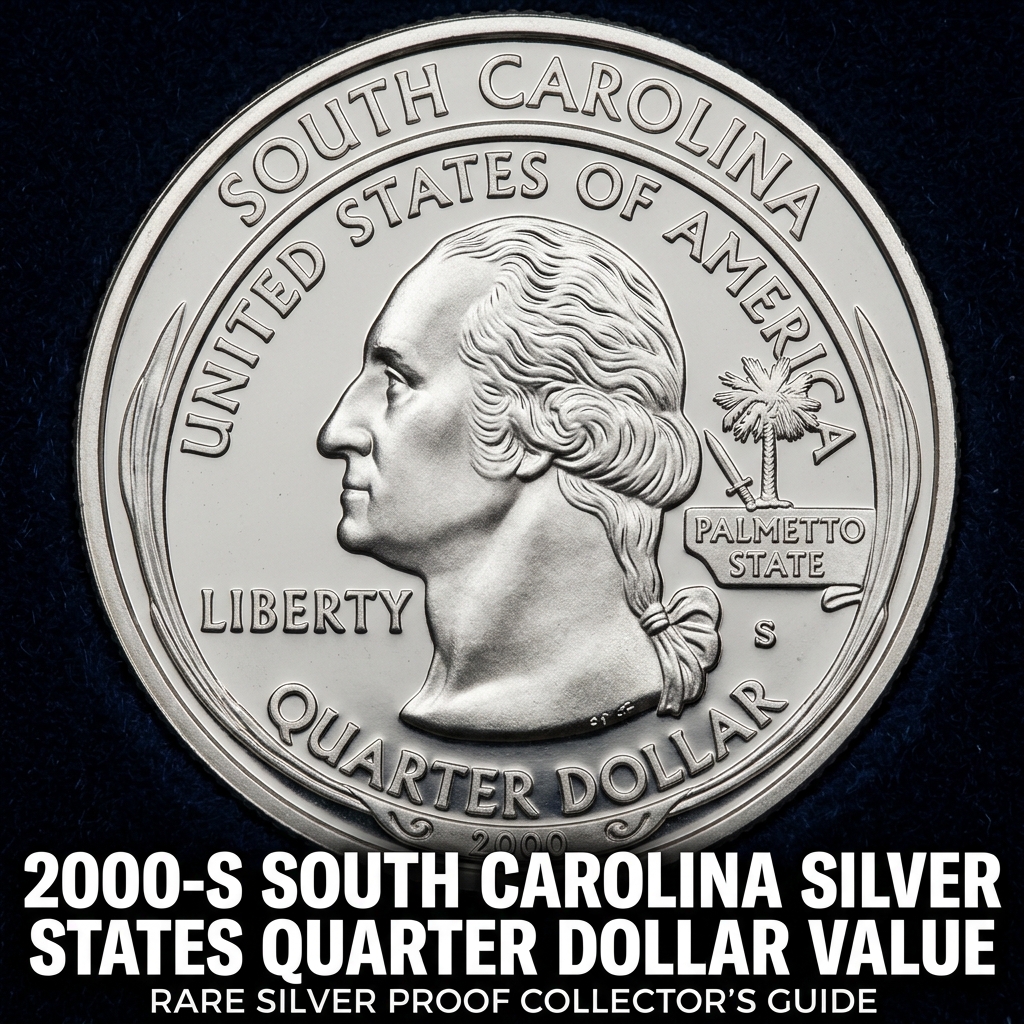
The 2000-S South Carolina Silver States Quarter is worth anywhere from $5 in lightly circulated condition to over $25 or more in pristine proof grades — and if you happen to have the silver version, you could be sitting on something even more valuable than you think.
What Exactly Is the 2000-S South Carolina Silver Quarter?
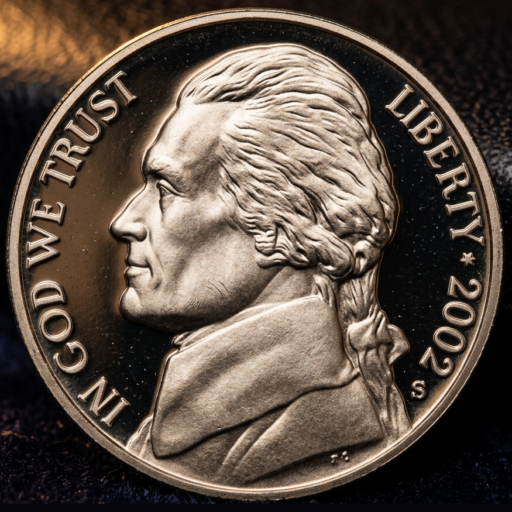
If you found a 2000-S South Carolina quarter in an old collection or tucked away in a drawer, you may have noticed the small “S” mintmark on the front. That “S” stands for the San Francisco Mint — and it tells you right away that this isn’t your average pocket change quarter.
The U.S. Mint produced two types of “S” mint quarters in 2000: a standard clad proof and a 90% silver proof. The silver version contains real silver content, which instantly makes it more desirable to collectors and investors alike.
If you’re not sure which version you have, a free coin identifier app can help you quickly figure out whether your coin is the standard clad proof or the rarer silver proof — no guesswork required.
How Much Is the 2000-S South Carolina Quarter Worth?
Value depends heavily on whether your coin is the clad proof or the silver proof. Both are collector’s items, but silver proofs command noticeably higher prices in today’s market.
The South Carolina quarter itself features a Carolina Wren perched on a branch, the state flower Yellow Jessamine, and a Sabal Palmetto tree — a beautifully designed coin that many collectors pursue specifically for the artwork.
Here’s a general value breakdown based on type and grade:
| Type | Grade | Estimated Value |
|---|---|---|
| Clad Proof | PR-65 | $5 – $8 |
| Clad Proof | PR-69 DCAM | $12 – $20 |
| Silver Proof | PR-65 | $10 – $15 |
| Silver Proof | PR-69 DCAM | $20 – $35+ |
| Silver Proof | PR-70 DCAM | $50 – $100+ |
Keep in mind these are estimates — actual sale prices can vary depending on the market and condition. For up-to-date pricing on similar 2000-S State Quarter issues, you can check live auction and dealer price data for 2000 State Quarters to see what collectors are actually paying right now.
Silver vs. Clad — How Do You Tell the Difference?
This is one of the most common questions people ask, and it’s a great one. Both the silver and clad proofs look nearly identical at first glance, so how do you know which one you have?
The easiest way is to check the edge of the coin. A clad proof will show a thin copper-colored stripe running around the edge, since it’s made of copper-nickel layers sandwiching a copper core. A silver proof will have a solid silver-white edge with no copper layer visible.
Another clue is the packaging. If your coin is still in its original U.S. Mint packaging, the silver proof sets are typically labeled as “Premier Silver Proof Set” or simply “Silver Proof Set.” If the coin came loose or from an unknown source, the edge test is your fastest method.
CoinHix is a great tool here — you can scan your coin and get an instant identification that tells you not just what the coin is, but also whether it’s the silver or clad version, saving you the headache of second-guessing yourself.
What Makes a 2000-S South Carolina Quarter More Valuable?
Beyond the silver vs. clad distinction, a few other factors push value higher for this coin.
Cameo contrast is one of the biggest ones. Proof coins are struck with special dies that create a frosted, raised design against a mirror-like background. The stronger this contrast, the more desirable the coin — hence why coins graded “DCAM” (Deep Cameo) sell for much more than standard proof grades.
Population also matters. Not every silver proof coin makes it to PR-70 in third-party grading. Coins certified by PCGS or NGC in the highest grades are scarcer and tend to sell for premiums. For a complete picture of what these coins are worth across different grades and conditions, this detailed guide to 2000 quarter values lays it all out clearly.
Finally, original Mint set packaging adds some collector appeal. A coin still sealed in its original government packaging is generally viewed as more trustworthy in terms of authenticity and handling history.
Should You Get It Graded?
If your 2000-S South Carolina Silver Proof Quarter looks absolutely flawless — no spots, no scratches, deep mirrored fields, and bold frosted details — it might be worth sending to PCGS or NGC for grading.
A raw (ungraded) silver proof might sell for $12–$20. The same coin graded PR-70 DCAM could sell for $50–$100 or more. That’s a meaningful jump, and for a coin in truly exceptional condition, the grading fee can absolutely pay off.
Not sure if yours is worth grading? CoinHix lets you assess your coin’s condition before committing to any fees — a smart first step before you spend money on professional grading services.
—
FAQ
Q: How do I know if my 2000-S South Carolina quarter is silver or clad?
A: Look at the edge of the coin. A silver proof will have a uniform silver-white edge with no copper stripe. A clad proof will show a thin copper-colored layer sandwiched in the middle. If the coin is still in original Mint packaging labeled “Silver Proof Set,” that’s your clearest confirmation.
Q: Is the 2000-S South Carolina Silver Quarter rare?
A: It’s not extremely rare — the U.S. Mint produced silver proof sets in large quantities — but it’s still a collector’s coin that most people won’t find in everyday circulation. Its value comes from the silver content, proof quality, and cameo designation rather than scarcity alone.
Q: Where is the best place to sell a 2000-S South Carolina Silver Quarter?
A: eBay is one of the most popular venues for selling proof quarters since it reaches a wide audience of collectors. You can also try coin dealers, local coin shows, or online platforms like Great Collections. If your coin is graded, it will generally sell more quickly and at a better price than an ungraded coin.