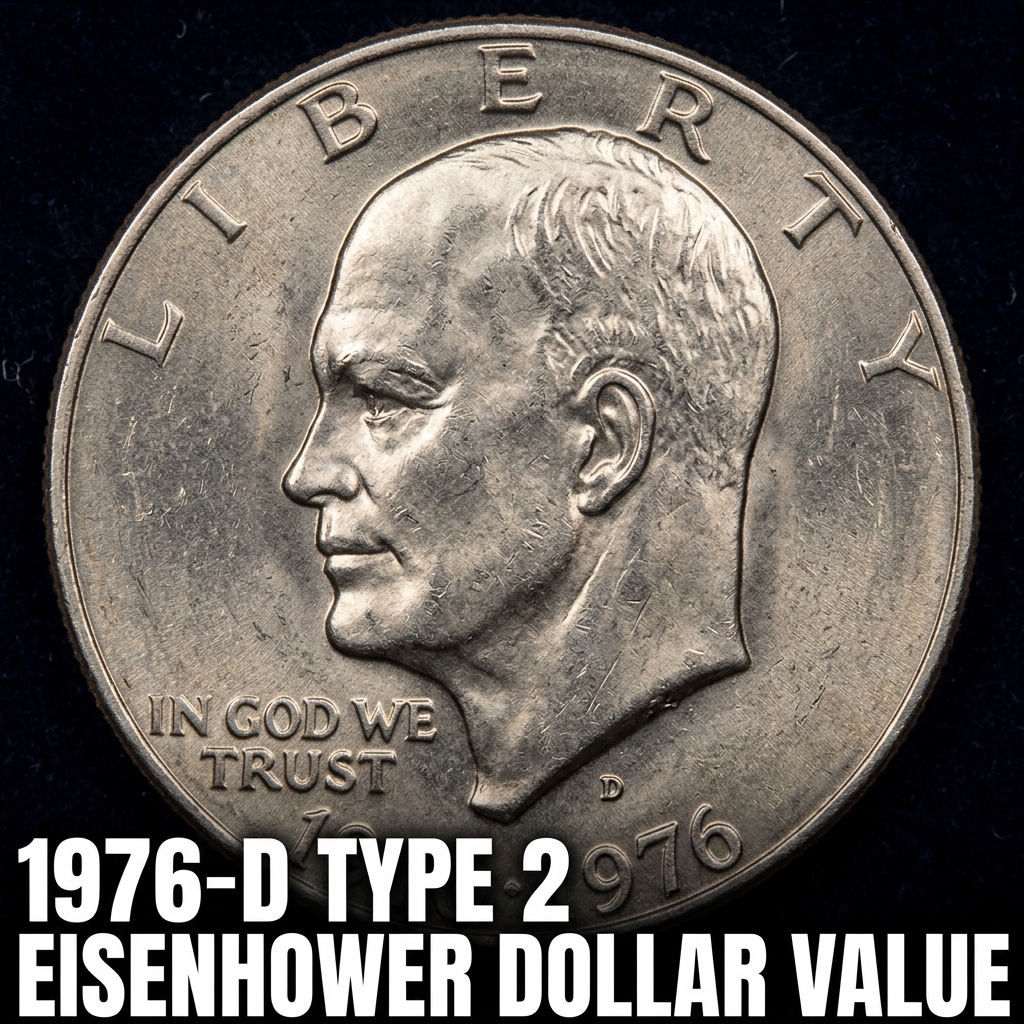
The 1976-D Type 2 Eisenhower Dollar is worth anywhere from $1.05 in heavily circulated condition to $50 or more in top mint state grades — and a few rare high-grade examples have sold for well over $100 at auction. If you’ve got one sitting in a drawer or inherited it from a relative, you might be pleasantly surprised.
What Makes the 1976-D Type 2 Different
The Eisenhower Dollar was minted from 1971 to 1978, but the 1976 issues hold a special place in American coin history. That year, the U.S. Mint released a special Bicentennial design to celebrate the nation’s 200th anniversary. Instead of the usual eagle on the reverse, these coins feature the Liberty Bell with the Moon — a design by artist Dennis R. Williams.
Here’s where it gets interesting: the Mint actually produced two types of reverse designs for the 1976 Bicentennial dollar. Type 1 has thicker lettering on the reverse, while Type 2 has thinner, sharper lettering. The Type 2 was released later in the year and is considered more refined in its design.
If you’re not sure which type you have, a free coin identifier app can help you quickly tell them apart right from your phone — no magnifying glass required.
1976-D Type 2 Eisenhower Dollar Value by Grade
Like most coins, condition matters a lot when it comes to what your 1976-D Type 2 Eisenhower Dollar is actually worth. Coins that have been in heavy circulation — scratched up, worn down, and dull — are worth little more than face value. But coins that were tucked away in a safe place right after they were minted can be worth serious money.
Here’s a quick breakdown of approximate market values:
| Grade | Condition | Estimated Value |
|---|---|---|
| MS-60 | Uncirculated (low) | $3 – $8 |
| MS-63 | Choice Uncirculated | $10 – $18 |
| MS-65 | Gem Uncirculated | $25 – $50 |
| MS-67 | Superb Gem | $100 – $300+ |
| Circulated | Well-worn, everyday use | $1.05 – $2 |
For a more detailed look at mint state Eisenhower Dollar price trends and recent auction records, it’s worth checking a dedicated coin pricing database to see what these coins are actually selling for right now.
How Many Were Made and Does That Affect Value
The Denver Mint produced a massive number of Eisenhower Dollars in 1976, and most of the circulated Type 2 coins are not rare. The mintage for the 1976-D dollar was in the hundreds of millions, which is part of why most circulated examples are only worth a dollar or two.
That said, the real value story is at the top end of the grading scale. High-grade MS-66 and MS-67 examples are genuinely scarce, because most people spent these coins or stored them carelessly. A coin that’s been sitting in a bank roll or a collector’s folder in near-perfect condition is a very different animal from one that’s been rattling around in someone’s pocket since 1976.
CoinHix makes it easy to track down recent sale prices for specific grades, so you can see what collectors are actually paying — not just estimated book value.
Tips for Checking Your Coin’s Condition
Before you sell or dismiss your 1976-D Type 2 Eisenhower Dollar, take a close look at it. Hold it under a bright light and tilt it at different angles. High points like Eisenhower’s cheekbone and the Liberty Bell’s surface are the first places to show wear.
If you see any dull gray patches or scratches on those high points, the coin has circulated and is likely worth only face value. But if the coin has a full, natural luster — that kind of cartwheel shine you see when you tilt it — you may have an uncirculated example on your hands.
You can also scan your coin with CoinHix to get an instant grade estimate and market value based on real collector data. It’s one of the fastest ways to know if your coin is worth sending in for professional grading.
For a broader look at all the 1776-1976 Bicentennial dollar values across different types and mint marks, comparing the full range of Bicentennial issues can help you understand exactly where your coin fits in.
Should You Get It Graded
Professional grading by PCGS or NGC is usually worth it only if your coin appears to be MS-65 or better. The cost of grading (typically $20 to $40 per coin plus fees) doesn’t make financial sense for a coin that’s only worth $3 to $8.
But if your coin looks pristine — full luster, no visible marks, sharp details on both the obverse and reverse — getting a professional grade could unlock significantly more value. A certified MS-67 example can sell for several hundred dollars to the right buyer.
Not sure whether it’s worth grading? Load up CoinHix, enter your coin’s details, and compare your coin’s estimated grade to current sold prices. It takes about two minutes and could save you from paying grading fees on a coin that doesn’t qualify.
FAQ
Q: Is the 1976-D Type 2 Eisenhower Dollar rare?
A: In circulated condition, no — millions were made and most are worth only face value. However, gem uncirculated examples in MS-66 or MS-67 are legitimately scarce and can be worth $100 to $300 or more.
Q: How do I tell a Type 1 from a Type 2 on the 1976-D Eisenhower Dollar?
A: Look at the lettering on the reverse (the side with the Liberty Bell). Type 1 has bold, thick letters. Type 2 has thinner, crisper lettering. A magnifying glass or a coin identifier app can help you spot the difference quickly.
Q: Can I sell my 1976-D Type 2 Eisenhower Dollar online?
A: Yes. eBay, Heritage Auctions, and coin dealer sites are all common places to sell. Just make sure you accurately describe the condition. If you think you have an uncirculated example, consider getting it certified first — it often fetches a better price and gives buyers more confidence.