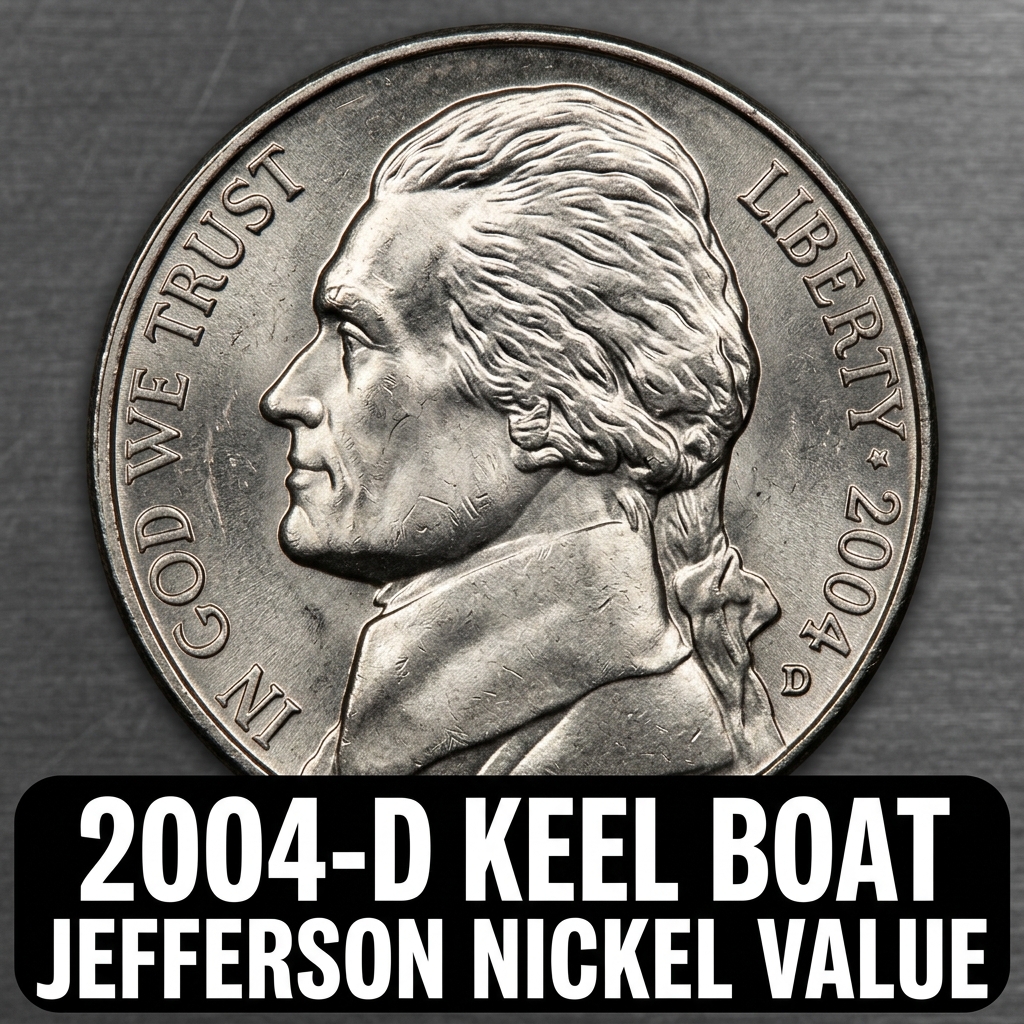
The 2004-D Keel Boat Jefferson Nickel is worth anywhere from face value (just 5 cents) in heavily worn condition to around $5 to $15 or more in uncirculated mint state grades. If you stumbled across one of these coins in a change jar or old collection, you’re in the right place to find out exactly what you’ve got.
What Is the 2004-D Keel Boat Jefferson Nickel?
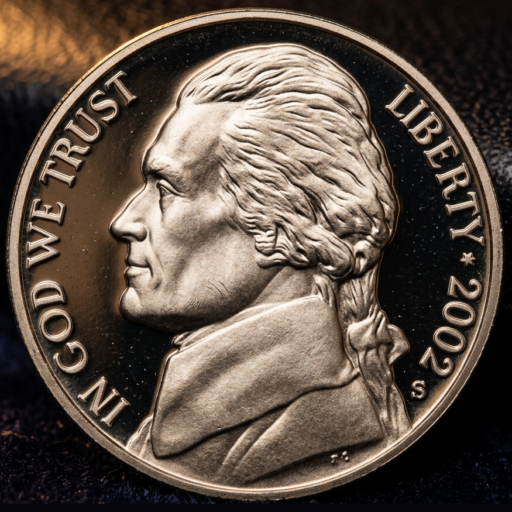
The 2004-D Keel Boat Jefferson Nickel is part of the famous Westward Journey Nickel Series, released by the U.S. Mint to celebrate the 200th anniversary of the Lewis and Clark Expedition. The “D” in the coin’s name tells you it was struck at the Denver Mint.
The reverse design features a keelboat — the type of vessel Lewis and Clark used to travel up the Missouri River. It’s a beautifully detailed design that’s quite different from the standard Monticello reverse most people associate with Jefferson nickels.
The obverse still shows Thomas Jefferson’s portrait, though it was updated with a more forward-facing design in 2005. This 2004 version kept the classic profile portrait. These coins were made in large numbers, so they’re not rare in the traditional sense — but higher-grade examples can still fetch a nice premium.
If you’re trying to figure out what your coins are worth and don’t want to do all the legwork yourself, a free coin identifier app can help you scan and identify coins quickly right from your phone.
2004-D Keel Boat Nickel Value by Grade
The value of a 2004-D Keel Boat Jefferson Nickel depends heavily on its condition. Coin collectors use a grading scale from Poor (P-1) to Perfect Mint State (MS-70) to describe a coin’s condition.
Circulated coins — meaning coins that actually went through people’s hands and cash registers — are generally worth face value or just slightly above. But uncirculated coins, especially those with strong luster and no visible contact marks, can be worth real money to collectors.
Here’s a quick breakdown of approximate values:
| Grade | Condition Description | Estimated Value |
|---|---|---|
| Good (G-4) | Heavy wear, design visible | Face value ($0.05) |
| Fine (F-12) | Moderate wear, details clear | $0.10 – $0.25 |
| Extremely Fine (EF-40) | Light wear on high points | $0.50 – $1.00 |
| MS-63 | Uncirculated, minor marks | $1.50 – $3.00 |
| MS-65 | Gem uncirculated, strong luster | $4.00 – $8.00 |
| MS-67 or Higher | Near perfect, top-tier grade | $15.00 – $50.00+ |
For those who want to dig into the real-time market data, you can check out detailed 2004 nickel value information including the Keel Boat variety to see how recent sales are trending.
How Many 2004-D Keel Boat Nickels Were Made?
The Denver Mint produced approximately 746,796,000 Keel Boat Jefferson Nickels in 2004. Yes, that’s nearly 750 million coins. That’s a huge mintage number, which is why most circulated examples are only worth face value.
However, high mintage doesn’t mean every coin is common in top condition. Finding a gem-quality MS-67 or MS-68 example is still a challenge, and those coins can sell for meaningful premiums at auction.
The Philadelphia Mint also struck its own Keel Boat nickel that year (the 2004-P). If you want to compare pricing across both mint marks, current market prices for the 2004-P Jefferson Nickel series in mint state can give you a useful point of reference for the whole Westward Journey lineup.
Errors and Varieties That Could Make Your Coin More Valuable
Even common coins can be worth serious money if they have a mint error. For the 2004-D Keel Boat Jefferson Nickel, collectors and dealers watch for a few specific types of errors:
Double Die Obverse (DDO): This occurs when the coin is struck more than once at a slightly different angle, creating a doubling effect on Jefferson’s portrait or the lettering. Even minor doubling can add $10 to $50 or more to a coin’s value.
Off-Center Strikes: When the planchet (the blank coin disc) is not properly centered under the die, you get an off-center strike. Depending on how far off-center it is, these errors can sell for $25 to over $100.
Die Cracks and Cuds: These are raised lines or blobs on the surface caused by a cracked die. Collectors love these types of mint errors, and well-defined examples are always sought after.
If you think you might have an error coin, CoinHix is a great tool to help you research and identify what you’ve found. The CoinHix app gives you access to current price data, sale records, and coin identification tools that can make a real difference when you’re trying to figure out if your coin is worth grading professionally.
Should You Get Your 2004-D Keel Boat Nickel Graded?
Professional grading is done by companies like PCGS (Professional Coin Grading Service) or NGC (Numismatic Guaranty Company). These services will evaluate your coin, assign it an official grade, and seal it in a tamper-proof plastic holder called a slab.
Grading fees typically start around $20 to $50 per coin, depending on turnaround time and the service level you choose. For a 2004-D Keel Boat Nickel, it really only makes sense to submit for grading if you believe your coin is in MS-66 or higher condition — otherwise, the grading fee would exceed what the coin is worth.
If you’re unsure whether your coin is worth the investment, try CoinHix first. You can get a solid idea of your coin’s approximate grade and value before spending money on professional services.
—
FAQ
Q: Is the 2004-D Keel Boat Jefferson Nickel rare?
A: Not in general circulation. With nearly 747 million struck, it’s a very common coin. However, finding one in truly pristine uncirculated condition (MS-67 or above) is genuinely difficult, and those examples do carry a real collector premium.
Q: What makes a 2004-D Keel Boat Nickel more valuable?
A: The biggest factors are condition (grade), the presence of mint errors like double dies or off-center strikes, and whether the coin has been professionally graded and certified by PCGS or NGC. Original luster and eye appeal also matter to serious collectors.
Q: Where can I sell my 2004-D Keel Boat Jefferson Nickel?
A: Common options include eBay, local coin shops, coin shows, and online auction platforms. For higher-grade or error coins, a reputable auction house may get you the best price. Always research recent sale prices before listing — tools like CoinHix make this easy by showing you what similar coins have actually sold for.