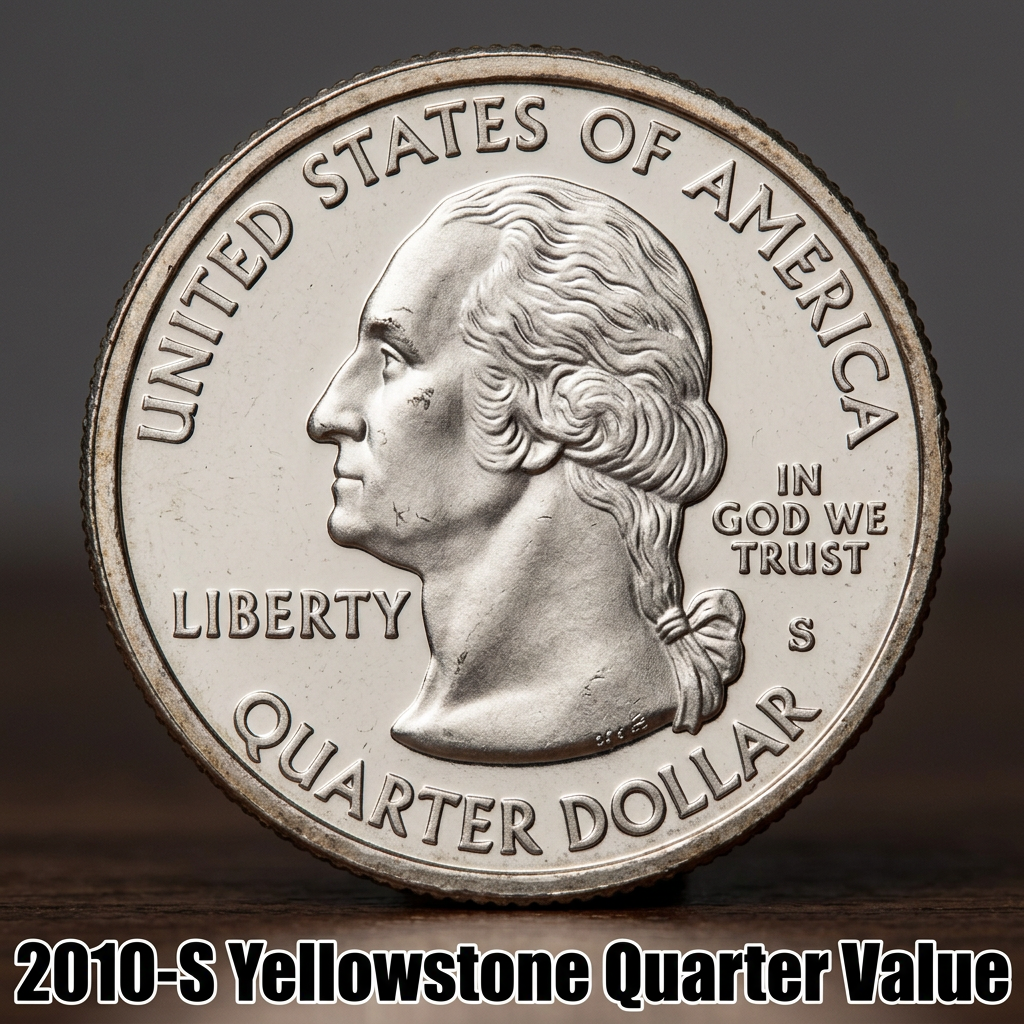
The 2010-S Yellowstone Quarter is worth anywhere from $1 to $5 for a standard proof coin, but premium deep cameo examples in perfect condition can fetch $10 to $25 or more. If you’ve got one sitting in a drawer or stumbled across it in an old coin collection, you’re in the right place to find out exactly what it’s worth.
What Is the 2010-S Yellowstone Quarter?
The 2010-S Yellowstone Quarter is part of the America the Beautiful Quarters program, launched by the U.S. Mint in 2010 to honor national parks and historic sites across the country. Yellowstone National Park in Wyoming was one of the first five parks featured in the series, making it one of the most iconic issues in the entire program.
The “S” mint mark tells you this coin was struck at the San Francisco Mint, which is known for producing proof coins — coins made with specially polished dies and blanks for collectors rather than general circulation. These coins were never meant to jingle in your pocket. They were made to sit in display cases and coin folders.
If you’re not sure how to identify your coin, a free coin identifier app can help you quickly confirm the mint mark, year, and variety before you start estimating its value.
How Much Is the 2010-S Yellowstone Quarter Worth Today
The value of the 2010-S Yellowstone Quarter depends on a few key factors: the coin’s grade, whether it’s a standard proof or a silver proof, and whether it’s been certified by a grading service like PCGS or NGC.
Here’s a general value breakdown:
| Coin Type | Grade | Estimated Value |
|---|---|---|
| Clad Proof | PR65 | $1 – $3 |
| Clad Proof Deep Cameo | PR69 DCAM | $5 – $10 |
| Clad Proof Deep Cameo | PR70 DCAM | $15 – $25+ |
| Silver Proof | PR69 DCAM | $10 – $20 |
| Silver Proof Deep Cameo | PR70 DCAM | $25 – $40+ |
For a deeper look at certified sale prices and recent auction results, you can check out the 2010 Yellowstone Quarter price history and graded coin data to see what collectors are actually paying right now.
Silver Proof vs Clad Proof — Does It Matter?
Yes, it matters quite a bit. The U.S. Mint offered two versions of the 2010-S Yellowstone Quarter in proof sets — a standard clad version (copper-nickel) and a silver proof version made of 90% silver.
The silver proof is generally more valuable, especially in top grades. Beyond the numismatic value, the silver content alone gives it intrinsic metal value that the clad version simply doesn’t have.
To tell them apart, look at the edge of the coin. A clad coin will show a copper-colored stripe running through the edge. A silver proof will have a solid silver edge with no visible layering. You can also check original packaging if you still have it — the silver proof sets were sold separately at a higher price.
CoinHix is a great tool to quickly compare both versions side by side and track current market values without needing to dig through multiple auction sites.
Mint Mark Location and How to Spot the Real Thing
The mint mark on the 2010-S Yellowstone Quarter is located on the obverse (the heads side) of the coin, just to the right of George Washington’s portrait. It’s a small “S” and easy to miss if you’re not looking for it.
Proof coins from San Francisco are generally well-struck with sharp details and a mirror-like field. The cameo contrast — where the raised design appears frosty white against a reflective background — is especially beautiful on high-grade examples.
If your coin looks dull, scratched, or worn, it may have been removed from its original packaging, which significantly reduces collector value. Original government packaging or a certified slab from PCGS/NGC is the best way to preserve and prove the coin’s condition.
For a full overview of what different 2010 quarters are worth across all mint marks and conditions, this detailed 2010 quarter value guide by denomination and mint mark is well worth bookmarking.
Should You Get It Graded or Just Sell It As-Is
If you have a 2010-S Yellowstone Quarter still in its original U.S. Mint proof set packaging, the best move is usually to keep it that way. Removing a proof coin from its holder can instantly reduce its value in the eyes of collectors.
However, if you think you have a high-grade example — especially a possible PR70 — getting it professionally graded by PCGS or NGC could increase its value significantly. Grading fees typically run $20–$40 per coin, so it only makes financial sense for coins you believe are truly top-tier.
Not sure where to start? CoinHix lets you look up recent graded sales for this exact coin so you can decide whether submitting for grading is worth the cost before you spend a dime.
—
FAQ About the 2010-S Yellowstone Quarter
Q: Is the 2010-S Yellowstone Quarter rare?
A: It’s not considered rare in the traditional sense — millions were minted. But top-grade PR70 Deep Cameo examples, especially silver proofs, are much harder to find and carry a genuine premium among collectors.
Q: How many 2010-S Yellowstone Quarters were made?
A: The U.S. Mint struck approximately 1.4 million clad proof Yellowstone Quarters and around 860,000 silver proof versions in 2010, making the silver version the harder one to track down.
Q: Where is the best place to sell a 2010-S Yellowstone Quarter?
A: eBay is the most popular marketplace for these coins. For graded examples, major auction houses like Heritage Auctions or Stack’s Bowers can get you in front of serious collectors. Always check recent sold listings before setting a price.