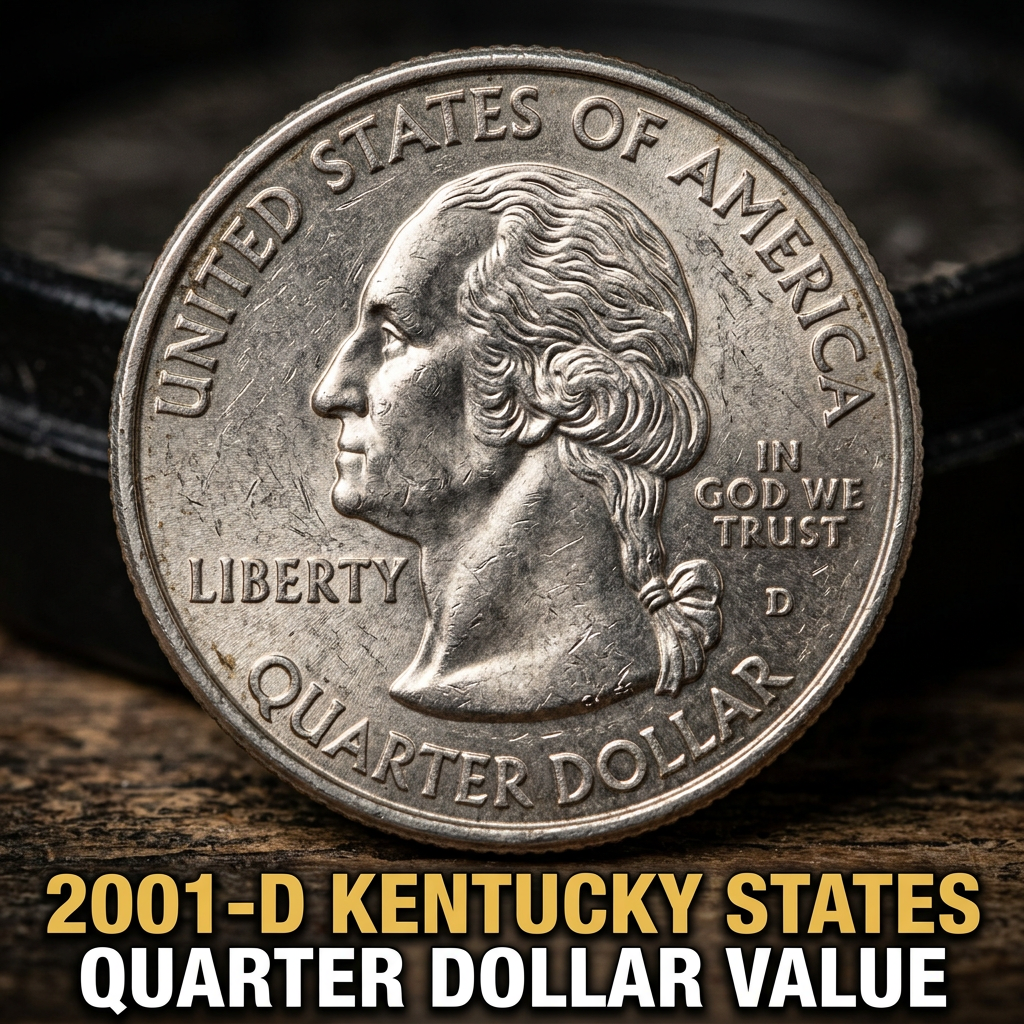
The 2001-D Kentucky State Quarter is worth anywhere from 25 cents in heavily circulated condition to around $10 or more in gem uncirculated grades, with top-certified examples occasionally fetching $20 to $50 at auction. If you found one in your change jar or inherited a coin collection, you’re in the right place — let’s break down exactly what you’ve got.
free coin identifier app tools have made it easier than ever for everyday people to get a quick read on coins like this one, without needing to visit a dealer or dig through price guides.
—
What Is the 2001-D Kentucky State Quarter?
The 2001-D Kentucky State Quarter is part of the United States Mint’s 50 State Quarters Program, which ran from 1999 to 2008. Kentucky was the 15th state to be honored in the series, and its coin was released in October 2001.
The “D” mintmark on this coin means it was struck at the Denver Mint. The reverse design features a thoroughbred horse standing behind a fence post, with Federal Hill (the famous “My Old Kentucky Home” estate) in the background. The words “My Old Kentucky Home” are inscribed on the coin as well.
The Denver Mint produced approximately 370,564,000 of these coins — yes, over 370 million — which is one big reason why circulated examples are so common and worth face value or just a little more. But condition is everything in coin collecting, and even high-mintage coins can be surprisingly valuable when they come out of the mint in perfect shape.
—
2001-D Kentucky Quarter Value by Condition
The value of your 2001-D Kentucky State Quarter depends heavily on its grade. Coins that have been used in everyday commerce show wear, scratches, and dull luster — these are generally worth face value or a few cents above. Uncirculated coins that never saw a cash register are a different story.
Here’s a quick value breakdown:
| Grade / Condition | Estimated Value |
|---|---|
| Circulated (Good to Fine) | $0.25 – $0.50 |
| Extremely Fine (EF-45) | $0.50 – $1.00 |
| Uncirculated (MS-60 to MS-63) | $1.00 – $3.00 |
| Gem Uncirculated (MS-65) | $5.00 – $10.00 |
| Superb Gem (MS-67+) | $20.00 – $50.00+ |
For a detailed look at 2001 quarter values across all mint marks and grades, it’s worth checking a dedicated pricing resource that tracks real auction results.
—
Are There Any Valuable Errors to Look For?
This is where things get exciting. Like many coins in the 50 State Quarters series, the 2001-D Kentucky Quarter has known error varieties that can be worth significantly more than a standard example.
The most famous is the “Extra Tree” error, sometimes called the “extra leaf” variety. On these error coins, an additional tree appears in the background of the design due to a die gouge or polishing issue. Collectors actively seek these out, and authenticated examples in mint state have sold for anywhere from $50 to several hundred dollars.
Other errors to watch for include off-center strikes, doubled die obverse, die cracks, and coins struck on the wrong planchet. These are rare but real — and worth having examined by a professional if you suspect you’ve found one.
CoinHix is a great resource for checking whether your coin matches known error varieties. The app’s image recognition and database tools help you compare your coin against documented examples quickly and accurately.
—
How to Check the Value of Your 2001-D Kentucky Quarter
If you want a more precise value for your specific coin, there are a few reliable ways to find out. First, look closely at the condition — does it have full luster? Are there any visible scratches or wear on Lincoln’s cheek on the obverse? The sharper and shinier it is, the more it’s likely worth.
You can also compare your coin’s details to certified auction records. Exploring recent sales data for state quarter coins in MS grades gives you a real-world sense of what buyers are actually paying — not just theoretical values.
For the fastest answer, CoinHix lets you photograph your coin and get an instant value estimate based on current market data. It’s free to use and designed for exactly the kind of situation where you’ve found an old coin and want a quick, trustworthy answer.
—
FAQ
Q: Is the 2001-D Kentucky State Quarter worth keeping?
A: If it’s in circulated condition, it’s worth face value — but it’s still a nice collectible piece of American history. If it shows no signs of wear or has any unusual features like an extra tree in the design, it could be worth holding onto or getting appraised.
Q: What does the “D” mintmark on the Kentucky Quarter mean?
A: The “D” stands for the Denver Mint, one of two primary production facilities that struck this coin in 2001. The Philadelphia Mint produced the 2001-P version without a mintmark.
Q: How can I tell if my Kentucky Quarter has the “Extra Tree” error?
A: Look at the background of the reverse design near Federal Hill. If you see an unusual extra tree that doesn’t appear on standard examples, you might have the error variety. Use CoinHix or consult a coin dealer to confirm — authenticated error coins are worth significantly more than face value.