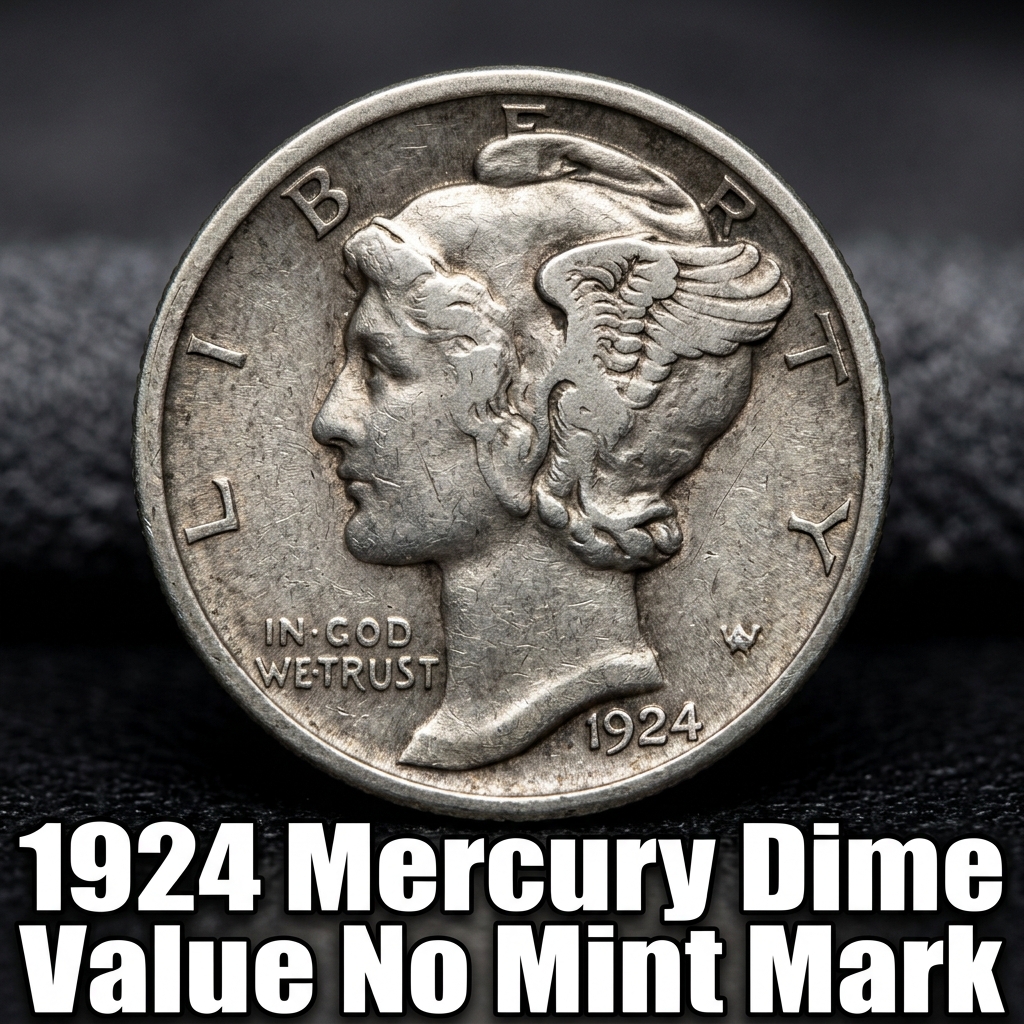
The 1924 Mercury Dime (no mint mark) is worth anywhere from $3 to $5 in heavily worn condition, up to $30 or more in fine shape, and potentially hundreds of dollars in uncirculated grades. If you found one of these silver dimes in an old coin jar or grandparent’s collection, you might be holding onto more than you think.
What Is the 1924 Mercury Dime and Where Was It Made?
The 1924 Mercury Dime with no mint mark was struck at the Philadelphia Mint, which was the main U.S. coin production facility at the time. Philadelphia coins typically don’t carry a mint mark, so the absence of a letter under the date is perfectly normal — it doesn’t mean the coin is rare or unusual.
This coin is officially called the Winged Liberty Head Dime, though nearly everyone calls it the Mercury Dime because the design looks like the Roman god Mercury. It was designed by sculptor Adolph A. Weinman and first issued in 1916. The obverse shows Lady Liberty wearing a winged cap, while the reverse features a fasces and an olive branch — symbols of strength and peace.
If you want to quickly identify what you have before diving into research, a free coin identifier app can help you confirm the coin type, year, and mint mark right from your phone. It’s a great first step for any casual collector or curious finder.
How Much Silver Is in a 1924 Mercury Dime
One of the biggest reasons people get excited about Mercury Dimes is the silver content. Each coin is made of 90% silver and 10% copper. At just 2.5 grams total, the silver weight comes in at about 0.07234 troy ounces per coin.
That means even a beat-up, heavily worn 1924 Mercury Dime has melt value. When silver prices hover around $25–$30 per troy ounce, each dime is worth roughly $1.80 to $2.20 in silver alone. That’s a solid floor for the coin’s value, regardless of condition.
So even if you find a coin that’s been banged around in a pocket for decades, it’s not worthless. Silver always holds some value, and that’s a comforting thought for most people who dig one of these out of an old drawer.
1924 Mercury Dime Value Chart by Grade
Here’s a quick look at what the 1924 Philadelphia Mercury Dime is worth across different conditions. These are approximate retail values based on current market trends.
| Grade | Description | Estimated Value |
|---|---|---|
| Good (G-4) | Heavy wear, major details visible | $3 – $4 |
| Very Good (VG-8) | Moderate wear, design clear | $4 – $6 |
| Fine (F-12) | Light to moderate wear | $6 – $10 |
| Extremely Fine (EF-40) | Light wear on high points only | $20 – $30 |
| About Uncirculated (AU-50) | Slight wear, most luster present | $35 – $50 |
| Mint State (MS-63) | Uncirculated, minor blemishes | $60 – $90 |
| Gem Mint State (MS-65+) | Near perfect, full luster | $150 – $400+ |
For the most up-to-date pricing data, you can check the 1924 Mercury Dime MS grade prices on CoinHix to see current auction results and market values in real time.
What Makes Some 1924 Mercury Dimes Worth More
Condition is the number one factor that drives value. A coin that was never used and stayed in a collection looks completely different from one that spent years in circulation. The detail on the bands of the fasces on the reverse — called Full Split Bands (FSB) — can dramatically increase value if fully visible and separated.
The 1924 Philadelphia issue had a mintage of about 24.01 million coins, which is a fairly typical number for the era. It’s not a scarce date, so most circulated examples are common. However, high-grade survivors with nice eye appeal are harder to come by.
If your coin has no scratches, strong luster, and the design is razor sharp, it could be worth submitting to a grading service like PCGS or NGC. A professionally graded MS-65 example can easily sell for $200 or more. You can also explore the full 1924 Mercury Dime value breakdown by date and grade for a comprehensive look at what similar coins are fetching.
How to Check Your 1924 Mercury Dime Value at Home
You don’t need to be a coin expert to get a rough idea of what your coin is worth. Start by examining it under good lighting. Look for the date (1924) and check the reverse for a mint mark — if there’s nothing below the olive branch, it’s Philadelphia.
Compare the coin’s details to photos of graded examples online. CoinHix makes this process easy with a searchable database and price tracking for Mercury Dimes by year and grade. You can browse completed sales to see what real buyers paid.
If you want a faster, hands-off approach, CoinHix also provides a convenient way to track coin values over time, which is especially useful if you’re building a collection or thinking about selling. For a quick scan and ID, pair it with a coin identifier app for the best results.
Frequently Asked Questions
Q: Is a 1924 Mercury Dime with no mint mark rare?
A: No, it’s not considered rare. The Philadelphia Mint struck over 24 million of them in 1924. It’s a common date in circulated grades, though well-preserved uncirculated examples are harder to find and worth more.
Q: How do I know if my Mercury Dime is real silver?
A: All genuine U.S. Mercury Dimes minted from 1916 to 1945 are 90% silver. You can confirm this with a simple magnet test — silver is not magnetic, so if the coin sticks to a magnet, it’s not genuine. A reputable CoinHix price check will also show silver melt values alongside collector values.
Q: Should I clean my 1924 Mercury Dime before selling it?
A: Absolutely not. Cleaning a coin removes its natural patina and can destroy collector value. Even if it looks dirty or dark, leave it alone. A cleaned coin is almost always worth less than an uncleaned one in the same grade, and experienced collectors and dealers can spot cleaning instantly.