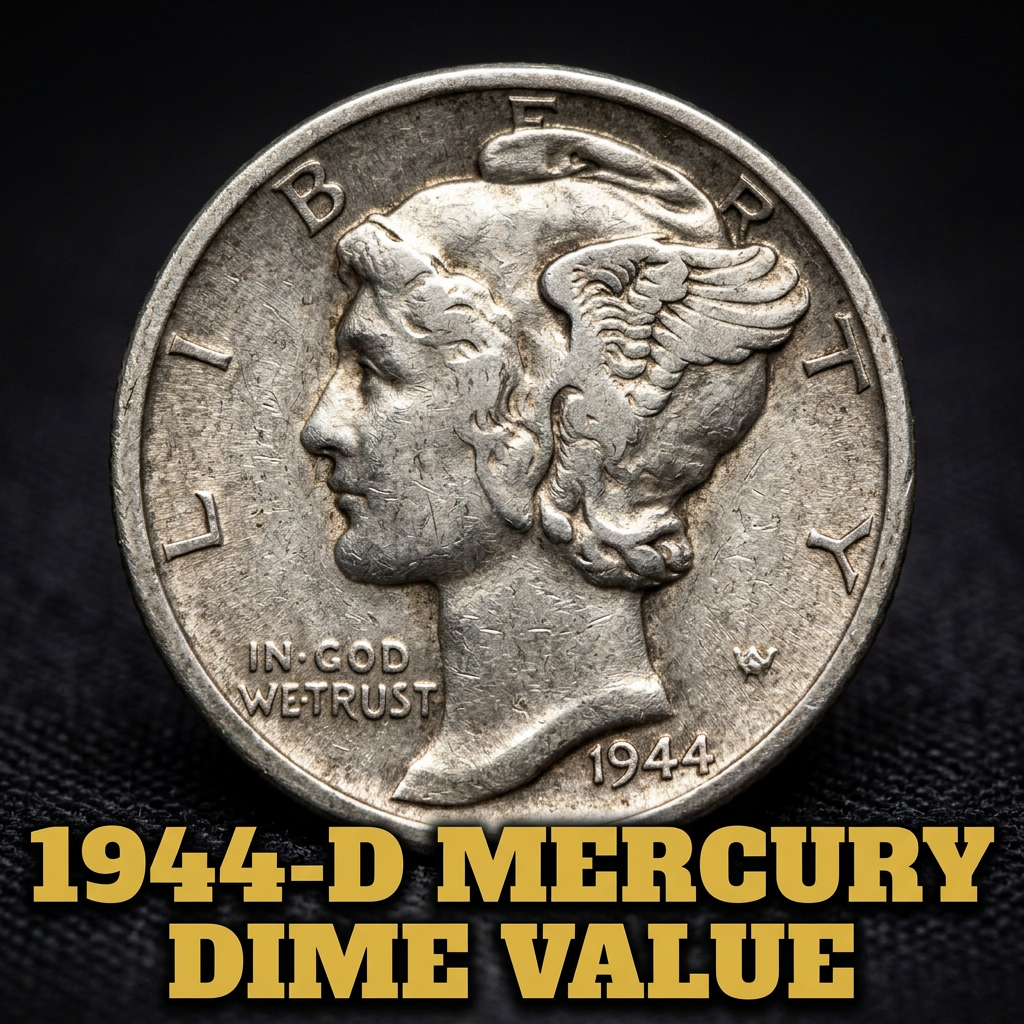
The 1944-D Mercury Dime is worth anywhere from $3 to $5 in heavily worn condition, but can climb to $30 or more in uncirculated grades — and exceptional mint state examples have sold for hundreds of dollars at auction. If you found one of these little silver coins tucked away in an old jar or inherited collection, you’ve got something genuinely worth looking into.
What Is the 1944-D Mercury Dime?
The 1944-D Mercury Dime was struck at the Denver Mint during World War II, and it’s part of one of the most beloved dime series in American history. The “D” mintmark appears on the reverse side of the coin, just to the left of the word “ONE” at the bottom. These coins were made from 90% silver, which alone gives them real melt value today.
Designed by Adolph Weinman, the obverse features a young Liberty wearing a winged cap — not the Roman god Mercury, despite the popular nickname. The reverse shows a fasces bundled with an olive branch, symbolizing strength and peace. It’s a beautiful design, and that artistic quality is one reason collectors still chase these coins decades later.
If you’re not sure what you have or want a quick identification, a free coin identifier app can help you figure out exactly which coin you’re holding before you dig into pricing. Tools like CoinHix are especially handy for beginners who want fast, reliable results right from their phone.
How Much Is the 1944-D Mercury Dime Worth?
The value of a 1944-D Mercury Dime depends mostly on its condition, or “grade” in collector terms. A coin that’s been through decades of pocket change will show obvious wear — flat details on Liberty’s face and the bands of the fasces on the reverse. A coin that was saved early and never circulated can look almost like it just left the mint.
The Full Split Bands (FSB) designation is a key factor for uncirculated examples. This refers to the horizontal bands on the fasces being fully separated and well-struck. Coins with this designation can be worth significantly more than standard MS-graded examples.
Here’s a general breakdown of 1944-D Mercury Dime values by grade:
| Grade | Condition Description | Estimated Value |
|---|---|---|
| Good (G-4) | Heavy wear, flat details | $3 – $4 |
| Fine (F-12) | Moderate wear, visible design | $4 – $6 |
| Extremely Fine (EF-40) | Light wear on high points | $7 – $12 |
| About Uncirculated (AU-55) | Slight rub, mostly sharp | $14 – $20 |
| MS-63 | Uncirculated, minor marks | $25 – $40 |
| MS-65 FSB | Gem uncirculated, full bands | $100 – $300+ |
For a more detailed look at current market pricing, you can browse up-to-date 1944-D Mercury Dime price data across mint state grades to see how the market is trending right now.
Silver Melt Value Matters Too
Even a well-worn 1944-D Mercury Dime has something going for it: silver. Each coin contains roughly 0.0723 troy ounces of pure silver. With silver hovering around $28–$30 per troy ounce in recent years, that puts the base melt value of any Mercury Dime at roughly $2.00 to $2.20.
That means even the most beat-up example you find in circulation has inherent value beyond just the one-cent face stamp. It’s one of the reasons these old silver dimes are worth keeping rather than spending.
If you’re tracking the value of multiple coins in a collection, CoinHix makes it easy to monitor silver melt values and market prices all in one place. It’s a practical tool whether you’re a casual finder or a seasoned collector.
Is the 1944-D a Common or Rare Coin?
The 1944-D Mercury Dime had a mintage of about 62,224,000 — that’s a lot of coins, so this isn’t a rare date by any stretch. You’ll find it fairly easily in coin shops and online marketplaces. However, finding one in truly high-grade mint state condition, especially with Full Split Bands, is a different story entirely.
The scarcity at the top of the grading scale is what drives collector demand. A coin graded MS-67 FSB, for example, is extremely difficult to find and can sell for well over $1,000 at major auctions. The 1944-D is a common coin in the low grades, but a genuinely scarce coin at the gem level.
For a thorough overview of what your 1944 dime is worth based on mint and condition, that resource breaks down both the Philadelphia and Denver issues side by side.
Tips for Selling or Holding Your 1944-D Mercury Dime
If your coin is circulated and shows typical wear, don’t expect a windfall — but it’s still worth more than face value thanks to silver content. If it looks sharp and original, consider getting it graded by a professional service like PCGS or NGC before selling, since a certified grade can significantly increase buyer confidence and final price.
Avoid cleaning the coin. Even gentle scrubbing removes the natural patina that collectors value, and a cleaned coin is almost always worth less than an original-surface example, even if it looks shinier to the naked eye.
CoinHix lets you photograph and log your coins quickly, so you can track what you have and make smarter decisions about what to sell and what to keep. It’s a great starting point for anyone just getting into the hobby.
FAQ
Q: How do I find the mintmark on a 1944-D Mercury Dime?
A: Flip the coin to the reverse side and look near the bottom, just to the left of the “E” in “ONE.” The small “D” there confirms it was minted in Denver.
Q: Is it worth getting a 1944-D Mercury Dime graded?
A: It depends on the coin’s condition. If it looks uncirculated or has sharp details, professional grading from PCGS or NGC can add significant value. For worn, circulated examples, the grading cost usually isn’t worth it.
Q: What makes a 1944-D Mercury Dime more valuable than a regular one?
A: The Full Split Bands designation on the reverse is the biggest value driver for higher-grade coins. A coin with clearly defined, separated bands on the fasces is more desirable and commands a premium over a standard uncirculated example.