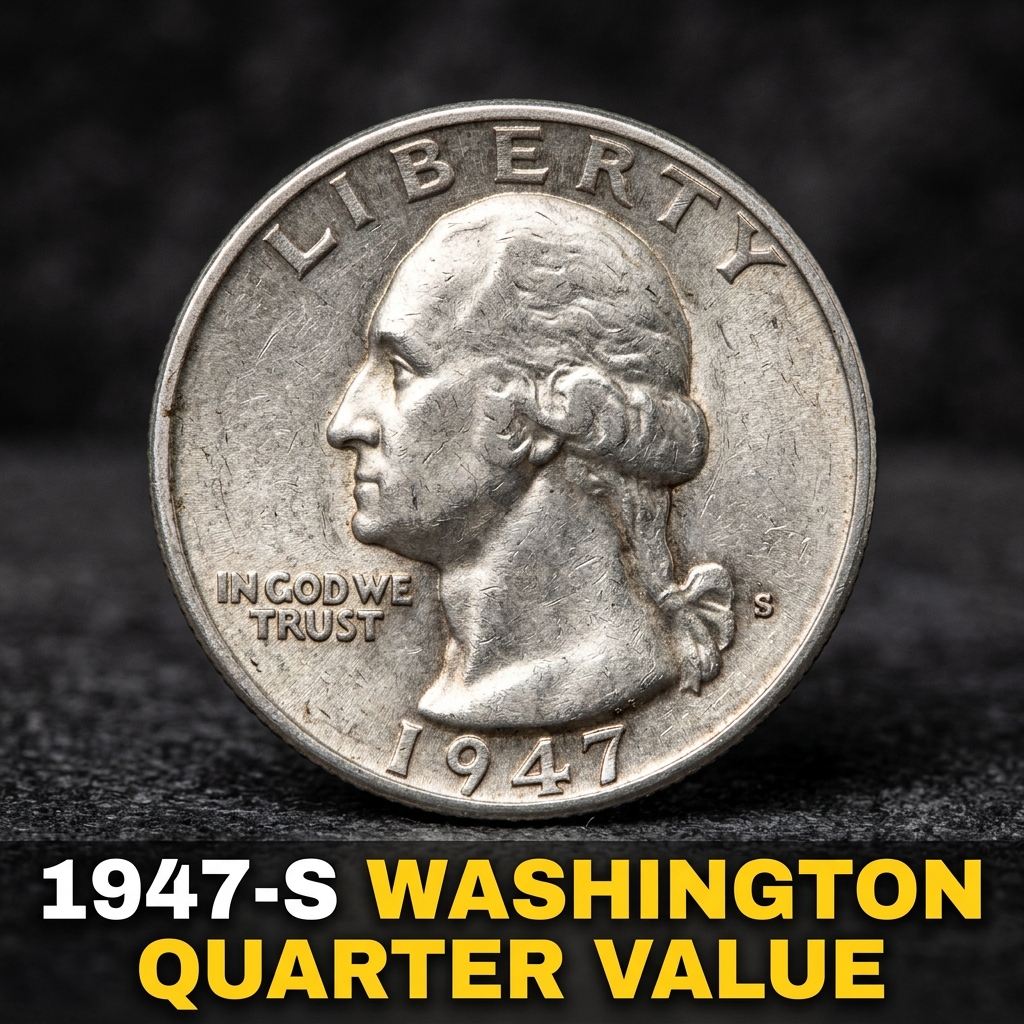
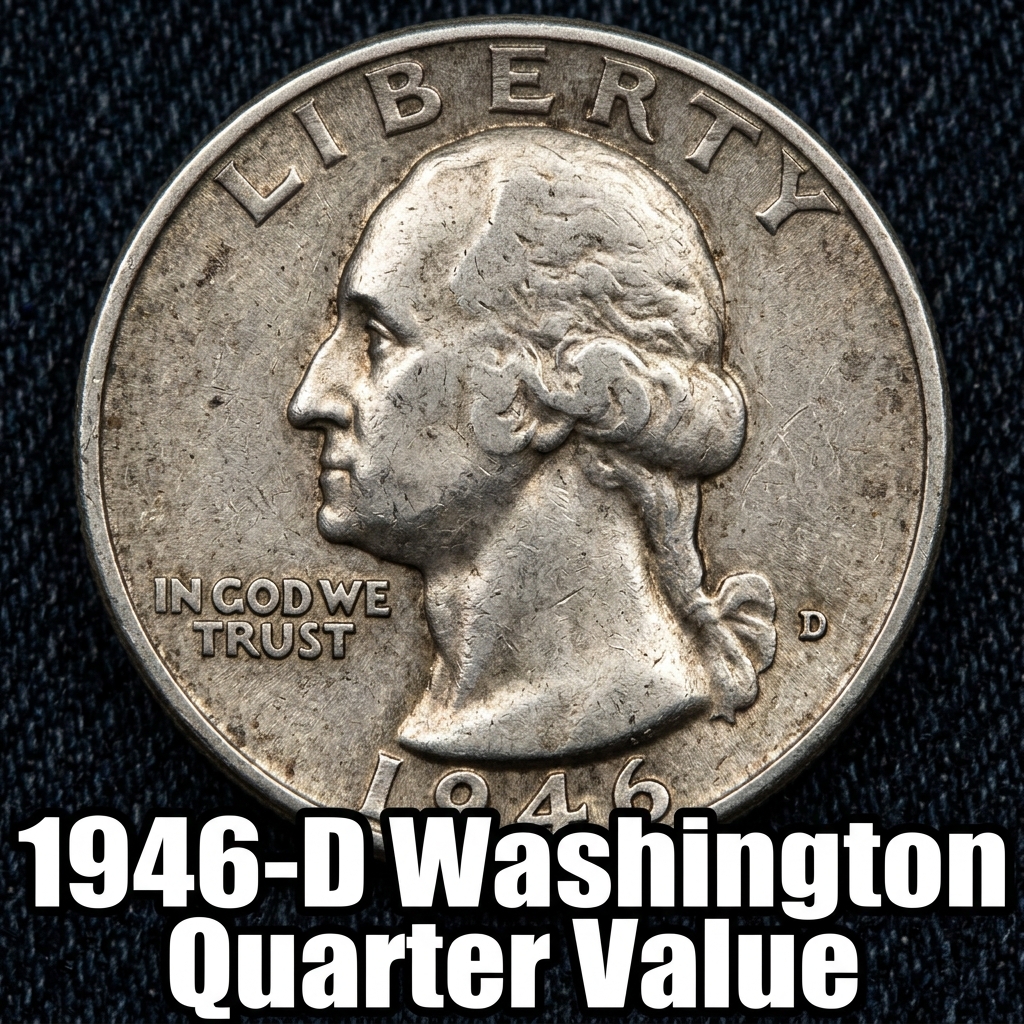
The 1946-D Washington Quarter is worth anywhere from $6 in heavily worn condition to over $200 or more in top mint state grades. If you found one of these coins in an old collection or tucked away in a drawer, you’re in the right place — let’s break down exactly what it might be worth.
What Is the 1946-D Washington Quarter?
The 1946-D Washington Quarter was struck at the Denver Mint in 1946, just one year after the end of World War II. The “D” mintmark on the reverse side of the coin (just above the “QUARTER DOLLAR” text) tells you it came from Denver. This coin was minted in 90% silver, which already gives it some baseline precious metal value regardless of its condition.
If you’ve got one of these coins sitting around and you’re not sure what it is, a free coin identifier app can help you confirm the coin’s identity, mintmark, and even give you a quick value estimate right from your smartphone. It’s one of the easiest ways to get started without needing any coin expertise.
Over 9.7 million 1946-D quarters were produced, making it a fairly common date in the Washington Quarter series. That said, high-grade examples — especially those with full, sharp details — can still command impressive prices from collectors.
1946-D Washington Quarter Value by Grade
The value of your 1946-D quarter depends heavily on its grade, or condition. Coin grades run from Poor (P-1) all the way to Perfect Mint State (MS-70). Here’s a general value breakdown to help you understand where your coin might fall.
A heavily worn coin with flat details is considered “Good” (G-4) and is worth around $6 to $8 — mostly for its silver melt value. A coin in “Fine” (F-12) to “Very Fine” (VF-30) condition, with some detail still visible, typically brings $7 to $10. Once you get into Extremely Fine (EF-40) territory, values jump to around $10 to $15.
The real excitement starts in mint state. An MS-63 example might sell for $25 to $40, while an MS-65 can fetch $60 to $100 or more. Top-tier MS-67 examples are rare and have sold for several hundred dollars at major auctions.
| Grade | Condition | Estimated Value |
|---|---|---|
| G-4 | Good (heavily worn) | $6 – $8 |
| VF-30 | Very Fine | $8 – $12 |
| EF-40 | Extremely Fine | $12 – $18 |
| MS-63 | Mint State (Choice) | $25 – $45 |
| MS-65 | Mint State (Gem) | $60 – $110 |
| MS-67 | Superb Gem | $300+ |
For the most current auction results and pricing trends, you can check out detailed 1946-D Washington Quarter price data by grade on CoinHix, which tracks real market sales across major platforms.
Silver Content and Melt Value
One thing that makes the 1946-D quarter valuable even in poor condition is its silver content. Washington Quarters minted before 1965 are composed of 90% silver and 10% copper. Each coin contains approximately 0.1808 troy ounces of pure silver.
With silver trading around $25–$30 per troy ounce (prices fluctuate, so check current spot prices), the raw melt value of your 1946-D quarter is roughly $4.50 to $5.50. That means even the most beat-up example is worth more than face value simply because of the metal it’s made of.
This silver premium is your floor price. No matter how worn the coin is, a reputable coin dealer or precious metals buyer will pay at least melt value for it.
What Makes a 1946-D Quarter More Valuable?
Beyond grade and silver, a few other factors can push your 1946-D Washington Quarter’s value higher. Eye appeal matters — coins with original luster, no cleaning, and no artificial toning are far more desirable to collectors. Cleaned coins, even in higher grades, are often worth significantly less because collectors dislike the altered surfaces.
Strike quality is another important factor. Some 1946-D quarters show weak strikes, particularly on Washington’s hair above the ear and on the eagle’s breast feathers on the reverse. A coin with a full, crisp strike is considered more desirable and can bring a premium over average examples.
For a comprehensive breakdown of 1946 quarter values across all mint marks and grades, it’s worth comparing your coin’s details to known examples before selling or submitting it for grading.
Professional certification through services like PCGS or NGC can dramatically increase buyer confidence and market value for high-grade examples. If you think your coin might grade MS-65 or higher, professional grading is usually worth the cost.
How to Find Out What Your 1946-D Quarter Is Worth
The easiest first step is to use CoinHix, a powerful coin valuation tool that lets you look up real market prices for Washington Quarters by date, mintmark, and grade. Whether you’re a first-time seller or a seasoned collector, CoinHix makes it simple to understand what buyers are actually paying right now.
You can also use CoinHix alongside a grading guide to get a realistic sense of your coin’s condition before approaching a dealer. Knowing your coin’s approximate grade ahead of time gives you confidence and helps you avoid underselling.
—
Frequently Asked Questions
Q: How do I know if my 1946 quarter is the Denver “D” mintmark variety?
A: Flip the coin over to the reverse side and look just above the text “QUARTER DOLLAR.” If you see a small “D,” it was minted in Denver. No mintmark means it’s a Philadelphia issue, and an “S” means San Francisco.
Q: Is a 1946-D Washington Quarter rare?
A: No, it’s not considered rare — over 9.7 million were minted. However, finding one in gem mint state (MS-65 or higher) with a strong strike and original luster is genuinely uncommon and can be worth $60 to several hundred dollars depending on the grade.
Q: Should I clean my 1946-D quarter before selling it?
A: Absolutely not. Cleaning a coin — even with gentle soap and water — removes the original surface and reduces its value significantly in the eyes of collectors and graders. Always sell or submit a coin in the condition you found it.