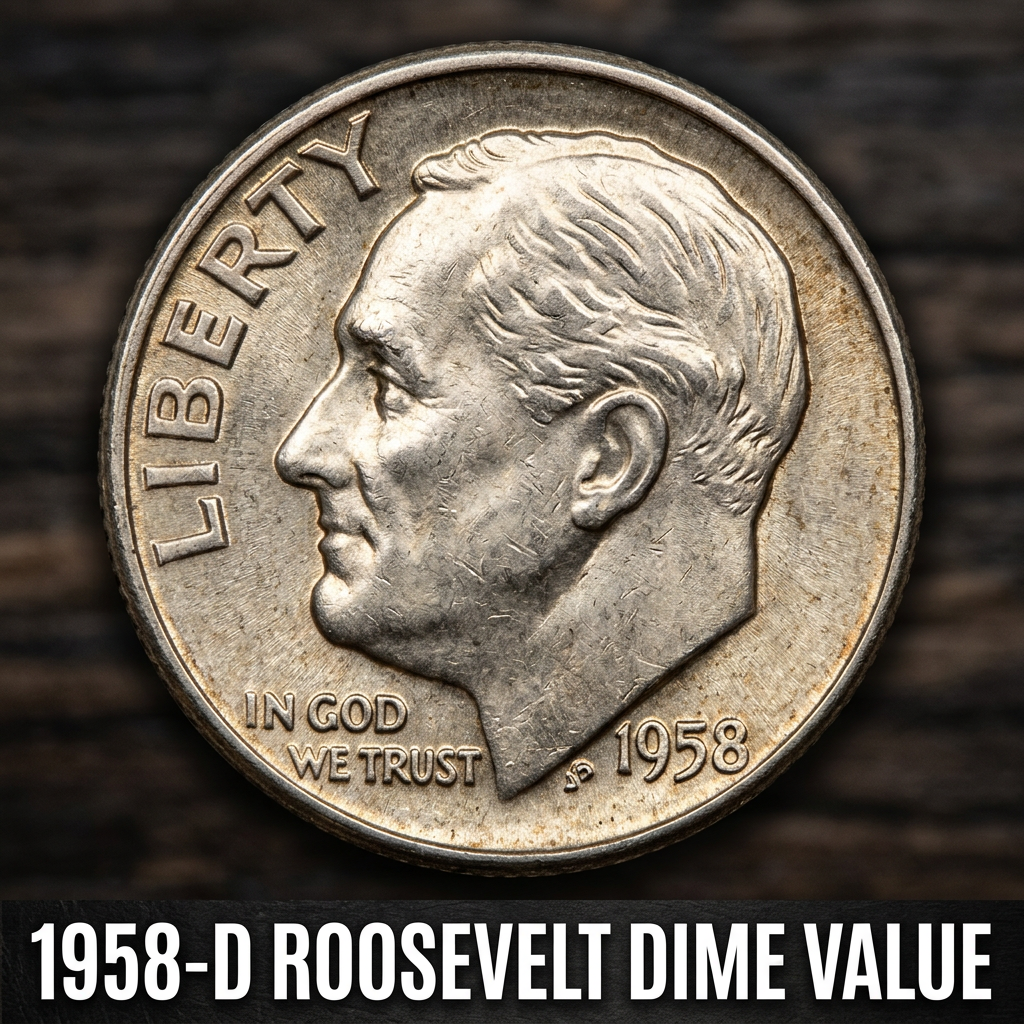
The 1958-D Roosevelt Dime is worth anywhere from $2 in heavily worn condition to over $30 or more in uncirculated mint state — and high-grade examples certified by PCGS or NGC can push well past $100. If you’ve got one sitting in an old coin jar or found it tucked inside a grandparent’s collection, you’re in the right place to find out exactly what it’s worth.
What Is the 1958-D Roosevelt Dime?
The 1958-D Roosevelt Dime was struck at the Denver Mint, which is where that small “D” mintmark under the torch on the reverse comes from. This was one of the final years the dime was made from 90% silver — a fact that immediately makes it more interesting than modern dimes.
In 1958, the Denver Mint produced over 78 million of these dimes, making it a fairly common coin in circulated grades. But common doesn’t mean worthless. The silver content alone gives every single one of them real melt value, regardless of condition.
If you’re not sure what you’ve got or how to read the mintmark, a free coin identifier app can help you quickly confirm the date, mintmark, and even get a rough value estimate right from your phone.
How Much Silver Is in a 1958-D Dime?
Here’s something a lot of people don’t realize: any Roosevelt Dime dated 1964 or earlier is made of 90% silver and 10% copper. That means your 1958-D dime has real intrinsic value based on the silver market, no matter how beat up it looks.
Each of these dimes contains approximately 0.07234 troy ounces of pure silver. With silver hovering around $27–$30 per ounce in recent years, the melt value of a 1958-D dime is roughly $1.95 to $2.20 at minimum.
So even the most worn-out, heavily circulated example still has a floor value based on silver. That’s why silver Roosevelt Dimes are always worth holding onto — they’re never truly worthless.
1958-D Roosevelt Dime Value by Grade
Coin grade has the biggest impact on value beyond the silver floor. The difference between a coin that’s been rattling around in a drawer for 60 years and one that was carefully stored can be dramatic.
Here’s a general value guide for the 1958-D Roosevelt Dime:
| Grade | Description | Estimated Value |
|---|---|---|
| Good (G-4) | Heavy wear, outline visible | $2.00 – $2.50 |
| Fine (F-12) | Moderate wear, features clear | $2.50 – $3.00 |
| Extremely Fine (EF-40) | Light wear on high points | $3.00 – $5.00 |
| About Uncirculated (AU-55) | Slight wear, mostly mint luster | $5.00 – $10.00 |
| Mint State (MS-63) | Uncirculated, minor marks | $15 – $30 |
| Mint State (MS-66+) | Gem quality, exceptional luster | $50 – $150+ |
For more detailed auction results and certified coin price data, you can check out the 1958-D Roosevelt Dime MS grade price history on CoinHix — it tracks real sales data so you know what buyers are actually paying.
What Makes a 1958-D Dime More Valuable?
Most 1958-D dimes are common in circulated grades, but a few factors can push the value significantly higher. Full Bands (FB) designation is the big one for Roosevelt Dimes — this refers to the horizontal bands on the torch on the reverse being fully separated and sharply struck.
Coins with the Full Bands designation are much harder to find in high grades and command strong premiums. An MS-65 FB example can be worth several times more than a regular MS-65.
Strike quality and original luster also matter. Coins that were never cleaned and still show their original mint surfaces are far more desirable to collectors. Cleaning a coin — even gently — typically destroys its numismatic value, so resist the urge to polish anything.
CoinHix is a great tool to quickly see how Full Bands versus non-Full Bands examples compare in today’s market.
How to Get the Best Price for Your 1958-D Dime
If you think you’ve got a nice uncirculated example, the best move is to get it professionally graded by PCGS or NGC. Certified coins sell for more because buyers trust the grade. A raw MS-65 might sell for $20, but a PCGS-graded MS-65 coin can fetch significantly more at auction.
For everyday circulated examples, selling in bulk silver lots or to a local coin dealer is often the most practical option. You won’t get numismatic premiums, but you’ll get fair silver value.
You can also explore the complete 1958 Roosevelt Dime value breakdown to compare the Philadelphia and Denver Mint versions side by side. The differences might surprise you.
CoinHix also lets you track silver melt values in real time, so you always know the floor price before you sell.
—
FAQ
Q: Is the 1958-D Roosevelt Dime made of silver?
A: Yes. All Roosevelt Dimes dated 1964 and earlier, including the 1958-D, are made of 90% silver. This gives them a base melt value tied to the silver market regardless of condition.
Q: How do I know if my 1958-D dime is uncirculated?
A: An uncirculated coin will show original mint luster — a cartwheel-like sheen when you tilt it under light. There should be no wear on Roosevelt’s cheekbone, hair, or the torch on the reverse. Any friction or dullness on the high points means it’s been circulated.
Q: Where is the mintmark on a 1958-D Roosevelt Dime?
A: The “D” mintmark is located on the reverse (tail side) of the coin, just to the left of the base of the torch. It’s small but visible under a magnifying glass or a good smartphone camera.