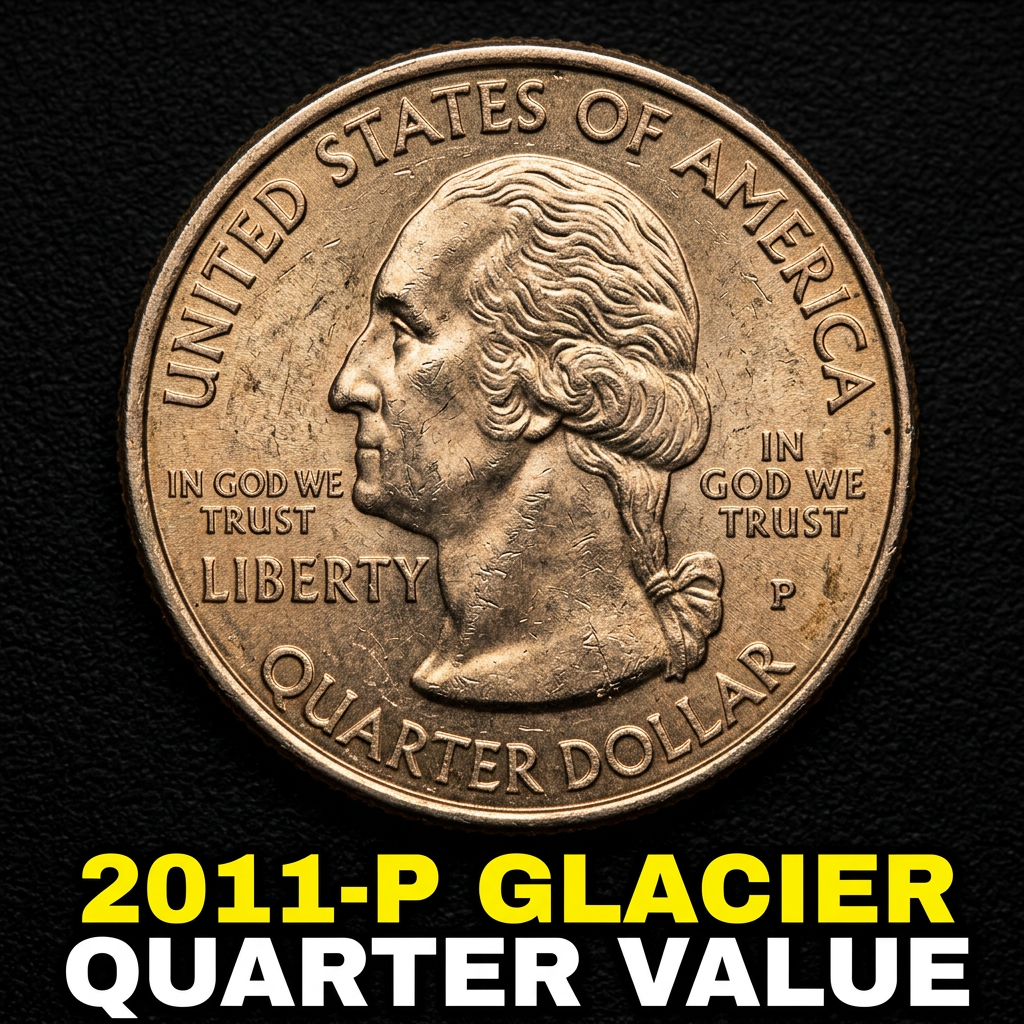
The 2011-P Glacier National Park Quarter is worth anywhere from face value (25 cents) in heavily worn condition to $5–$15 or more in uncirculated mint state, with top-grade specimens occasionally fetching significantly higher prices at auction.
If you pulled one of these coins out of your change jar or found it tucked in an old drawer, you’re in the right place. This guide breaks down exactly what your 2011-P Glacier Quarter might be worth — and whether it’s worth holding onto.
What Is the 2011-P Glacier National Park Quarter?
The 2011-P Glacier National Park Quarter is part of the America the Beautiful Quarters Program, a series launched by the U.S. Mint in 2010 to honor national parks and historic sites across all 50 states, territories, and the District of Columbia.
The “P” in the name tells you it was struck at the Philadelphia Mint. The reverse design features a stunning image of the Reynolds Mountain in Glacier National Park, Montana — complete with forests and a reflective lake. It’s genuinely one of the more beautiful designs in the series.
These quarters were released in 2011 and are composed of a copper-nickel clad composition, just like regular modern quarters. To get started identifying coins like this one at home, you might want to try a free coin identifier app that can help you match coins to their series and condition quickly.
How Much Is the 2011-P Glacier Quarter Worth in Circulated Condition?
If your coin has been used in everyday commerce — meaning it shows wear on the high points, the details are slightly flat, or the surfaces look dull — it’s considered a circulated coin. In this condition, the 2011-P Glacier Quarter is generally worth its face value of $0.25.
Collectors typically aren’t paying premiums for circulated examples of this coin because hundreds of millions were minted. However, that doesn’t mean your coin is worthless — it’s still a beautiful piece of American history representing one of the most visited national parks in the country.
If you want to dig deeper into pricing across grades, check out the full 2011 quarter value breakdown by mint mark and grade to compare how the Philadelphia issue stacks up against the Denver and San Francisco versions.
2011-P Glacier Quarter Value in Uncirculated Condition
Here’s where things get more interesting. If your coin has never been used — meaning the surfaces are bright, the details are sharp, and you can see the original luster — you may have an uncirculated coin on your hands. These are graded on the Sheldon scale from MS-60 up to a perfect MS-70.
| Grade | Condition | Estimated Value |
|---|---|---|
| Circulated (G–VF) | Worn, flat details | $0.25 (face value) |
| MS-60 to MS-63 | Uncirculated, minor marks | $1 – $3 |
| MS-65 | Gem uncirculated | $5 – $10 |
| MS-67 and above | Superb gem, near perfect | $15 – $50+ |
| MS-68 (rare) | Exceptional, top pop | $100+ |
For certified high-grade examples, auction records show that MS-67+ coins have sold for well above typical retail estimates. You can browse current market prices and recent sale data for 2011-P America the Beautiful quarters in mint state to get a sense of where the market currently sits.
How to Tell If Your Coin Is Worth Getting Graded
Professional grading through services like PCGS or NGC typically costs $20–$40 per coin, so it only makes financial sense if your coin has a realistic shot at grading MS-66 or higher. Here’s a quick checklist to help you decide:
– No visible scratches or contact marks on the cheek and high points of the design
– Strong, unbroken luster across both sides
– No cleaning, polishing, or environmental damage
– Sharp, well-struck details on the mountain and forest in the reverse design
If your coin checks most of those boxes, it may be worth submitting. CoinHix is a great tool for researching recent certified sale prices before you decide whether to invest in grading.
How Many 2011-P Glacier Quarters Were Minted?
The 2011-P Glacier National Park Quarter had a mintage of approximately 30,400,000 coins — which sounds like a lot, but it’s actually relatively low compared to most modern quarters. For context, common Washington quarters from the 1990s were often minted in the billions.
That lower mintage does give the Glacier Quarter a slight edge in collector appeal compared to some other modern issues. Still, because so many were saved in uncirculated condition right from the start, truly high-grade examples (MS-67 and above) remain the ones that command premium prices.
Using CoinHix lets you track the coin across multiple grades so you can instantly see where the value really starts to climb. It’s one of the smarter ways to stay on top of what the market is doing for this coin.
Tips for Storing and Preserving Your 2011-P Glacier Quarter
Whether your coin is worth $1 or $50, proper storage makes a difference. Handling mistakes are the number one reason coins lose value before they ever reach a grader.
Always hold coins by the edges — never touch the face or reverse. Store your quarter in an airtight coin flip, a 2×2 mylar holder, or a hard plastic slab. Avoid PVC holders, which can cause a green haze on the surface over time.
Keep coins in a stable environment: no humidity, no direct sunlight, and no drastic temperature changes. A small fireproof box or safe is ideal for pieces you think might have real value. CoinHix also has a portfolio feature that lets you log and track the coins you’re holding, which is handy if you’re building a set of America the Beautiful Quarters.
—
FAQ
Q: Is the 2011-P Glacier Quarter rare?
A: Not in the traditional sense — 30.4 million were minted. However, finding one in gem uncirculated condition (MS-67 or higher) is genuinely uncommon, and those examples carry real collector value.
Q: What’s the difference between the 2011-P and 2011-D Glacier Quarter?
A: The “P” means it was struck at the Philadelphia Mint and the “D” means Denver. Both have similar mintages and values, though specific high-grade populations can vary between the two, causing slight price differences at the top of the grading scale.
Q: Should I clean my 2011-P Glacier Quarter before selling it?
A: Absolutely not. Cleaning a coin — even gently — almost always reduces its value dramatically in the eyes of collectors and graders. A cleaned coin will typically be labeled as “cleaned” by grading services and can lose 50–90% of its potential value. Leave it exactly as you found it.