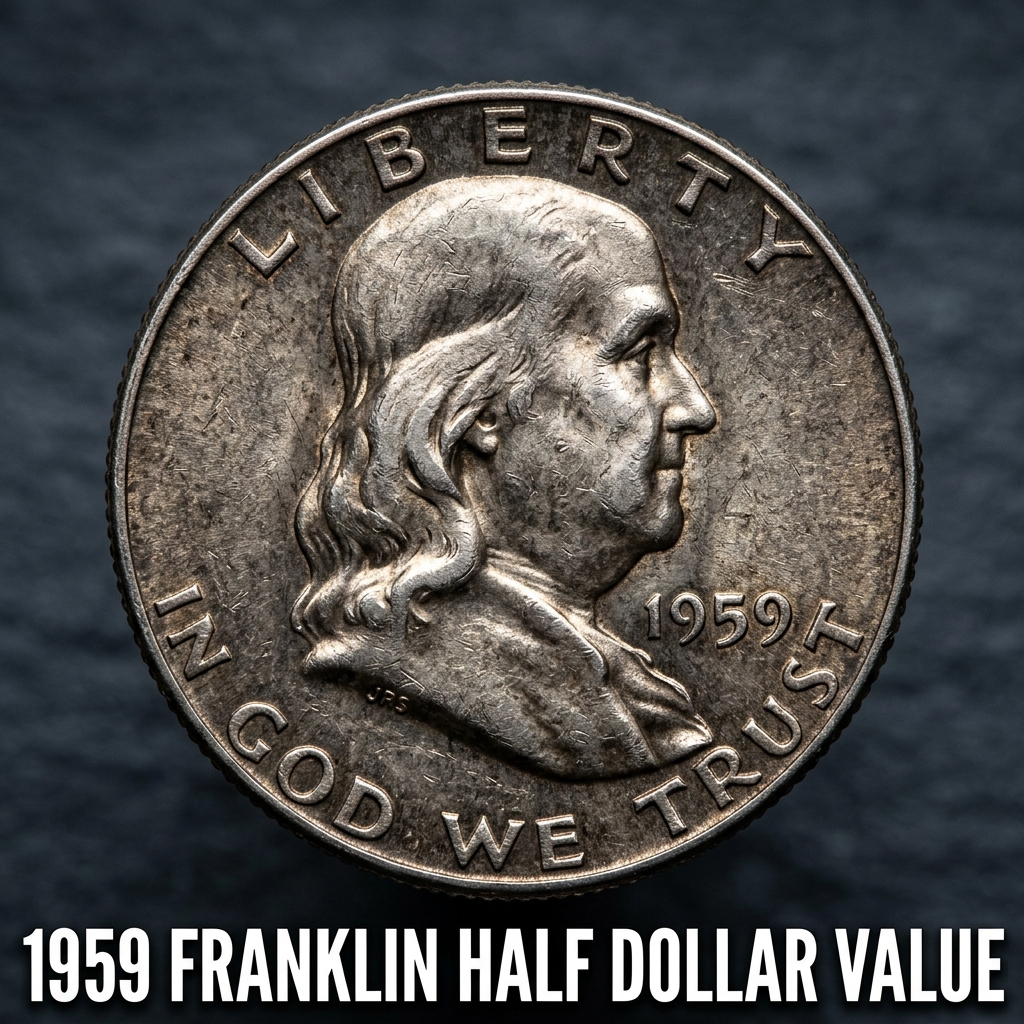
The 1959 Franklin Half Dollar is worth anywhere from $10 in heavily worn condition to over $200 or more in top mint state grades. If you just found one of these silver coins in an old collection, a drawer, or an estate sale, you’re in the right place — let’s break down exactly what it’s worth and what to look for.
What Makes the 1959 Franklin Half Dollar Special
The 1959 Franklin Half Dollar was minted during the final years of the Franklin series, which ran from 1948 to 1963. These coins feature Benjamin Franklin on the obverse and the Liberty Bell on the reverse — a classic American design that collectors still love today.
One thing that makes these coins immediately valuable is their silver content. Each 1959 Franklin Half Dollar contains 90% silver, which means even a worn example has real melt value based on the current price of silver.
Beyond the silver, collectors prize these coins for their condition, mint mark, and whether the coin shows “Full Bell Lines” — a special designation we’ll explain below. If you’re not sure what you have, using a free coin identifier app is a great first step to figure out exactly which coin you’re holding before you look up its value.
1959 Franklin Half Dollar Value by Mint Mark and Grade
There were two versions of the 1959 Franklin Half Dollar struck: the Philadelphia Mint (no mint mark) and the Denver Mint (with a “D” mint mark on the reverse, near the Liberty Bell). Both are common in lower grades, but nice examples in MS65 or higher can bring significant premiums.
Here’s a general value breakdown to give you a quick idea of what your coin might be worth:
| Grade | 1959 (Philadelphia) | 1959-D (Denver) |
|---|---|---|
| Good (G-4) | $10 – $12 | $10 – $12 |
| Fine (F-12) | $11 – $14 | $11 – $14 |
| Extremely Fine (EF-40) | $13 – $16 | $13 – $16 |
| MS-63 | $25 – $40 | $20 – $35 |
| MS-65 | $80 – $130 | $60 – $100 |
| MS-65 FBL | $200 – $500+ | $150 – $400+ |
For the most current auction results and certified coin prices, you can check the 1959 Franklin Half Dollar MS price data on CoinHix — it’s updated regularly and shows real market trends.
The Full Bell Lines Designation and Why It Matters
If you’ve done any research on Franklin Half Dollars, you’ve probably seen the abbreviation “FBL” — that stands for Full Bell Lines. This refers to the horizontal lines at the bottom of the Liberty Bell on the reverse of the coin.
On most business strike examples, these lines are weak or worn away because the Liberty Bell sits directly opposite Franklin’s cheek on the obverse — a high point on both sides that causes uneven striking pressure. A coin with sharp, complete bell lines is much harder to find and commands a serious premium.
A 1959 Franklin Half Dollar graded MS65 FBL can be worth three to five times more than the same coin without the Full Bell Lines designation. If you think your coin looks sharp, it’s worth getting it professionally graded by PCGS or NGC.
You can also use CoinHix to compare certified population data and understand how rare your specific coin might be among graded examples.
How to Tell If Your 1959 Franklin Half Dollar Is Worth More
Most people who find a 1959 Franklin Half Dollar are dealing with a circulated example — and that’s perfectly fine. Even a worn coin is still 90% silver and worth more than face value. But there are a few things that can push its value higher.
First, check the overall eye appeal. Does the coin have original luster, or does it look cleaned or dull? Cleaned coins are worth significantly less to collectors, even if they look shiny at first glance.
Second, look at the surfaces under good lighting. Avoid coins with heavy scratches, rim nicks, or dark spots. Coins with minimal marks and good luster can grade into the MS-63 to MS-65 range, which is where value really starts to climb.
For a detailed look at how condition affects pricing on this specific date, the 1959 Half Dollar value breakdown at Coin Value App offers a solid grade-by-grade reference that’s easy to follow.
And if you want to identify and value coins quickly at home, CoinHix is a smart tool to keep on your phone — just scan the coin and get instant results.
Is the 1959 Franklin Half Dollar a Good Find
Absolutely. Even in average circulated condition, a 1959 Franklin Half Dollar is a genuine piece of American silver history with real metal value backing it up. Mint state examples, especially those with Full Bell Lines, are genuinely sought-after coins among Franklin series collectors.
If you found this coin in a jar, a coin album, or an old purse, hold onto it and don’t clean it. Check the mint mark, assess the condition honestly, and use the resources in this guide to get a realistic sense of what you have. You might be holding something worth a nice little payout — or at the very least, a coin well worth keeping.
—
Frequently Asked Questions
Q: How much silver is in a 1959 Franklin Half Dollar?
A: The 1959 Franklin Half Dollar is made of 90% silver and 10% copper. It weighs 12.5 grams and contains approximately 0.3617 troy ounces of pure silver. At current silver prices, that gives it a melt value of around $8 to $10, depending on the market.
Q: What does “FBL” mean on a Franklin Half Dollar?
A: FBL stands for Full Bell Lines. It’s a special designation given to coins that show sharp, complete horizontal lines at the base of the Liberty Bell on the reverse. FBL coins are rarer and typically worth significantly more than non-FBL examples of the same date and grade.
Q: Should I clean my 1959 Franklin Half Dollar before selling it?
A: No — never clean a coin you plan to sell. Cleaning removes the original surface and luster, which dramatically reduces a coin’s value to collectors. Even a dull or toned coin in original condition is worth more than one that has been polished or dipped.