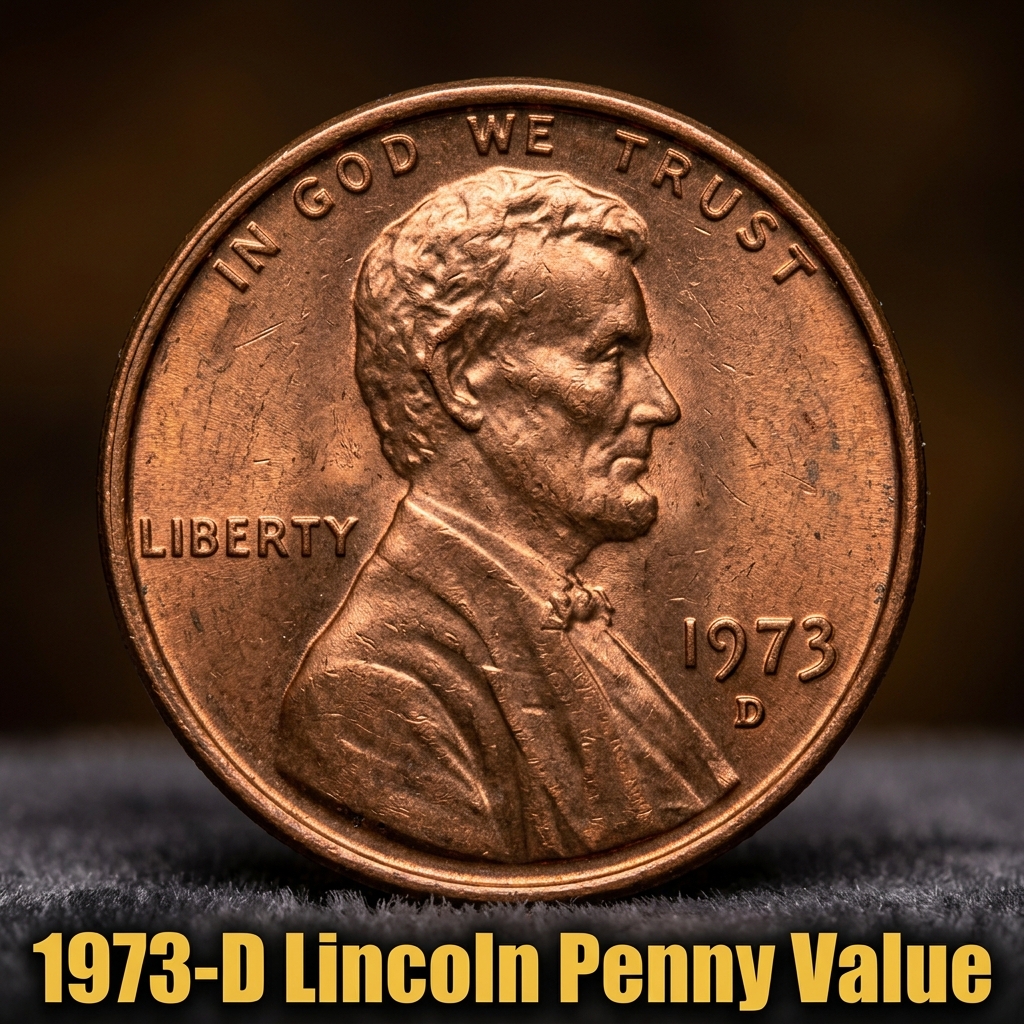
The 1973-D Lincoln Penny is worth anywhere from a few cents in heavily worn condition to around $5 or more in well-preserved mint state — and a handful of rare error coins can fetch significantly higher prices. If you’ve come across one of these coins in your change jar or an old collection, you’re in the right place to find out what it might be worth.
Getting Started: How to Identify Your 1973-D Penny
The “D” in 1973-D stands for Denver, which means your coin was struck at the Denver Mint. You’ll find that small “D” mintmark on the obverse (front) of the coin, just below the date on the right side.
The 1973-D Lincoln Penny features the classic portrait of Abraham Lincoln on the front and the Lincoln Memorial on the reverse — a design that ran from 1959 all the way through 2008. These coins were made of 95% copper and 5% zinc, giving them that familiar reddish-brown color.
If you want a quick and easy way to identify coins from your collection, try a free coin identifier app on your phone. It can scan your coin and give you an instant estimate of its type and grade — no expertise required.
The Denver Mint produced over 3.5 billion of these pennies in 1973, making them one of the higher-mintage Lincoln cents of that era. High mintage generally means lower collectible value for circulated examples — but condition still plays a big role.
1973-D Lincoln Penny Value by Grade
Coin value is almost entirely driven by condition, or “grade.” Here’s a simple breakdown of what collectors typically pay for a 1973-D penny depending on its state of preservation:
| Grade / Condition | Description | Estimated Value |
|---|---|---|
| Poor / Fair | Heavily worn, barely readable | Face value ($0.01) |
| Fine (F-12) | Moderate wear, major details clear | $0.05 – $0.15 |
| Extremely Fine (EF-40) | Light wear on high points | $0.25 – $0.75 |
| Mint State (MS-63) | Uncirculated, minor contact marks | $1.00 – $3.00 |
| Gem Mint State (MS-65+) | Near-perfect, full original luster | $5.00 – $15.00+ |
For a more detailed look at 1973-D Lincoln Penny prices across all mint state grades, including MS-60 through MS-67 red designations, you’ll find auction records and price trends that can help you set realistic expectations.
Does Color Designation Affect the Value?
Yes — and this surprises a lot of people. For copper cents like the 1973-D, grading services also assign a color designation: Red (RD), Red-Brown (RB), or Brown (BN).
A coin that retains most of its original copper-red luster is graded “Red” and commands the highest premiums. A fully Brown coin has toned evenly over time and is typically worth the least among uncirculated examples — though it’s still a perfectly collectible coin.
An MS-65 Red example of the 1973-D cent can sell for $10–$15 or more, while the same grade in Brown might only bring $1–$3. This is why storage matters. Coins kept in a cool, dry place in proper coin flips or albums tend to hold their color better over time.
If you’re not sure how to evaluate the color and grade of your coin, CoinHix makes it easy to look up certified coin prices and recent sales data right from your smartphone.
Are There Any Valuable 1973-D Penny Errors?
Error coins are where things get really exciting. While most 1973-D pennies are common, a small number were struck with interesting errors that can increase their value dramatically.
Some known error types to look for include:
– Doubled Die Obverse (DDO): Look for doubling in Lincoln’s eye, the date, or the lettering. A confirmed DDO can be worth $25–$100 or more depending on the severity.
– Off-Center Strike: If the design is noticeably off-center, these can sell for $10–$50+ depending on how dramatic the shift is.
– Die Cracks or Cuds: Raised lines or blobs on the coin’s surface caused by a cracked die — minor versions add a small premium; major ones can be worth more.
To check whether your coin matches known error varieties, you can explore detailed 1973 penny value information including error varieties and what they’re worth. Having a reference like this can save you from unknowingly selling a valuable coin for pocket change.
Is It Worth Getting Your 1973-D Penny Graded?
For most circulated 1973-D pennies, professional grading through PCGS or NGC isn’t worth the cost — grading fees typically start around $20–$30, which far exceeds what a common circulated example is worth.
However, if you have a coin that appears to be in gem uncirculated condition (brilliant, fully red, and free of major marks), or if you suspect it’s an error coin, professional grading could absolutely pay off. A certified MS-66 or MS-67 Red 1973-D penny is rare and can sell for $50–$200 or even more at auction.
CoinHix is a great starting point before you spend money on grading. Use the app to compare your coin’s appearance to certified examples, get a rough value estimate, and decide whether submitting it makes financial sense.
—
FAQ About the 1973-D Lincoln Penny
Q: Is a 1973-D penny rare?
A: Not in general — over 3.5 billion were minted in Denver that year, making circulated examples very common. However, high-grade Red specimens (MS-66 and above) and confirmed error coins are genuinely scarce and collectible.
Q: What is the most valuable 1973-D penny ever sold?
A: Top-grade certified examples in MS-67 Red have sold at auction for over $100–$200. Error coins with strong doubled dies or dramatic off-center strikes can also reach similar or higher prices depending on collector demand.
Q: How can I tell if my 1973-D penny is worth more than face value?
A: Start by checking the coin’s condition — look for original luster and minimal wear. Then examine it under magnification for any doubling or errors. Apps like CoinHix can help you compare your coin against certified examples and get a quick value estimate without needing to be an expert.