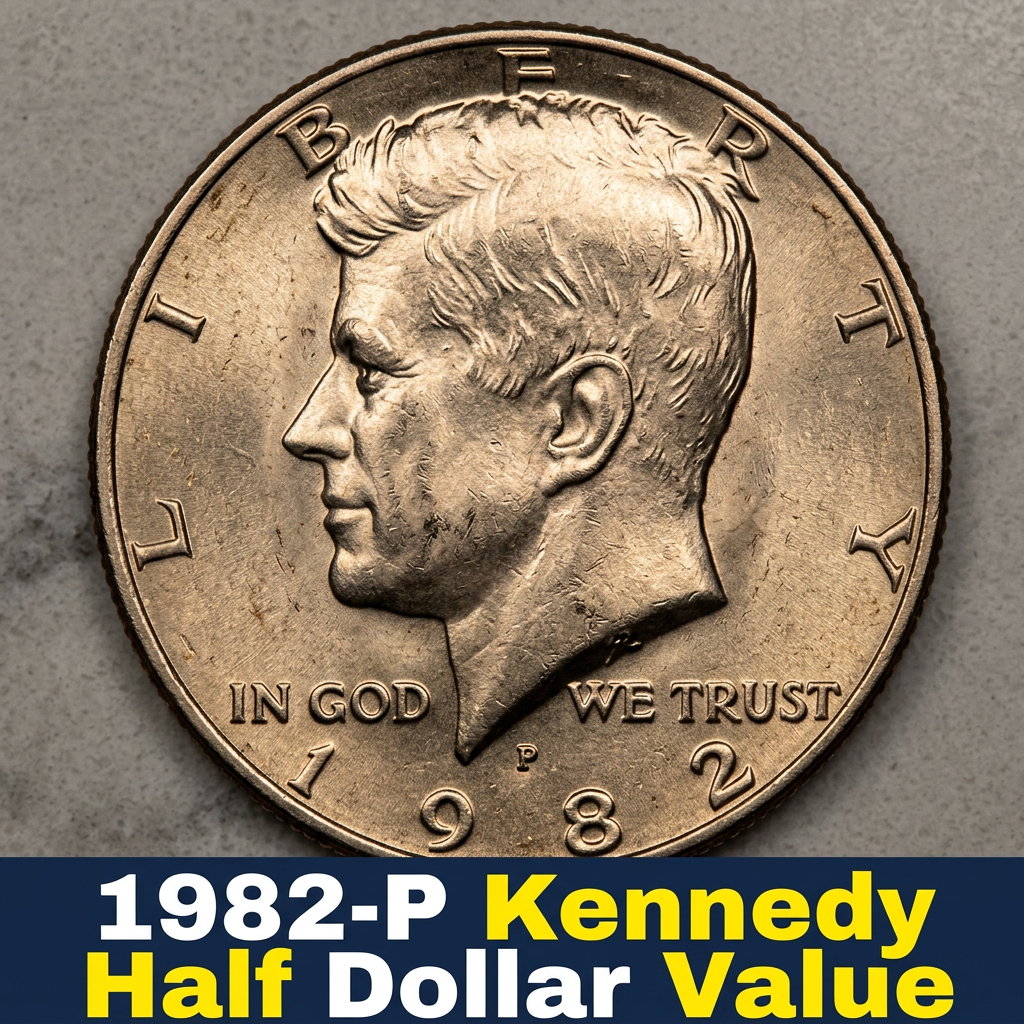
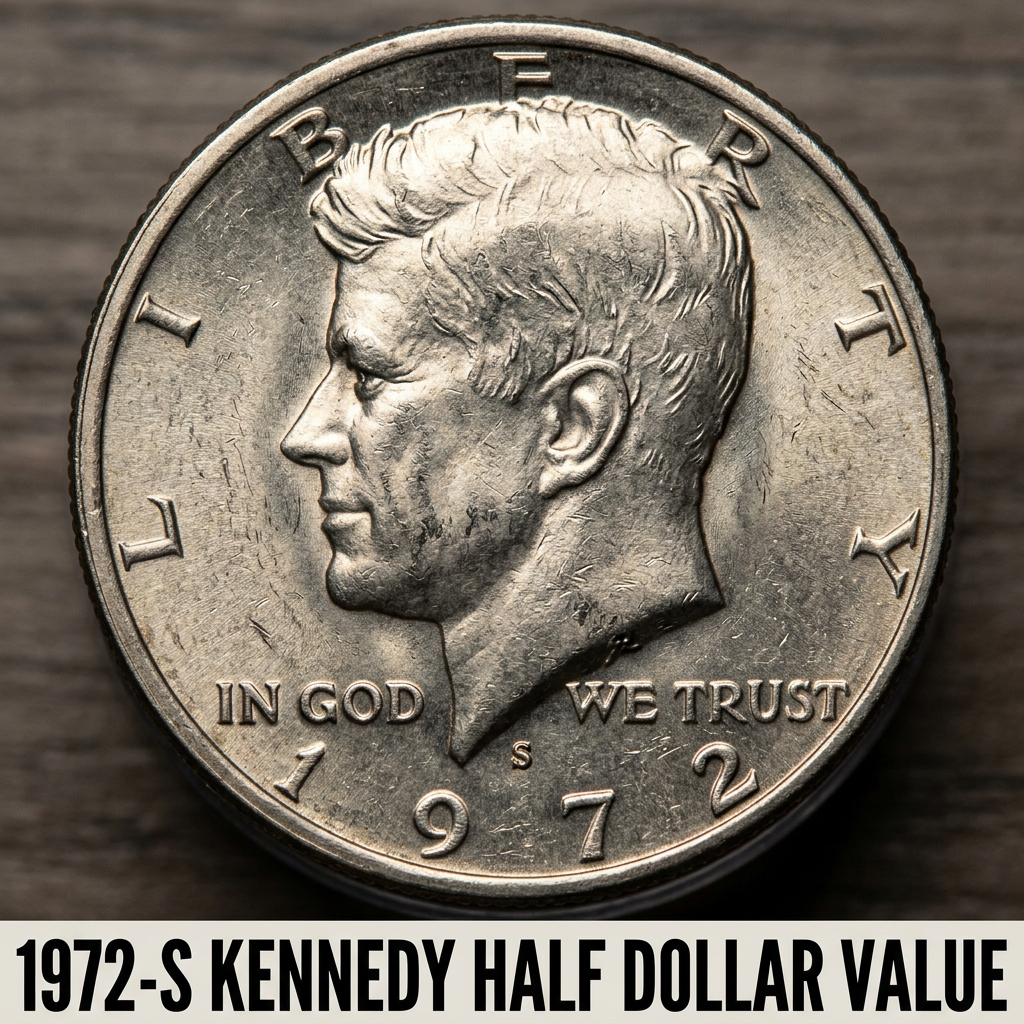
The 1972-S Kennedy Half Dollar is worth anywhere from $2 in circulated condition to over $15 or more in pristine proof quality — and certain special varieties can command significantly higher prices from serious collectors.
If you stumbled across one of these coins in an old jar, a coin album, or an estate sale, you’re in the right place. This guide will walk you through exactly what your 1972-S half dollar might be worth, what to look for, and how to get the best information before you sell or trade it.
What Makes the 1972-S Kennedy Half Dollar Special
The “S” mintmark on this coin tells you it was struck at the San Francisco Mint — and that changes everything about its value.
Unlike the Philadelphia and Denver Mint versions of the 1972 Kennedy Half Dollar, the San Francisco issue was made exclusively as a proof coin. That means it was never intended for everyday pocket change. These coins were carefully struck twice with specially polished dies, giving them that mirror-like background and frosted portrait that collectors love.
The total proof mintage for the 1972-S was approximately 3,260,996 coins — impressive in number, but many were handled carelessly over the decades, reducing the population of truly flawless examples.
If your coin still has sharp edges, a deep mirror finish, and no visible hairlines or scratches, you may have something genuinely collectible on your hands.
How Much Is a 1972-S Kennedy Half Dollar Worth Today
Value depends heavily on condition, also called “grade” in the coin world. Proof coins are graded on a scale from PR60 to PR70, with PR70 being perfect.
Here’s a simple breakdown to help you understand current market values:
| Grade | Condition | Estimated Value |
|---|---|---|
| PR60 | Proof, noticeable marks | $2 – $4 |
| PR63 | Proof, minor blemishes | $4 – $7 |
| PR65 | Gem Proof, few flaws | $8 – $15 |
| PR67 | Superb Gem Proof | $15 – $40 |
| PR69 | Near Perfect Proof | $40 – $80+ |
| PR70 | Perfect Proof | $200+ |
For up-to-date auction results and recent sales data, you can check out the latest 1972 Kennedy Half Dollar price data across multiple grades — it’s updated regularly and gives you a real-world sense of what buyers are actually paying.
Deep Cameo Varieties and Why They Matter
Here’s where things get interesting for collectors.
Proof coins from the San Francisco Mint in 1972 can also come with a special designation called “Deep Cameo” (DCAM) or simply “Cameo” (CAM). These refer to the high contrast between the frosted device — that’s the portrait of Kennedy and the eagle — and the mirror-like field (background).
A coin graded PR65 might sell for around $10. But a PR65DCAM — the same grade with Deep Cameo designation — can fetch $20 to $40 or more.
PCGS and NGC are the two leading grading services that assign these designations. If you think your coin might qualify, having it professionally graded could be worth the investment.
You can also get a quick starting estimate using a detailed 1972 Kennedy Half Dollar value breakdown with variety information before deciding whether to go the professional grading route.
How to Check Your Coin’s Condition at Home
You don’t need to be an expert to get a general sense of your coin’s grade — you just need good lighting and a magnifying glass.
Look at the fields (flat background areas) first. In a high-grade proof, these should look like a deep, clear mirror. Any hairlines — thin scratches from cleaning or poor storage — will knock the grade down significantly.
Next, examine the high points of the design: Kennedy’s cheekbone, his hair above the ear, and the eagle’s breast feathers. If these areas are sharp and frosty, you’re looking at a strong proof.
One of the fastest ways to get a rough idea is to use a free coin identifier app on your smartphone. These tools use image recognition to help identify your coin and give you a ballpark value. CoinHix is one of the most popular options among everyday collectors — it’s easy to use and gives you instant coin identification with value estimates right from your phone.
Is Your 1972-S Kennedy Half Dollar Worth Selling
For most circulated-looking proof coins in lower grades (PR60 to PR63), the value is modest — usually just a few dollars. But don’t let that discourage you from checking.
If your coin has been stored in the original U.S. Mint proof set packaging, the odds of it being in PR65 or better condition are much higher. Coins kept in original mint holders are protected from the hairlines and handling damage that drag grades down.
Before you sell, do a little homework. Compare recent auction results, check the current market with tools like CoinHix, and consider whether professional grading makes financial sense for your specific coin.
Even a modest coin is worth understanding — and sometimes a seemingly ordinary 1972-S proof surprises people with a DCAM designation or high-grade certification that pushes it well above average value.
FAQ
Q: Is the 1972-S Kennedy Half Dollar made of silver?
A: No. By 1972, Kennedy Half Dollars were made of a copper-nickel clad composition — 75% copper and 25% nickel. The 90% silver versions were only made in 1964, and 40% silver clad proofs ran from 1965 to 1970. Your 1972-S has no silver content.
Q: How do I know if my coin is genuine and not a fake?
A: Check the weight (should be 11.34 grams) and look for sharp, well-defined details under magnification. Counterfeits often look “mushy” or slightly off in their lettering. For peace of mind, CoinHix can help you identify your coin visually, and for high-value coins, always consider submitting to PCGS or NGC for professional authentication.
Q: Where is the best place to sell a 1972-S Kennedy Half Dollar?
A: For common grade examples (PR63 to PR65), eBay is your best bet for finding buyers quickly. For higher-grade or DCAM specimens, a reputable coin dealer or a major auction house like Heritage Auctions or Stack’s Bowers may get you a better return. Always get multiple quotes before committing to a sale.