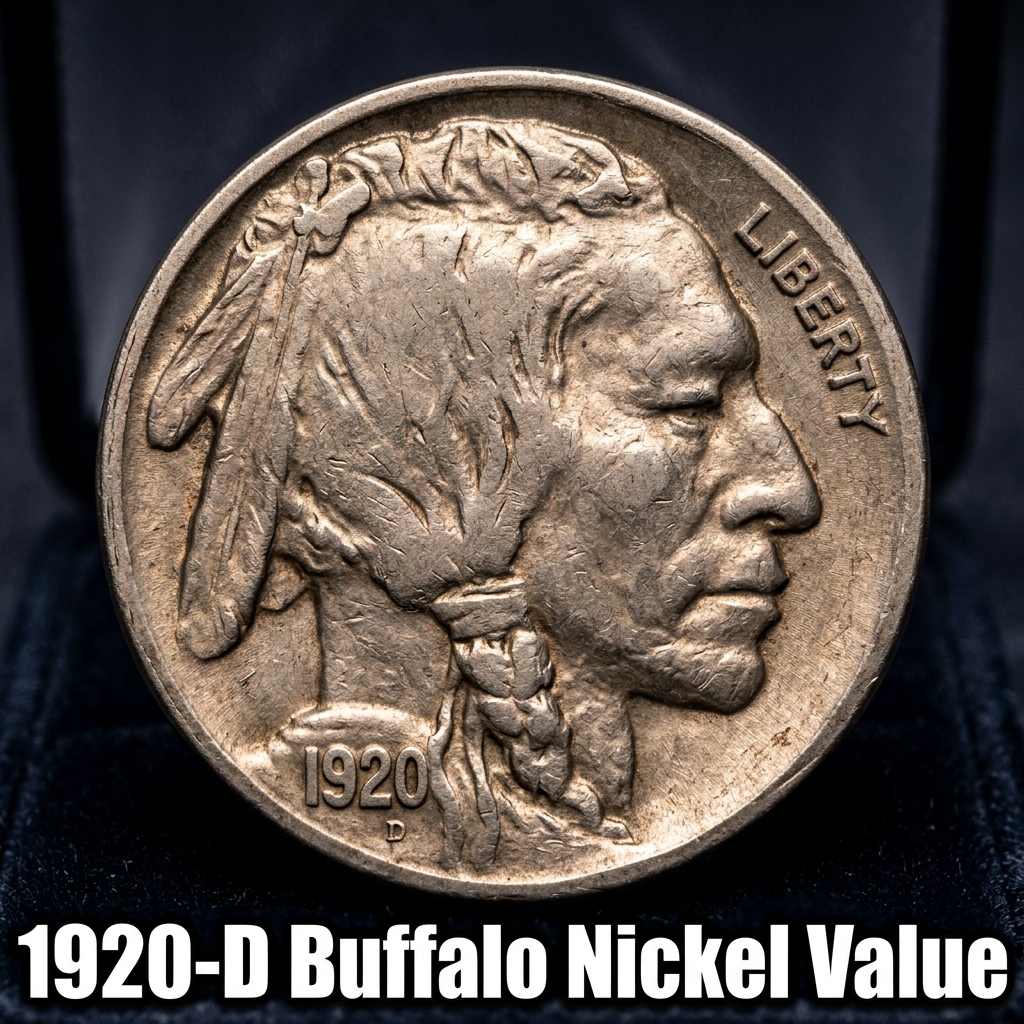
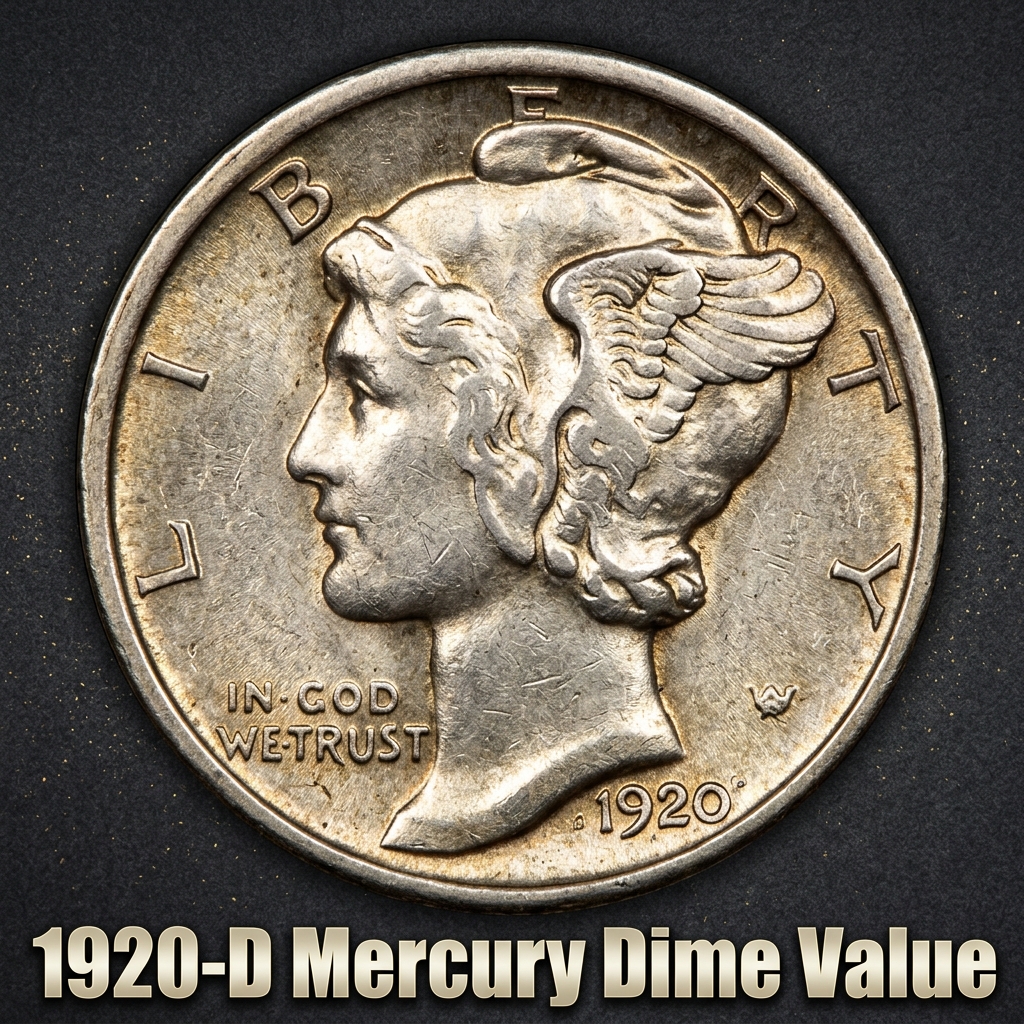
The 1920-D Mercury Dime is worth anywhere from $4 to $10 in heavily worn condition, while well-preserved examples can fetch $30 to $100 or more — and top-grade mint state coins have sold for several hundred dollars at auction. If you’ve come across one of these small silver coins in an old jar or inherited collection, you may be sitting on more than pocket change.
What Is the 1920-D Mercury Dime?
The 1920-D Mercury Dime was minted at the Denver Mint in 1920, making it one of three mint varieties produced that year alongside Philadelphia and San Francisco issues. It features the iconic Winged Liberty Head design by sculptor Adolph Weinman — a portrait often mistaken for the Roman god Mercury, which is how the coin got its popular nickname.
The coin is made of 90% silver and 10% copper, giving it an intrinsic metal value even in poor condition. The “D” mintmark appears on the reverse side, just to the left of the fasces design.
With a mintage of around 19.17 million pieces, the 1920-D isn’t considered rare, but finding one in great shape is a different story. Circulated examples are common, but lightly worn or uncirculated coins are genuinely hard to come by.
If you’ve found one and aren’t sure what you have, a free coin identifier app can help you quickly figure out the mint year, mintmark, and approximate value before you do anything else.
1920-D Mercury Dime Value by Grade
The value of your 1920-D Mercury Dime depends heavily on its condition, or “grade.” Coin grading ranges from Poor (P-1) on the low end to Mint State (MS-65 and above) on the high end.
Here’s a general breakdown of what you can expect:
| Grade | Condition Description | Estimated Value |
|---|---|---|
| Good (G-4) | Heavy wear, major details visible | $4 – $6 |
| Fine (F-12) | Moderate wear, all lettering clear | $7 – $12 |
| Extremely Fine (EF-40) | Light wear on high points | $20 – $35 |
| About Uncirculated (AU-50) | Slight wear, most luster intact | $40 – $65 |
| Mint State (MS-63) | No wear, minor contact marks | $100 – $200 |
| Mint State (MS-65+) | Gem quality, exceptional luster | $300 – $600+ |
For a deeper look at 1920-D Mercury Dime prices across mint state grades, it’s worth checking certified auction records to see what real buyers are actually paying.
What Makes a 1920-D Dime More Valuable?
Not all 1920-D Mercury Dimes are equal. A few key factors can push the value significantly higher than the baseline estimates above.
Full Split Bands (FSB): On the reverse of the coin, there are horizontal bands wrapped around the fasces. When the middle pair of bands shows a clear, complete split — known as Full Split Bands — collectors pay a premium. An MS-65 with FSB can be worth two to three times more than the same grade without it.
Strike quality: Denver Mint coins from this era sometimes suffered from weak strikes, making sharply struck examples more desirable.
Original skin: Coins with original, untampered surfaces and natural toning are preferred over cleaned coins, which can lose 30–50% of their value.
Certified grading: Coins graded by PCGS or NGC carry more credibility in the market and typically sell for more than raw, ungraded coins.
How to Check If Your Coin Has Been Cleaned
One of the most common ways people accidentally reduce the value of their old coins is by cleaning them. It seems logical — a shiny coin should be worth more, right? Not in the coin collecting world.
Cleaned coins often have an unnatural brightness, fine hairline scratches from polishing, or an odd, flat look to the surface. Natural silver toning, by contrast, tends to develop in soft grays, blues, and browns over decades.
If you’re not sure whether your 1920-D Mercury Dime has been cleaned, CoinHix can help. The CoinHix app lets you scan your coin and get an instant condition estimate, which is a great first step before taking it to a dealer.
You can also review detailed 1920 dime value information by condition and mintmark to compare your coin against known examples.
Should You Sell, Hold, or Get It Graded?
If your 1920-D Mercury Dime looks like it’s in very good shape — sharp design details, no visible wear on the high points, and original luster — it may be worth getting it professionally graded. PCGS and NGC offer grading services, and a certified MS-64 or MS-65 coin can be significantly more liquid and valuable on the open market.
For circulated coins in Good to Fine condition, you’re probably looking at bullion-adjacent value — a few dollars above spot silver price. These are still nice keepsakes, but the return on a professional grading fee wouldn’t make financial sense.
Use CoinHix to get a quick scan and estimated grade before committing to any selling or grading decision. It’s free to use and can save you from undervaluing — or over-investing in — your find.
—
FAQ
Q: How do I know if my dime is a 1920-D or a different mint?
A: Flip the coin over and look just to the left of the fasces (the bundle of sticks) on the reverse. A small “D” means it was minted in Denver. No letter means Philadelphia, and an “S” means San Francisco.
Q: Is the 1920-D Mercury Dime made of real silver?
A: Yes. It contains 90% silver and 10% copper. Even a heavily worn example has a base silver melt value of roughly $2–$3 depending on current silver spot prices, and collectible value usually exceeds that.
Q: What’s the most valuable 1920-D Mercury Dime ever sold?
A: High-grade examples in MS-67 with Full Split Bands have sold for over $1,000 at major coin auctions. These are exceptionally rare in top condition, so if your coin looks pristine, it’s definitely worth getting a professional opinion.