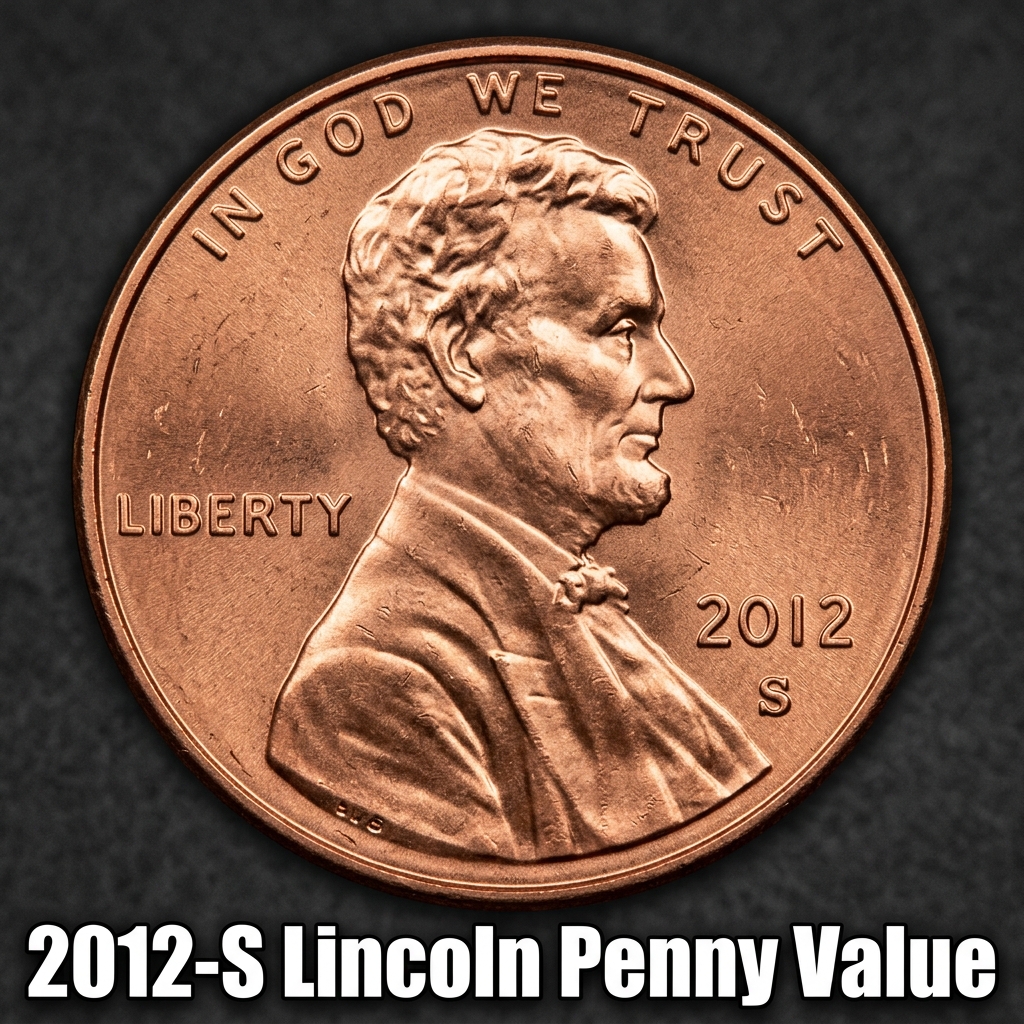
The 2012-S Lincoln Shield Penny is worth anywhere from $3 to $10 in typical proof condition, but gem-quality examples graded PR70 DCAM can fetch $20 to $40 or more among collectors. If you found one of these coins in an old proof set or inherited a collection, you might be sitting on more than just a penny — and this guide will help you figure out exactly what you have.
What Makes the 2012-S Lincoln Penny Different
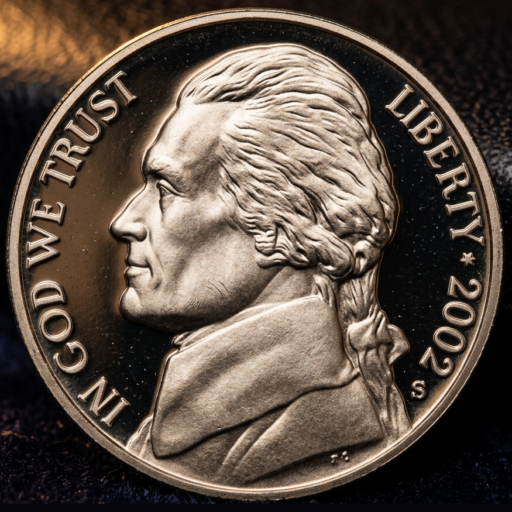
The “S” mintmark on this coin tells you it was struck at the San Francisco Mint — and that’s a big deal. The San Francisco Mint doesn’t produce pennies for everyday circulation. Instead, it makes specially struck proof coins intended for collectors, sold in annual proof sets by the U.S. Mint.
Unlike the copper-zinc pennies you’d find in your change, the 2012-S was made with extra care. Dies were polished, blanks were cleaned, and each coin was struck multiple times to bring out sharp details and a mirror-like finish. That process is what gives proof coins their distinctive look: frosted design against a glassy background.
If you’ve got one of these and want a quick estimate of its grade and value, tools like CoinHix can give you an instant read on what collectors are currently paying — without the guesswork.
You can also use a free coin identifier app to scan your coin and get basic details like mint year, mintmark, and estimated value range in seconds — a great starting point before doing any deeper research.
How Much Is the 2012-S Lincoln Penny Worth Today
Value depends almost entirely on grade and eye appeal for proof coins. A coin pulled from a standard proof set, showing no major damage or haze, typically grades PR65 to PR67 and sells for $3 to $8. Step up to PR68 or PR69 and prices climb to $10–$20. A perfect PR70 DCAM — the holy grail of proof grading — can sell for $30 to $50 depending on who’s buying.
The “DCAM” designation stands for Deep Cameo, describing that sharp contrast between the frosted devices and mirrored fields. Not every 2012-S achieves this, so coins with strong cameo contrast are worth more.
Here’s a quick value breakdown:
| Grade | Designation | Estimated Value |
|---|---|---|
| PR65 | Cameo (CAM) | $3 – $5 |
| PR67 | Deep Cameo (DCAM) | $6 – $10 |
| PR68 | Deep Cameo (DCAM) | $10 – $20 |
| PR69 | Deep Cameo (DCAM) | $18 – $30 |
| PR70 | Deep Cameo (DCAM) | $30 – $50+ |
For the most current market prices by grade, check out 2012 Lincoln Shield Penny prices across all grade levels — data is updated regularly so you’re seeing real-world sales, not guesses.
The Shield Design and Mintage Numbers
The reverse of this coin features the Union Shield, introduced in 2010 to mark Lincoln’s 201st birthday and carry the Lincoln cent into a new era. The design shows 13 vertical stripes representing the original colonies, topped by a horizontal bar with “E PLURIBUS UNUM” inscribed across it.
The 2012-S proof Lincoln penny had a mintage of approximately 794,000 coins — reasonable for a proof issue, not especially rare by itself, but still far fewer than the billions of circulation cents made in Philadelphia and Denver that same year.
Mintage alone doesn’t make a coin valuable, but combined with perfect condition and strong cameo contrast, that number limits how many top-pop examples exist in the world. That scarcity at the top grades is what drives prices for PR69 and PR70 pieces.
Is It Worth Getting Your 2012-S Lincoln Penny Graded
Honestly, for most people — probably not. If your coin is already in a government proof set case and looks clean, it’s fine where it is. Professional grading (through services like PCGS or NGC) costs $20 to $40 per coin, which wipes out any profit on a lower-grade example.
However, if you have a coin that shows exceptional mirror fields and razor-sharp frost on Lincoln’s portrait, it might be worth submitting for grading. A certified PR70 DCAM can sell for multiples of what an ungraded coin brings.
Not sure what you have? Try running it through CoinHix first — the app can help you estimate grade and condition before you spend money on professional submission. It’s a smart first step that many collectors overlook.
For a broader look at how the 2012 penny’s value changes based on mint mark and condition, that resource breaks it down clearly for both beginners and more experienced collectors.
Tips for Storing and Handling Your 2012-S Proof Penny
Proof coins are sensitive. Fingerprints, moisture, and even breath can leave marks that reduce a coin’s grade — and its value. If you’re taking your 2012-S out of its original case to examine it, always handle it by the edges, never the face.
Store it in a cool, dry place away from direct sunlight. If it came in a U.S. Mint proof set box, keep it there. Mylar flips or hard plastic coin holders are good alternatives if you need to store coins individually.
Don’t clean your coin. Ever. Even gentle cleaning removes microscopic metal and destroys that reflective proof surface permanently. A “cleaned” designation on a graded coin tank its value immediately.
CoinHix also has storage tips and condition guides built right in, making it useful beyond just price lookups — especially if you’re just getting started with coin collecting.
—
FAQ
Q: Is the 2012-S Lincoln penny rare?
A: It’s not rare in the traditional sense — nearly 800,000 were made — but it’s a collector-only coin that never circulated. Finding one means it came from a proof set, which most people don’t have in their everyday change. Top-grade examples are relatively scarce.
Q: Can I spend a 2012-S penny as regular money?
A: Technically yes, it’s legal tender worth one cent. But you’d be giving up a coin worth $3 to $50 depending on condition. Keep it, store it properly, and look up its current value before making that call.
Q: Where can I sell a 2012-S Lincoln proof penny?
A: eBay is the most common marketplace for selling individual proof coins. You can also try coin shows, local coin shops, or online dealers. Make sure you check recent sold listings — not just asking prices — so you know what buyers are actually paying.