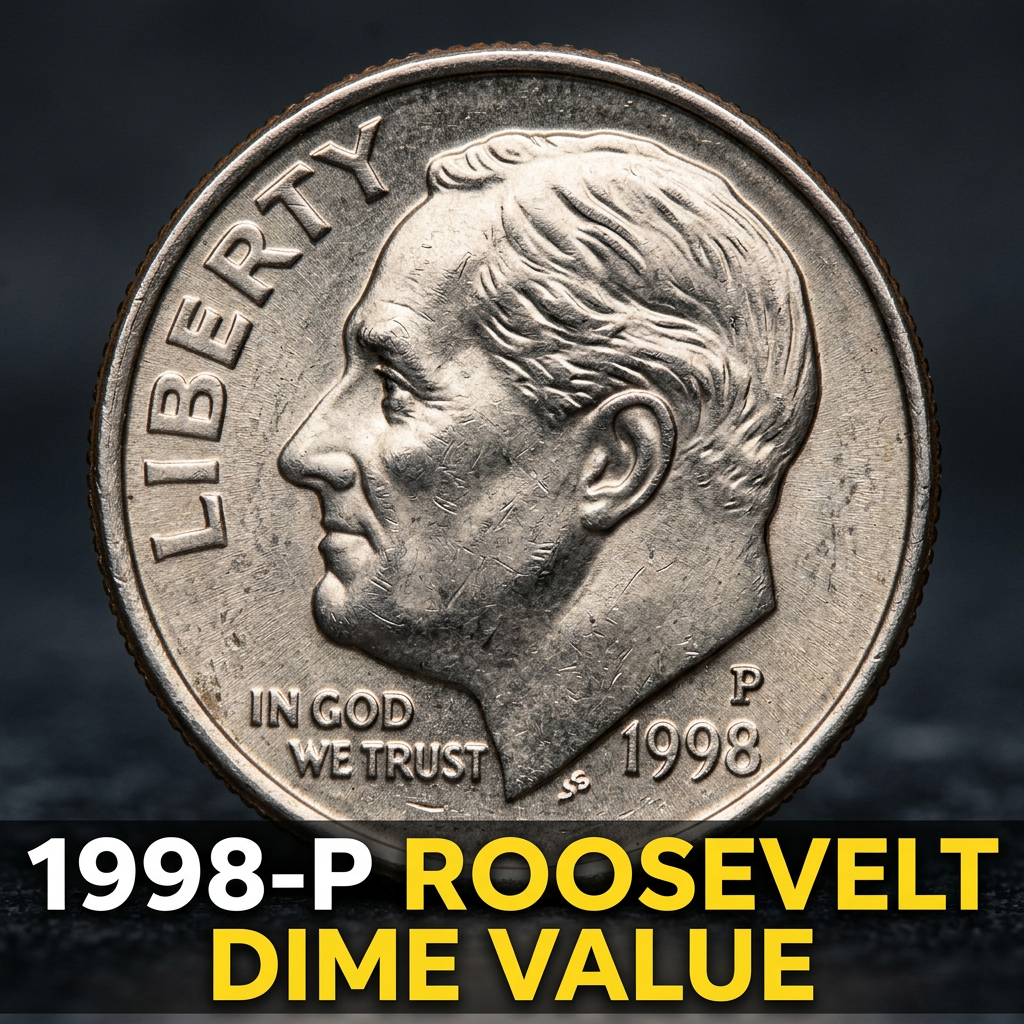
The 1998-P Roosevelt Dime is worth anywhere from 10 cents in circulated condition to around $10 or more in certified mint state — and a few exceptional specimens have sold for well over $20 at auction. If you’ve found one of these coins in your pocket change or an old jar, read on to find out exactly what you’re holding.
If you want a quick answer right now, one of the easiest ways to check is by using a free coin identifier app that can scan your coin and give you an instant value estimate. These tools are especially handy when you’re sorting through a collection and don’t want to look up every coin manually. Apps like CoinHix are designed for everyday people — not just professional numismatists — so the interface is simple and the results are surprisingly accurate.
Background on the 1998-P Roosevelt Dime
The Roosevelt Dime series has been in production since 1946, and by 1998, the Philadelphia Mint was churning out hundreds of millions of them for general circulation. The “P” mintmark on the obverse of the coin (just above the date) tells you it came from the Philadelphia facility.
In 1998, the Philadelphia Mint struck approximately 1,163,000,000 dimes — yes, over a billion. That enormous mintage is the main reason most 1998-P Roosevelt Dimes are worth only face value. Coins that were used in everyday commerce get worn down quickly, and with so many made, there’s no shortage of them.
That said, condition is everything in coin collecting. A dime that spent decades in a drawer, untouched and well-preserved, can be worth significantly more than one that rattled around in a cash register for years.
How Condition Affects the 1998-P Dime Value
Coin grading follows a scale from 1 to 70, with circulated coins falling below MS-60 and uncirculated (mint state) coins graded MS-60 through MS-70. For the 1998-P Roosevelt Dime, the jump in value really happens at the higher end of the mint state range.
Most coins you pull from pocket change will grade Fine (F-12) to Extremely Fine (EF-45), and at those grades, your coin is worth face value — just 10 cents. However, a coin graded MS-65 or higher starts to attract real interest from collectors.
Here’s a simple value breakdown based on grade:
| Grade | Condition | Estimated Value |
|---|---|---|
| F-12 | Fine | $0.10 |
| EF-45 | Extremely Fine | $0.10 – $0.25 |
| MS-63 | Choice Uncirculated | $1 – $3 |
| MS-65 | Gem Uncirculated | $5 – $10 |
| MS-67 | Superb Gem | $20 – $50+ |
For the most up-to-date auction results and certified coin prices, you can check out recent 1998-P Roosevelt Dime sales data by grade on CoinHix, which tracks real market transactions across major platforms.
What Makes a 1998-P Dime Worth More Than Face Value
Beyond grade, a few specific factors can push a 1998-P Roosevelt Dime’s value higher. The first is Full Torch (FT) designation — a special designation awarded to coins where the bands on Roosevelt’s torch are sharply and completely struck. This is a detail that even experienced collectors can miss without magnification.
Coins with the Full Torch designation at MS-65 or above are considerably rarer and fetch a premium. A typical MS-65 1998-P dime might sell for $5–$8, but an MS-65 FT can be worth $15–$30 depending on the buyer.
Another value factor is surface quality. Coins with deep, original mint luster and no contact marks or cleaning are the ones that end up in certified holders graded MS-67 or MS-68. At those levels, the collector market becomes very competitive, and prices spike significantly.
For a deeper breakdown of what your specific coin might be worth, this detailed 1998 dime value guide walks through variety types, grades, and real sale prices in plain language.
Should You Get It Certified?
If your 1998-P Roosevelt Dime looks like it’s never been touched — bright, shiny, no scratches — it might be worth submitting to a third-party grading service like PCGS or NGC. Professional certification adds credibility and often increases resale value.
That said, certification isn’t free. Grading fees typically start around $20–$30 per coin, which means it only makes financial sense if you believe your coin can grade MS-66 or higher. If it comes back MS-65 and sells for $8, you’ve lost money on the process.
Before spending on certification, use CoinHix to research recent sales and get a realistic sense of what your coin might fetch. The app pulls live market data so you’re not guessing based on outdated price guides.
Where to Sell a 1998-P Roosevelt Dime
If you’ve determined your coin is worth selling, you have a few good options. eBay is the most popular venue for individual coins, especially raw (uncertified) examples. Coin shows and local dealers are also good choices, though dealers will typically offer 50–70% of retail value since they need to profit on resale.
For certified coins in high grades, auction houses like Heritage Auctions or Stack’s Bowers attract serious collectors willing to pay top dollar. If you’re unsure where to start, CoinHix has a marketplace section that helps connect sellers with buyers in a straightforward way.
—
Frequently Asked Questions
Q: Is a 1998-P Roosevelt Dime rare?
A: No, it’s not rare in the traditional sense. Over a billion were minted in 1998 at the Philadelphia facility alone. However, finding one in pristine, uncirculated condition — especially with a Full Torch designation — is genuinely uncommon, and those examples do carry collector value.
Q: How can I tell if my 1998-P dime is uncirculated?
A: Look for original mint luster — a cartwheel-like sheen that rotates as you tilt the coin under a light. Circulated coins will show flat, worn high points, especially on Roosevelt’s cheekbone, ear, and the torch bands. Even minor wear drops a coin from mint state to circulated grades, significantly reducing its value.
Q: What is the most valuable 1998-P Roosevelt Dime ever sold?
A: High-grade certified examples in MS-68 Full Torch have sold for over $100 at major auctions. These are exceptional pieces with perfect surfaces and sharp strikes — an unusual combination for a coin this common. Most 1998-P dimes in circulation will never come close to that, but it shows that even modern coins can have exciting collector potential under the right conditions.