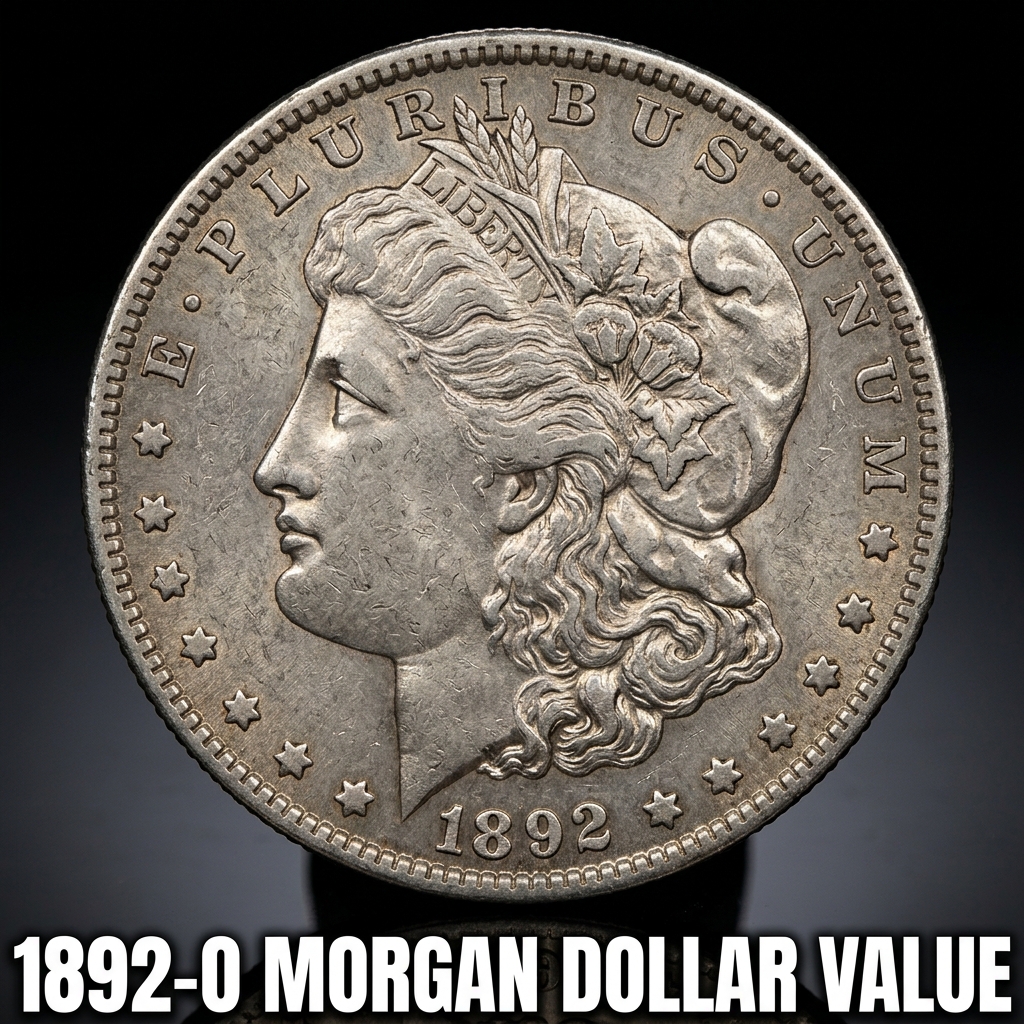
The 1892-O Morgan Dollar is worth anywhere from $30 in heavily worn condition to over $1,500 or more in high mint state grades — and rare varieties can push that number even higher. If you found one of these silver dollars in an old collection, a drawer, or inherited it from a relative, you may be sitting on something genuinely valuable. Let’s walk through everything you need to know.
What Is the 1892-O Morgan Dollar?
The 1892-O Morgan Dollar was struck at the New Orleans Mint in Louisiana — that’s what the “O” mintmark stands for. You’ll find it on the reverse side of the coin, just above the “DO” in “DOLLAR.” The New Orleans Mint was a major production facility during this era, and in 1892 it produced a substantial number of Morgan Dollars.
These coins are made of 90% silver and 10% copper, weighing 26.73 grams. The Morgan Dollar design, created by engraver George T. Morgan, features Lady Liberty on the obverse and a heraldic eagle on the reverse. It’s one of the most beloved classic American coin series.
If you’re not sure what you have or want to identify a coin quickly, a free coin identifier app can help you scan and recognize your coin in seconds — no experience needed.
1892-O Morgan Dollar Value by Grade
The grade — or condition — of your coin has the biggest impact on its value. A coin that looks nearly perfect is worth dramatically more than one that’s been heavily circulated and worn down over 130 years of use.
Here’s a general value breakdown for the 1892-O Morgan Dollar:
| Grade | Description | Estimated Value |
|---|---|---|
| G-4 (Good) | Heavy wear, design visible | $30 – $40 |
| VF-20 (Very Fine) | Moderate wear, details clear | $50 – $75 |
| EF-40 (Extremely Fine) | Light wear on high points | $80 – $120 |
| MS-60 (Mint State) | Uncirculated, some marks | $200 – $400 |
| MS-63 (Choice Uncirculated) | Few blemishes, nice luster | $500 – $800 |
| MS-65 (Gem Uncirculated) | Strong luster, minimal marks | $1,500+ |
For a deeper look at 1892-O Morgan Dollar prices across all mint state grades, you can explore detailed auction records and population data to see exactly where your coin fits.
How to Tell If Your Coin Is Worth More
Beyond basic grade, a few other factors can significantly affect your 1892-O Morgan Dollar’s value. One key thing to look for is eye appeal — does the coin have bright, original luster, or does it look dull and cleaned? Cleaned coins are worth much less to collectors, even if they appear shiny at first glance.
Strike quality also matters. Some New Orleans Mint issues from this era are known for weak strikes, particularly around Liberty’s hair above the ear and the eagle’s breast feathers. A sharply struck example will always command a premium.
Another thing to check: is there any sign of a repunched mintmark (RPM) or other die variety? Some 1892-O coins have known varieties that are tracked and valued separately by specialists.
CoinHix is a great tool to have in your pocket when researching these details. The app gives you real-time price data, grade comparisons, and historical auction results — all in one place. Whether you’re a first-time finder or a seasoned collector, CoinHix takes the guesswork out of coin valuations.
Mintage Numbers and Why They Matter
The New Orleans Mint struck 2,744,000 Morgan Dollars in 1892. While that sounds like a large number, many of these coins were heavily used in commerce and didn’t survive in collectible condition. Higher-grade examples — especially MS-63 and above — are genuinely scarce today.
That scarcity in top grades is exactly why the value jumps so dramatically between a circulated example worth $40 and a gem uncirculated piece worth $1,500 or more. Survival rates in top condition are what drive collector demand.
You can check a full breakdown of the 1892 silver dollar’s value across all mint marks — Philadelphia, New Orleans, San Francisco, and Carson City — to compare how the “O” mint version stacks up against its cousins.
Should You Sell, Hold, or Get It Graded?
If your 1892-O Morgan Dollar looks like it’s in uncirculated or near-uncirculated condition, it’s worth getting it professionally graded by PCGS or NGC. The cost of grading is usually $30–$50, and it can unlock significantly higher resale value if the coin grades out well.
For circulated examples in Good to Extremely Fine grades, the silver melt value alone is around $20–$22 (based on current silver prices), so even a worn coin isn’t worthless. Many dealers and coin shops will buy them readily.
Not sure where to start? Download CoinHix and scan your coin to get an instant value estimate based on current market data. It’s one of the easiest ways to understand what you have before you walk into a coin shop or list it online.
Frequently Asked Questions
Q: How do I know if my Morgan Dollar is from New Orleans?
A: Look on the reverse side of the coin, just above the “DO” in “DOLLAR.” If you see a small “O” mintmark, it was struck at the New Orleans Mint. Coins with no mintmark were made in Philadelphia.
Q: Is a cleaned 1892-O Morgan Dollar still worth anything?
A: Yes, but significantly less than an original coin. Collectors strongly prefer coins with natural, original surfaces. A cleaned coin that would grade MS-63 might only sell for circulated prices. Always avoid cleaning your coins.
Q: What’s the most valuable 1892-O Morgan Dollar ever sold?
A: Top-grade examples in MS-65 and MS-66 have sold at major auctions for several thousand dollars. The finest known specimens are rare, and when they come to market, they attract serious collector interest. Professional grading and certification are essential at those value levels.