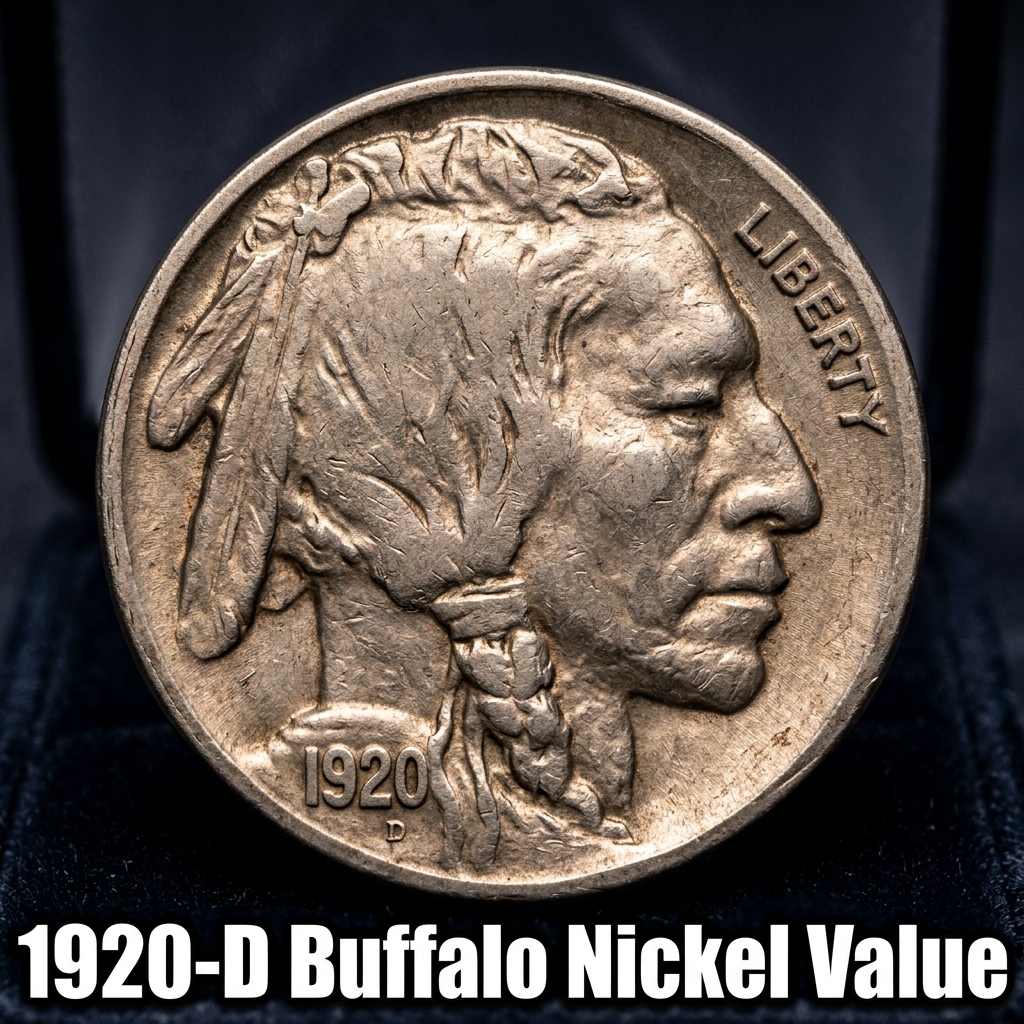
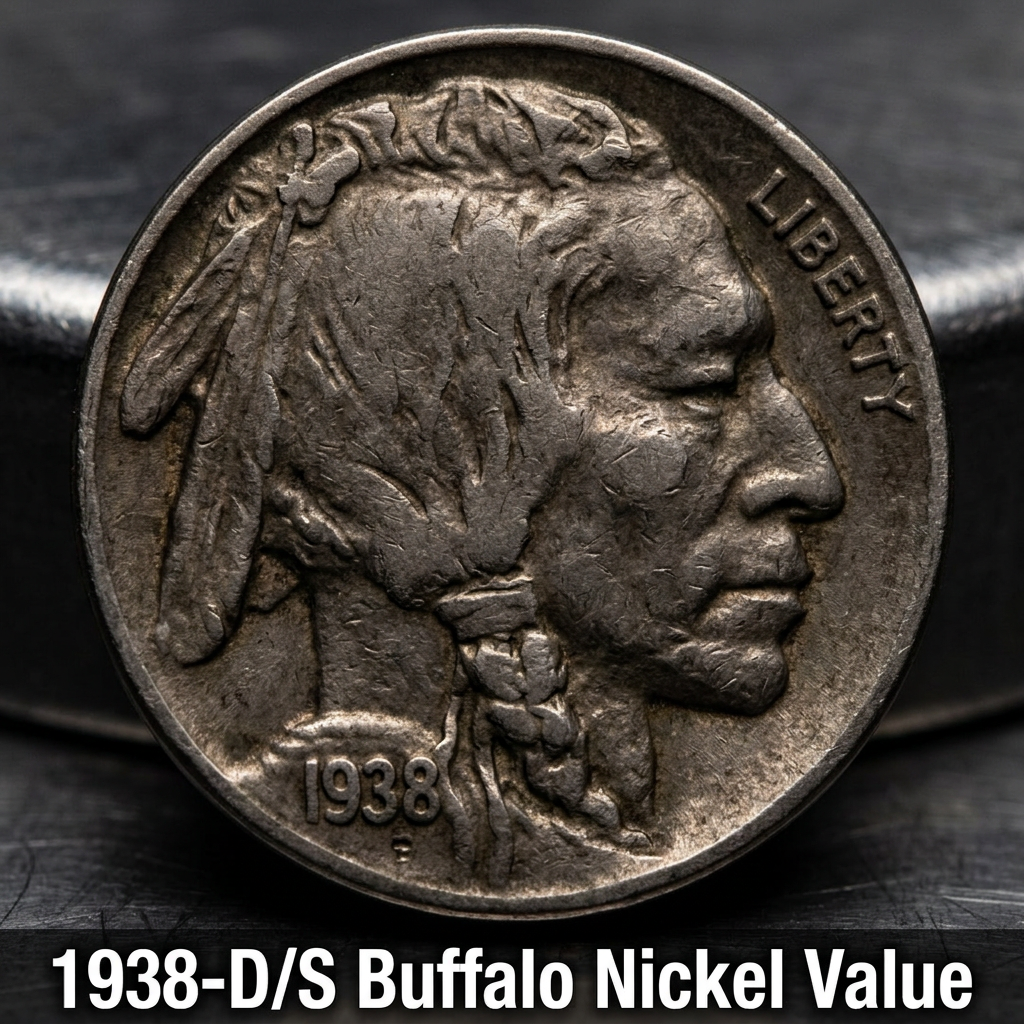
The 1938-D/S Buffalo Nickel is worth anywhere from $15 in heavily circulated condition to well over $500 in mint state — and if you happen to have one in top grades, collectors will pay even more. This little coin has a fascinating backstory that makes it one of the most talked-about varieties in all of American numismatics, and if you found one tucked away in an old jar or coin roll, you might be sitting on a genuinely exciting find.
What Exactly Is the 1938-D/S Buffalo Nickel?
Before we dive into values, it helps to understand why this coin exists in the first place. The 1938-D/S is what’s called an overmintmark variety — meaning the Denver Mint punched a “D” mintmark directly over a previously stamped “S” (San Francisco) mintmark on the working die.
This kind of thing happened because mint workers reused dies and corrected errors by re-punching new mintmarks on top of old ones. Under magnification, you can actually see the ghost of the “S” peeking out beneath the bold “D.” That visible doubling is exactly what collectors love, and it’s what separates this coin from an ordinary 1938-D nickel.
The 1938 Buffalo Nickel was also the last year this iconic design was minted, which adds a layer of sentimental and historical appeal. Collectors who want a complete Buffalo Nickel set must have this coin, and the overmintmark variety adds serious premium value on top of that.
If you’re not sure whether the coin in your hand is a genuine D/S variety, consider using a free coin identifier app to get a quick starting point before taking it to a dealer.
How to Identify the D/S Overmintmark
Finding the overmintmark requires a decent magnifying glass or a jeweler’s loupe — at least 5x to 10x magnification is recommended. Flip the coin to the reverse (the side showing the bison) and look at the mintmark located just below the words “FIVE CENTS” on the right side.
On a genuine 1938-D/S, you’ll notice the “D” looks slightly thicker or has an unusual serif shape at its base. That’s the remnant of the “S” that was punched there first. Some examples show a very prominent “S” tail curving to the left, while others are more subtle.
The coin should also match normal Buffalo Nickel specifications: 21.2mm diameter, 5 grams in weight, and composed of 75% copper and 25% nickel. If the weight or size is off, you may have a replica.
CoinHix is one of the best tools available to cross-reference die variety details and see real auction comparables while you’re doing your research.
1938-D/S Buffalo Nickel Value by Grade
The condition of your coin makes an enormous difference in what it’s worth. Numismatists use the Sheldon scale (1 to 70) to grade coins, and a coin that looks barely worn versus one that looks nearly new can differ in value by hundreds of dollars.
Here’s a general value guide:
| Grade | Description | Estimated Value |
|---|---|---|
| G-4 (Good) | Heavy wear, design visible | $15 – $25 |
| VF-20 (Very Fine) | Moderate wear, clear details | $40 – $70 |
| EF-40 (Extremely Fine) | Light wear on high points | $80 – $130 |
| MS-63 (Mint State) | Uncirculated, some bag marks | $200 – $350 |
| MS-65 (Gem) | Exceptional luster and strike | $500+ |
For the most up-to-date market data, you can check current 1938-D Buffalo Nickel auction prices and MS grade values to see how recent sales are trending.
What Affects the Value Beyond Grade
Grade is the biggest factor, but it’s not the only one. The strength of the overmintmark itself plays a role — a bold, easy-to-see “S” beneath the “D” is more desirable than a faint one. Die variety collectors specifically seek out the most dramatic examples.
Eye appeal matters too. Two coins might share the same grade but one might have richer luster, a more complete strike on the bison’s horn, or more attractive toning. These subtle visual differences can push a coin’s sale price significantly higher at auction.
Storage history also counts. A coin that spent decades in an album often shows less damage than one that was loose in a drawer. CoinHix lets you compare photos of graded examples side by side so you can get a realistic sense of where your coin might land.
For a broader breakdown of how different years and conditions interact in this series, this detailed guide to 1938 Buffalo Nickel values across all grades and varieties is worth bookmarking.
Should You Get It Graded?
If your coin is in uncirculated condition or shows a very bold D/S overmintmark, professional grading from PCGS or NGC is absolutely worth considering. A graded and slabbed coin sells more confidently in the marketplace, and buyers are willing to pay a premium for third-party verification.
Grading fees typically run $30–$50 per coin for standard submissions, so it makes financial sense if your coin might be worth $150 or more. CoinHix can help you track recent certified sales so you can make an informed decision before spending money on grading fees.
If your coin is heavily worn and the overmintmark is barely visible, professional grading probably won’t add enough value to justify the cost. In that case, selling raw to a knowledgeable collector or coin shop is a perfectly reasonable route.
FAQ
Q: How do I know if my 1938-D nickel is the D/S variety?
A: Look at the “D” mintmark on the reverse under magnification. If you can see traces of an “S” beneath the “D” — particularly a curved lower serif or a second loop — you likely have the D/S variety. A loupe of at least 5x is needed to see it clearly.
Q: Are all 1938-D/S Buffalo Nickels valuable?
A: All genuine examples have collectible value above a regular 1938-D, but condition matters a lot. Heavily worn pieces might bring $15–$25, while uncirculated examples can fetch several hundred dollars. The bolder the overmintmark and the better the grade, the higher the value.
Q: Where is the best place to sell a 1938-D/S Buffalo Nickel?
A: Options include online auction platforms like eBay or Heritage Auctions, local coin dealers, and coin shows. For higher-grade examples, a major auction house often gets the best results. Getting at least two or three offers before selling is always a smart move.