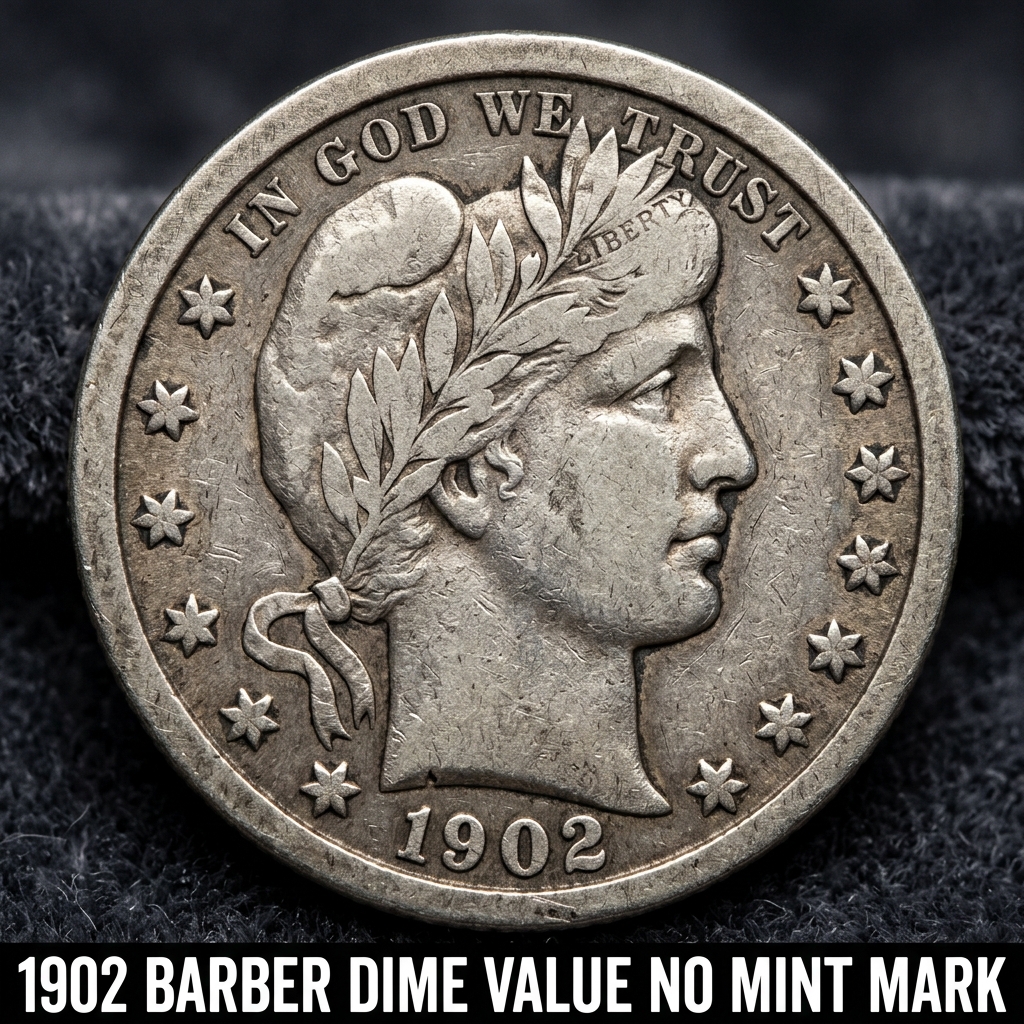
The 1902 Barber Dime is worth anywhere from $3 in heavily worn condition to over $100 or more in high mint state grades. If you found one of these old silver dimes in a coin jar or inherited collection, you might be sitting on more than pocket change — and this guide will help you figure out exactly what you have.
What Is the 1902 Barber Dime?
The 1902 Barber Dime was struck at the Philadelphia Mint, which is why it carries no mint mark. It’s part of the Barber coinage series, designed by Chief Engraver Charles E. Barber, featuring Lady Liberty in a classical Roman helmet on the obverse and an eagle on the reverse.
These dimes are made of 90% silver and 10% copper, giving them real metal value in addition to their numismatic worth. Even a worn example contains about 0.0723 troy ounces of silver, so as silver prices rise, so does the floor value of these coins.
The Philadelphia Mint produced 21,380,777 Barber Dimes in 1902, making them one of the higher-mintage years in the series. That means they’re not rare in circulated grades, but well-preserved examples are still quite desirable to collectors.
If you want a quick way to identify what you’re holding, try using a free coin identifier app to get an instant read on your coin’s details before diving into a deeper valuation.
How Condition Affects the 1902 Barber Dime Value No Mint Mark
Condition — or grade — is everything when it comes to the value of a 1902 Barber Dime with no mint mark. The difference between a coin in Good condition and one in Mint State can be dozens or even hundreds of dollars.
In heavily circulated coins, the hair detail above Liberty’s ear and the legend “LIBERTY” on her headband are usually worn flat. If you can still read even part of “LIBERTY,” your coin is considered Fine or better — and that matters.
Here’s a quick breakdown of typical values by grade:
| Grade | Description | Estimated Value |
|---|---|---|
| Good (G-4) | Heavy wear, outline visible | $3 – $5 |
| Fine (F-12) | Moderate wear, some detail | $8 – $15 |
| Extremely Fine (EF-40) | Light wear on high points | $30 – $50 |
| About Uncirculated (AU-50) | Slight friction, most luster | $60 – $85 |
| Mint State (MS-63) | Uncirculated, minor marks | $100 – $175 |
| Mint State (MS-65) | Gem uncirculated | $300+ |
For a more detailed and up-to-date breakdown, check out this complete guide to 1902 Barber Dime values across all grades and mint marks.
Silver Melt Value and Why It Matters
Even if your 1902 Barber Dime is too worn to excite a coin collector, it still has real silver value. With silver currently trading around $28–$30 per troy ounce, the melt value of a single Barber Dime is typically around $2.00 to $2.20.
That’s your baseline — no Barber Dime in any condition is really worth less than its silver content, unless it’s been cleaned or damaged in a way that destroys collectibility entirely.
Coin dealers will usually pay close to melt for heavily worn pieces, but even a slight bump in grade can push the price significantly above that floor. This is why taking five minutes to assess condition — or using CoinHix to scan and grade your coin — can literally make the difference between a $3 coin and a $15 one.
Tips for Getting the Most Money for Your 1902 Barber Dime
If you think your coin might be in Fine condition or better, don’t just toss it in a junk pile. A few smart steps can help you get full value.
First, never clean your coin. Cleaning removes original luster and surface metal, which destroys collector value instantly. A naturally toned coin is always worth more than a polished one to serious buyers.
Second, store it properly in a coin flip or soft plastic holder while you research it. Fingerprints and scratches lower the grade and the price.
Third, use CoinHix to scan your coin and get an instant estimated value based on current market data. It’s one of the fastest ways to know whether your coin belongs in a dealer case or a silver melt pile — and it fits right in your pocket.
Finally, consider getting high-grade examples professionally certified by PCGS or NGC. A graded MS-63 or better coin will sell for significantly more at auction than a raw coin of the same quality.
FAQ About the 1902 Barber Dime No Mint Mark Value
Q: How do I know if my 1902 Barber Dime has no mint mark?
A: Look at the reverse of the coin, just above the “E” in “ONE DIME.” If there’s no letter there, it was minted in Philadelphia and carries no mint mark. Philadelphia coins from this era never used a mint mark, so a blank space confirms it.
Q: Is the 1902 Barber Dime with no mint mark rare?
A: Not in circulated grades — over 21 million were made in Philadelphia alone. However, finding one in truly uncirculated condition (MS-63 or higher) is uncommon, and gem examples in MS-65 or above are genuinely scarce and can sell for $300 or more.
Q: Can I use an app to identify and value my 1902 Barber Dime?
A: Absolutely. CoinHix is a popular option that uses image recognition to identify coins and provide current market values. It’s especially helpful if you’ve found a small collection and want quick answers without driving to a coin shop. Just snap a clear photo in good lighting and the app does the rest.