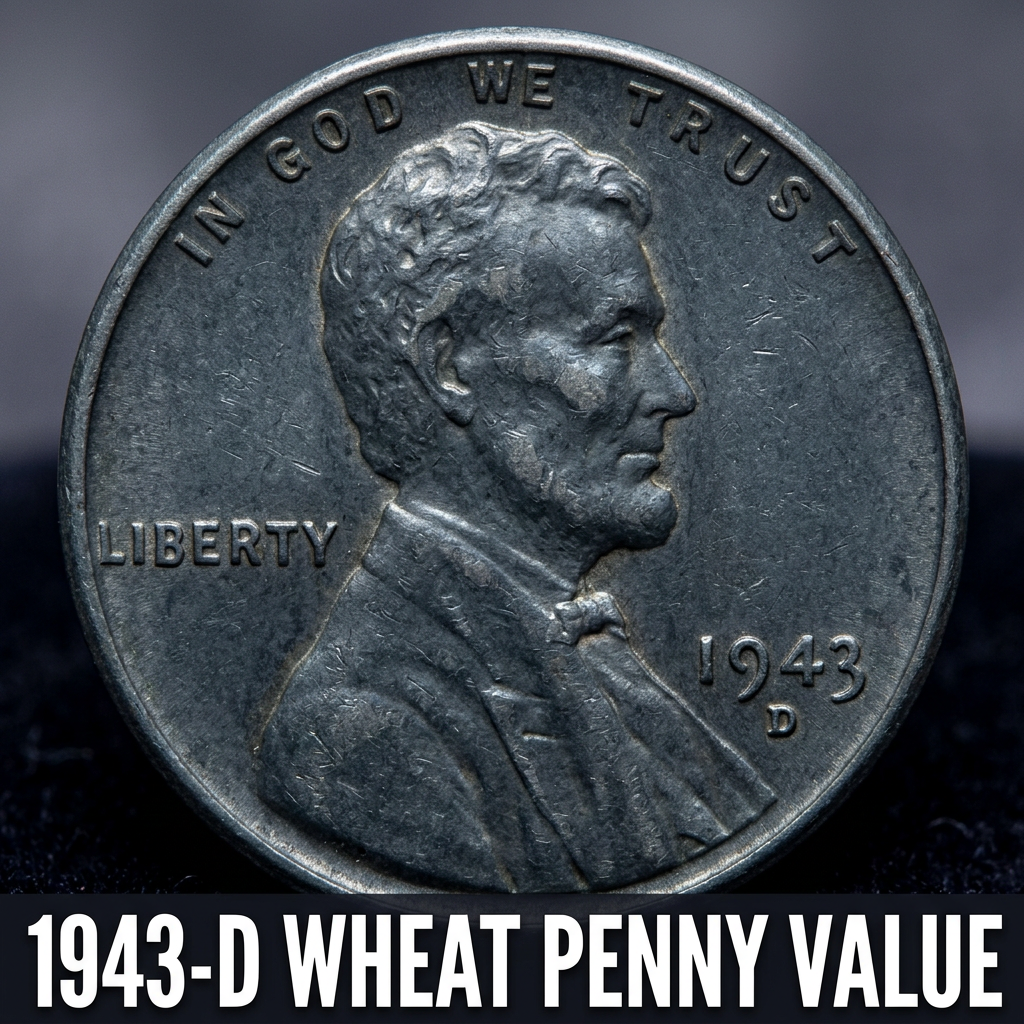
The 1943-D Wheat Penny is worth anywhere from $0.15 in heavily worn condition to over $10 in uncirculated grades, with top mint state examples occasionally fetching $100 or more at auction. If you just pulled one of these wartime steel cents out of a jar or old coin collection, you’re in the right place to find out exactly what it’s worth.
What Makes the 1943-D Wheat Penny Special
The 1943-D Wheat Penny is one of the most fascinating coins in American history. During World War II, copper was classified as a critical war material needed for ammunition casings and military equipment. The U.S. Mint made a dramatic switch — striking pennies out of zinc-coated steel instead of the traditional copper-tin alloy.
The “D” mintmark stands for the Denver Mint, one of three facilities that produced steel cents that year alongside Philadelphia and San Francisco. Denver struck approximately 217,660,000 steel pennies in 1943, making it a relatively available coin — but condition still plays a massive role in determining its value.
If you’re not sure whether your coin is a 1943-D or something else entirely, using a free coin identifier app can help you confirm the mintmark and date before you get too excited about its potential worth.
1943-D Wheat Penny Value by Grade
Coin values vary enormously based on condition, also known as “grade” in the coin collecting world. A heavily circulated 1943-D Wheat Penny that’s been through decades of pocket wear will look dull and show flat details. An uncirculated example, on the other hand, retains its original luster and sharp design.
Here’s a quick value breakdown:
| Grade | Condition | Estimated Value |
|---|---|---|
| Good (G-4) | Heavily worn, flat details | $0.15 – $0.25 |
| Fine (F-12) | Moderate wear, some detail visible | $0.50 – $1.00 |
| Extremely Fine (EF-40) | Light wear on high points | $2.00 – $4.00 |
| About Uncirculated (AU-50) | Slight friction, mostly sharp | $5.00 – $8.00 |
| Mint State (MS-63) | No wear, minor marks | $10 – $25 |
| Gem Mint State (MS-65+) | Exceptional luster and strike | $50 – $100+ |
For the most up-to-date market data, you can browse current 1943-D Wheat Penny prices across all mint state grades to see what collectors are actually paying right now.
Watch Out for Rust and Cleaning
One thing that makes the 1943 steel penny tricky is its material. Because these coins are made of steel, they rust — and rusty coins are worth significantly less than clean, original examples. A coin with active rust, pitting, or heavy corrosion can drop to near face value regardless of its date or mintmark.
Cleaning is another major issue. Many people find old coins and instinctively clean them with household products. Don’t do it. Cleaned coins lose their natural surface, and experienced collectors and dealers can spot cleaning instantly. A cleaned 1943-D Wheat Penny that might have graded MS-63 could lose 50–80% of its potential value once it’s been polished or scrubbed.
Store your steel cents in a dry environment, ideally in a coin flip or airtight holder, to prevent further rust from forming.
The Rare 1943-D Bronze Error Penny
Now here’s where things get really exciting. While the standard 1943-D steel penny is worth just a few dollars in average condition, there exists an extraordinarily rare error version — the 1943-D bronze wheat penny. These coins were accidentally struck on leftover copper-alloy planchets from 1942.
Only a tiny number of 1943-D bronze error pennies are known to exist, and they are worth a staggering amount of money. Authenticated examples have sold at auction for anywhere from $200,000 to over $1,000,000. Yes, you read that right.
The easiest way to test whether your 1943 penny might be bronze is with a magnet. Steel coins will stick to a magnet. A bronze coin will not. If your 1943-D penny doesn’t stick, take it to a professional numismatist immediately for authentication — do not try to sell it without having it professionally graded first.
For a deeper look at what makes the 1943 steel penny series so unique and valuable, check out this detailed overview of 1943 steel penny values and varieties that covers all three mints and key collector insights.
How to Get the Best Price for Your 1943-D Wheat Penny
If you’ve determined your coin is in decent shape and want to sell it, you have several options. Online auction platforms like eBay are popular for selling common dates, while coin shows and local dealers are good for quick offers. For higher-grade examples, consider submitting to a professional grading service like PCGS or NGC — a certified grade adds credibility and often increases buyer confidence.
CoinHix is a great tool for tracking real-time market prices before you sell. Instead of guessing what your coin might fetch, CoinHix lets you see what similar coins have actually sold for, giving you real negotiating power at the dealer’s table.
If you’re building a collection and want to identify other coins in your stash, CoinHix also offers easy-to-navigate coin price guides that cover everything from Lincoln cents to Morgan dollars.
—
FAQ
Q: Is a 1943-D Wheat Penny made of silver?
A: No. The 1943-D Wheat Penny is made of zinc-coated steel, not silver. It has a silvery appearance, which is why many people mistake it for a silver coin. True silver pennies were never officially minted in U.S. history. The wartime composition change was strictly from copper to steel.
Q: How do I know if my 1943 penny is the rare bronze version?
A: The quickest test is the magnet test. Hold a magnet near your coin — if it sticks, it’s the common steel version. If it does not stick at all, you may have a rare bronze error. Take it to a certified coin dealer or submit it to PCGS or NGC for professional authentication. Do not clean it or attempt to alter it in any way.
Q: Where is the “D” mintmark on a 1943-D Wheat Penny?
A: The “D” mintmark is located on the obverse (front) of the coin, just below the date on the right side. It’s a small letter that indicates the coin was struck at the Denver Mint. Always check for the mintmark before assessing value, as the mint of origin can affect collector demand.