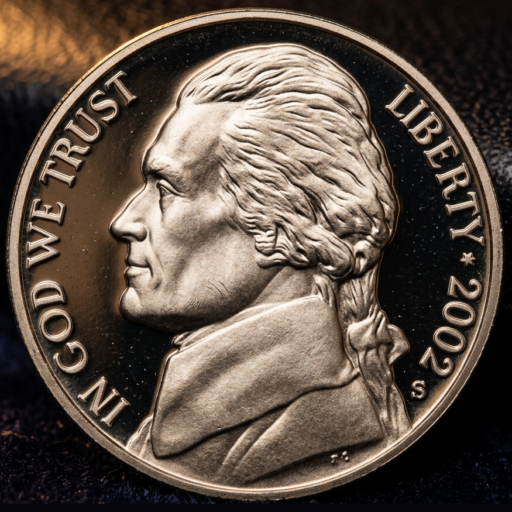
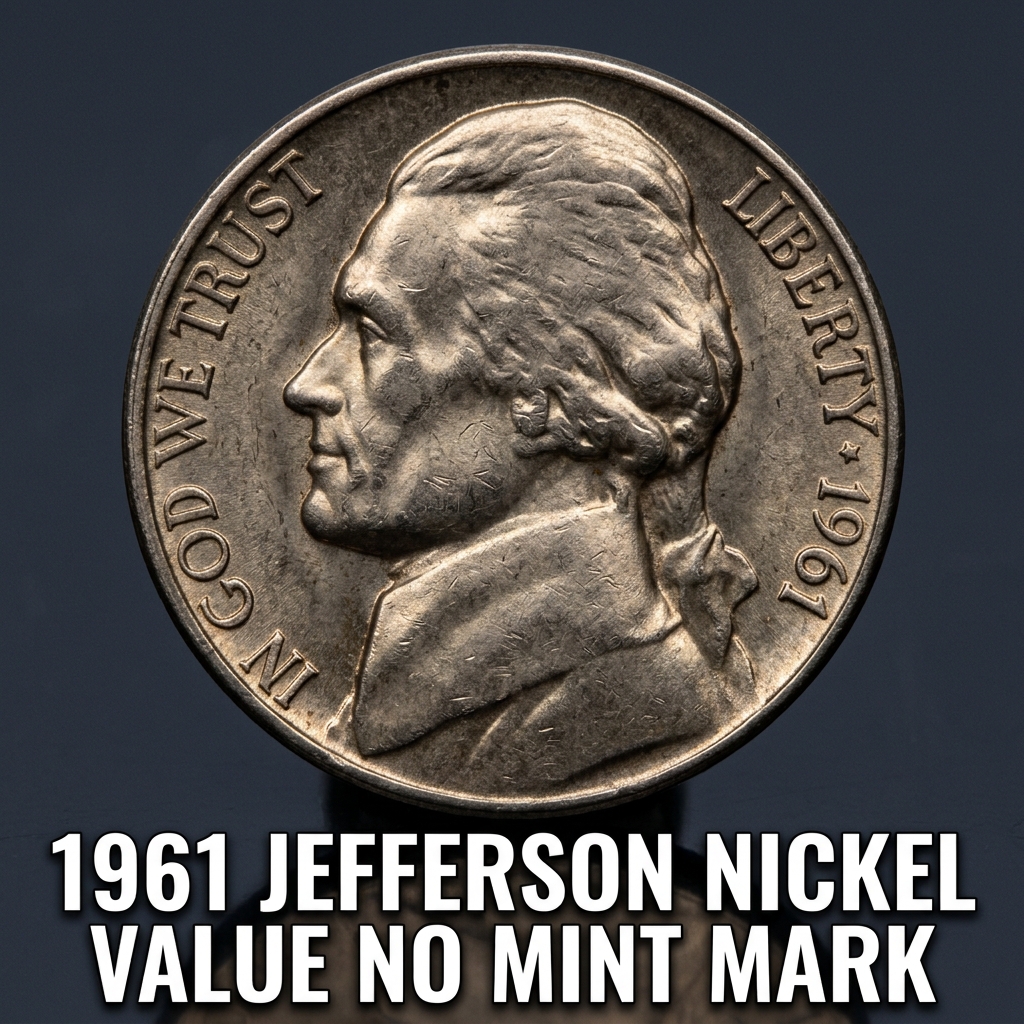
The 1961 Jefferson Nickel with no mint mark is worth anywhere from face value in heavily worn condition to over $100 or more in pristine uncirculated grades. Most people find these in old collections or loose change jars, and while they’re common coins, a few key details can make them surprisingly valuable.
What Does “No Mint Mark” Mean on a 1961 Nickel?
When you flip over your 1961 Jefferson Nickel and don’t see any small letter stamped near Monticello on the reverse side, that means it was minted in Philadelphia. Back in 1961, the Philadelphia Mint didn’t add a mint mark to its coins — that was just the standard practice of the era.
The Philadelphia Mint struck over 229 million Jefferson Nickels in 1961, making this a high-mintage coin. High mintage generally means more coins survived, which keeps values modest for average circulated examples. However, coins in exceptional condition can still command real premiums.
If you’re not sure whether your coin has a mint mark or just can’t find it, a free coin identifier app can help you quickly figure out what you’re holding. These tools are especially handy when you’re going through a box of old coins and need fast answers.
1961 Jefferson Nickel Value by Grade
The condition of your coin — what collectors call the “grade” — makes the biggest difference in value. A coin fresh out of circulation with heavy wear might only be worth a few cents over face value, while a gem uncirculated example can be worth many times more.
Here’s a general breakdown of what the 1961 Jefferson Nickel No Mint Mark is worth across different grades:
| Grade | Description | Estimated Value |
|---|---|---|
| Good (G-4) | Heavy wear, major design visible | $0.10 – $0.25 |
| Fine (F-12) | Moderate wear, some details remain | $0.25 – $0.50 |
| Extremely Fine (EF-40) | Light wear on high points only | $0.50 – $1.00 |
| MS-63 (Uncirculated) | No wear, some contact marks | $3 – $8 |
| MS-65 (Gem Uncirculated) | Strong luster, few blemishes | $15 – $35 |
| MS-67 or Higher | Near perfect, top registry coins | $100 – $500+ |
For the most current auction results and certified coin prices, you can check out live 1961 Jefferson Nickel MS grade price data to see what these coins are actually selling for right now.
Full Steps — The Detail That Can Triple Your Coin’s Value
Here’s something that catches a lot of people off guard: on Jefferson Nickels, collectors pay special attention to a feature called “Full Steps” on the Monticello building shown on the reverse. If the steps of Monticello are crisp, sharp, and fully defined with no breaks or flat spots, the coin is designated FS (Full Steps).
A 1961 Jefferson Nickel with Full Steps in MS-65 can be worth significantly more than a regular MS-65 example. We’re talking about potentially 3 to 5 times the price difference in some cases. Full Steps coins are harder to find because the step detail was often poorly struck or worn down even on coins that technically never circulated.
To check whether your coin might qualify as Full Steps, use a magnifying glass and look closely at the bottom portion of Monticello. You should see five or six distinct, unbroken horizontal lines. If they’re there and clear, you might want to get that coin professionally graded.
CoinHix is a great tool to use when you’re trying to research these kinds of details. The app breaks down coin values by grade and specialty designation, so you’re not guessing.
Proof Versions and Special Strikes
The 1961 Philadelphia Mint also produced Proof versions of the Jefferson Nickel as part of the annual Proof set sold to collectors. These coins were struck with specially polished dies on polished planchets, giving them a mirror-like finish and sharp detail.
Proof 1961 Jefferson Nickels are worth more than regular business strike coins in most cases. A PR-65 (Proof 65) example typically sells in the $5 to $15 range, while a deep cameo PR-67 or higher can fetch $30 to $80 or more. These are generally found still sealed inside the original Proof set packaging.
If you’re trying to identify whether your coin is a Proof or a business strike, look for the highly reflective fields (the flat background areas) and frosted devices (the raised design elements). That contrast is a dead giveaway.
For a full breakdown of 1961 nickel values across all grades and mint marks, it’s worth checking a dedicated coin value reference to make sure you’re not leaving money on the table.
How to Get the Best Price If You Want to Sell
If you think you have a higher-grade 1961 Jefferson Nickel — especially one with Full Steps or in MS-66 or better — consider sending it to PCGS or NGC for professional grading and authentication. A certified grade gives buyers confidence and often results in significantly higher sale prices at auction.
For coins in average circulated condition, you’re unlikely to find a dealer interested at a premium. Your best bet is to sell in bulk lots online or simply keep them as part of a collection.
CoinHix makes it easy to track market prices and see recent sales data, which helps you pick the right time to sell and set realistic expectations. And if you’re sorting through a large collection and want to identify each coin quickly, CoinHix has an image recognition feature that can speed up the whole process.
—
Frequently Asked Questions
Q: Is a 1961 Jefferson Nickel with no mint mark rare?
A: No, the 1961 Philadelphia Mint Nickel is a common coin with over 229 million produced. Most examples are only worth face value or a small premium. The exception is high-grade uncirculated coins, especially those with Full Steps, which can be genuinely scarce and valuable.
Q: How do I know if my 1961 nickel is in good enough condition to be worth selling?
A: Look for coins with no signs of wear on Jefferson’s cheekbone and hair detail on the obverse, and sharp, unbroken steps on Monticello on the reverse. If the coin has a natural shine with no cleaning or scratches, it’s worth getting a second opinion from a dealer or grading service.
Q: What makes a 1961 Jefferson Nickel worth $100 or more?
A: Coins that grade MS-67 or higher by PCGS or NGC standards are exceptionally rare and can sell for $100 to $500 or even more at auction. The combination of a nearly perfect strike, full original luster, and minimal marks is what pushes these common-date coins into serious collector territory.