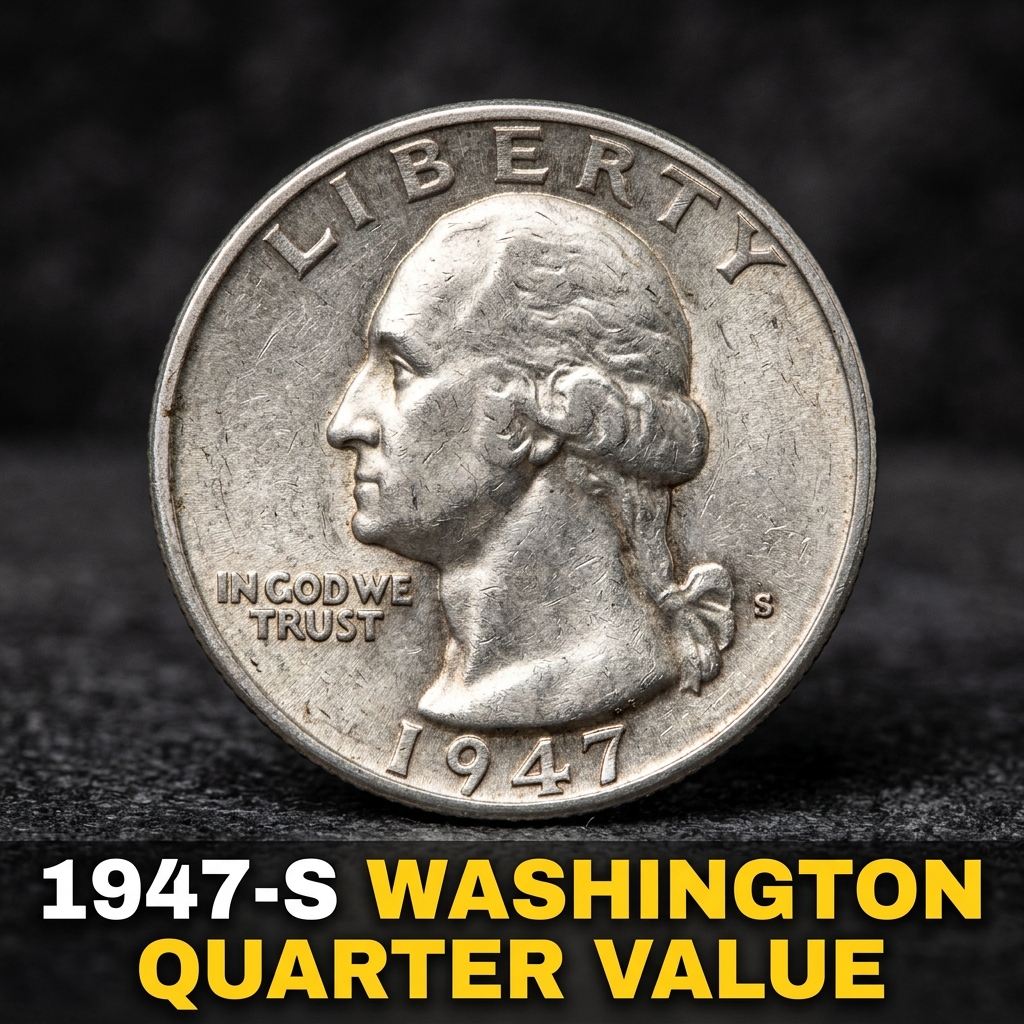
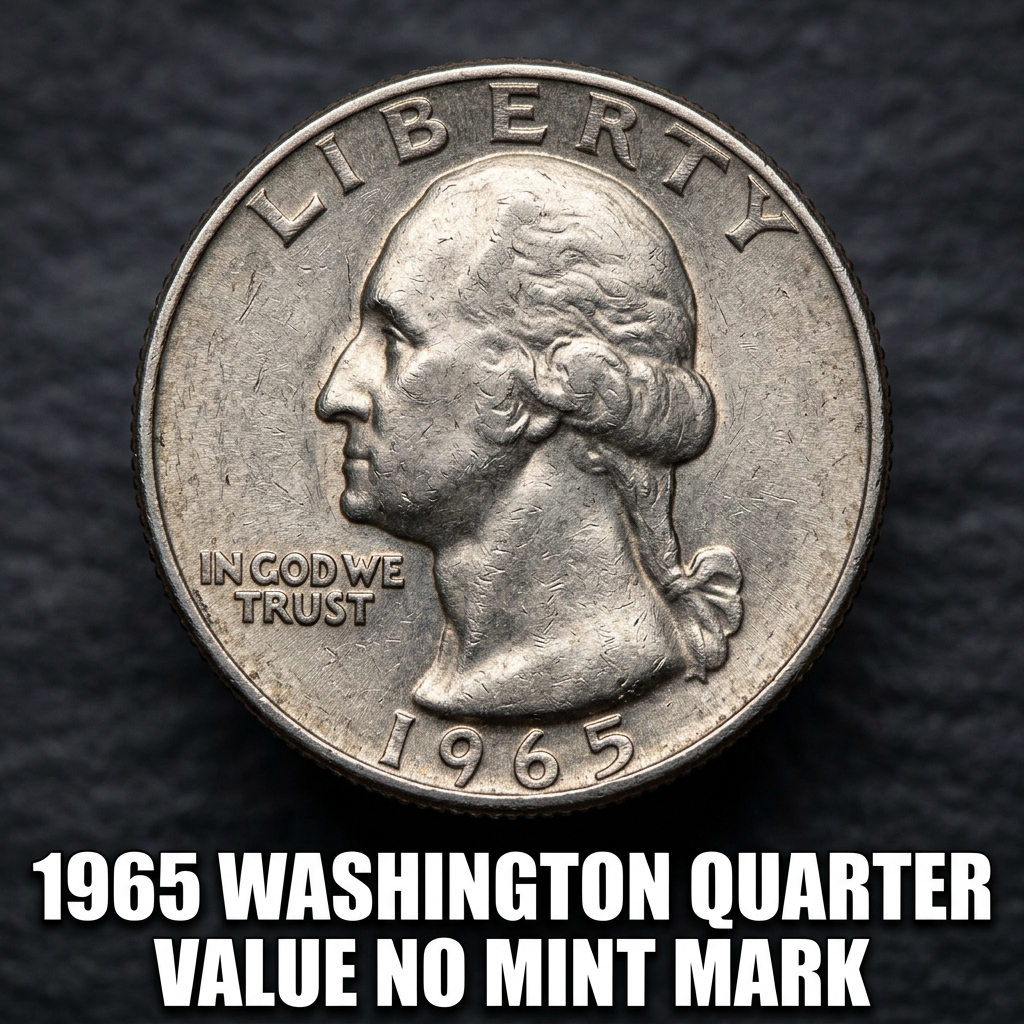
The 1965 Washington Quarter is worth anywhere from 25 cents in heavily worn condition to over $100 or more in pristine, uncirculated grades — and if you happen to have a rare silver error coin, it could be worth thousands. If you recently found one of these quarters in an old jar or your grandma’s coin collection, you’re in the right place to find out exactly what you’ve got.
Why the 1965 Quarter Has No Mint Mark
One of the first things people notice about the 1965 Washington Quarter is the missing mint mark — and that’s not a mistake or a sign of rarity. It was actually done on purpose.
In 1965, the U.S. Mint made a major change: they switched from 90% silver quarters to a copper-nickel clad composition. To mark this transition and discourage collectors from hoarding coins by mint location, the U.S. Mint deliberately left off mint marks on all coins from 1965 through 1967. So every 1965 quarter you’ll ever find — whether it came from Philadelphia, Denver, or San Francisco — has no mint mark. That’s completely normal.
If you want to quickly identify your coin’s details without doing all the research yourself, a free coin identifier app can scan your coin and give you instant information on its mint year, condition, and estimated value. Tools like CoinHix make this process incredibly simple for everyday collectors and beginners.
What Is the 1965 Washington Quarter Worth No Mint Mark
For most people, the honest answer is: not a lot — if it’s been circulated. The 1965 quarter was made in massive numbers (over 1.8 billion coins), so circulated examples are extremely common and generally worth only face value or a slight premium.
However, uncirculated coins — those that never passed through everyday use — can be worth real money. Condition is everything in coin collecting, and a coin graded MS-65 or higher can fetch $15 to $100 or more at auction.
Check out this detailed breakdown of 1965 quarter values by grade and condition to see exactly where your coin might fall on the spectrum.
Here’s a quick value table based on coin grade:
| Grade | Condition Description | Estimated Value |
|---|---|---|
| Good (G-4) | Heavy wear, details visible | Face value (~$0.25) |
| Fine (F-12) | Moderate wear, clear design | $0.50 – $1 |
| Extremely Fine (EF-40) | Light wear on high points | $1 – $3 |
| MS-63 (Uncirculated) | No wear, some contact marks | $5 – $15 |
| MS-65 (Gem Uncirculated) | Sharp, lustrous, minimal marks | $20 – $60 |
| MS-67 or Higher | Near-perfect condition | $100+ |
The 1965 Silver Quarter Error — A Coin Worth Thousands
Here’s where things get really exciting. In 1965, a small number of quarters were accidentally struck on leftover 90% silver planchets (blanks) instead of the new copper-nickel clad ones. These are known as the 1965 Silver Quarter errors, and they are extraordinarily rare.
A genuine 1965 silver quarter error weighs 6.25 grams instead of the standard 5.67 grams for clad quarters. If you have a scale at home, that’s the first test to try. Confirmed silver error quarters have sold at major auctions for $7,000 to over $17,000 — making this one of the most exciting finds a casual collector can stumble upon.
You can explore live auction prices and historical sales data for the 1965 Washington Quarter in MS grades to see what collectors are actually paying right now.
How to Check Your 1965 Quarter at Home
Before spending money on professional grading, there are a few simple steps you can do right at home:
Step 1 — Weigh it. A clad quarter weighs 5.67g. If yours weighs 6.25g, you may have a silver error worth investigating further.
Step 2 — Check the edge. A copper-nickel clad quarter shows a copper stripe on the edge. A silver error coin will have a solid silver-colored edge all the way around.
Step 3 — Look at the condition. Check for scratches, wear, and luster under a magnifying glass. The fewer marks and the more shine, the higher the grade — and the more it’s worth.
Step 4 — Use an app. CoinHix is one of the best tools available to everyday coin finders. Just snap a photo of your 1965 Washington Quarter, and the app will identify it, estimate its grade, and show you current market values instantly. It takes the guesswork out of coin collecting entirely.
Is It Worth Getting Your 1965 Quarter Professionally Graded
Professional grading by services like PCGS or NGC costs money — typically $20 to $50 per coin at entry-level tiers. For a regular circulated 1965 quarter worth face value, that doesn’t make financial sense.
However, if your coin looks sharply uncirculated with excellent luster and no visible contact marks, grading could unlock significantly higher collector value. And if you suspect you have a silver error, professional grading and authentication is absolutely worth the investment before selling.
Not sure where your coin falls? CoinHix can give you a ballpark estimate before you commit to any professional service, saving you both time and money.
—
FAQ
Q: Why does my 1965 quarter have no mint mark — is it rare?
A: No, the missing mint mark is completely intentional. The U.S. Mint removed mint marks from all coins produced between 1965 and 1967 as part of the transition from silver to clad coinage. It’s not a sign of rarity or error.
Q: How do I know if I have a 1965 silver quarter error?
A: The easiest test is to weigh the coin. A genuine 1965 silver error quarter weighs approximately 6.25 grams, compared to 5.67 grams for a standard clad quarter. You should also look at the edge — a silver coin will have a solid uniform color, while a clad coin shows a reddish copper stripe. If both tests point to silver, have it authenticated by PCGS or NGC.
Q: What is the most valuable 1965 Washington Quarter ever sold?
A: The most valuable examples are the confirmed 1965 silver error quarters, which have sold at auction for well over $10,000. Among regular clad strikes, high-grade MS-67 or MS-68 specimens have sold for several hundred dollars, depending on the eye appeal and certification.