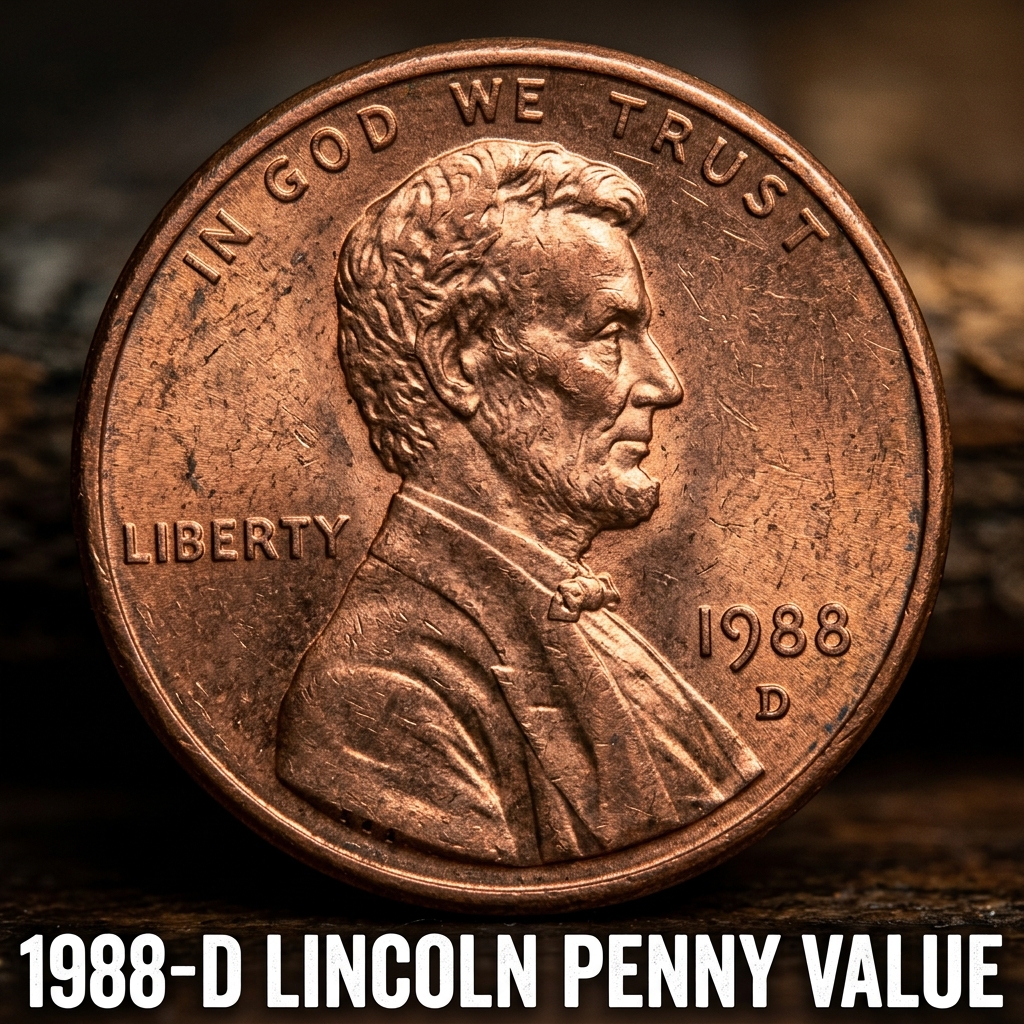
The 1988-D Lincoln Penny is worth anywhere from a few cents in circulated condition to around $1–$5 in average uncirculated grades, with top-quality specimens grading MS-67 or higher fetching $50 or more at auction. If you found one in your change jar, here’s everything you need to know.
—
What Is the 1988-D Lincoln Penny?
The 1988-D Lincoln penny was struck at the Denver Mint, indicated by the small “D” mintmark you’ll find on the obverse (front) just below the date. In 1988, the Denver Mint produced over 5.2 billion Lincoln cents — yes, billion with a “B” — making this one of the most commonly produced coins in American history.
Because so many were made, the vast majority of circulated 1988-D pennies you find in pocket change are worth exactly face value: one cent. But that doesn’t mean every single one is worthless. Condition is everything in coin collecting, and a perfectly preserved example can still surprise you.
If you’re not sure what you’re looking at, a free coin identifier app can help you quickly scan your coin, check its grade estimate, and get a real-world value — no expertise needed.
—
How Much Is the 1988-D Penny Worth by Grade?
Coin value is almost always tied to condition, which collectors measure using a scale called the Sheldon scale (1–70). Here’s a simple breakdown of typical 1988-D Lincoln penny values across different grades:
| Grade | Condition | Estimated Value |
|---|---|---|
| Good (G-4) | Heavy wear, details visible | $0.01 – $0.05 |
| Fine (F-12) | Moderate wear, clear lettering | $0.05 – $0.10 |
| Extremely Fine (EF-40) | Light wear on high points | $0.10 – $0.25 |
| Uncirculated (MS-63) | No wear, some bag marks | $0.50 – $1.00 |
| Choice Uncirculated (MS-65) | Sharp luster, minor contact marks | $1.00 – $5.00 |
| Gem (MS-67+) | Near-perfect, full red luster | $50.00+ |
For a deeper look at certified auction results and current dealer pricing, you can explore detailed 1988-D Lincoln penny price data across all mint state grades to see what real buyers are actually paying.
—
The Color Designation Matters More Than You Think
One thing many beginners don’t realize is that Lincoln Memorial cents — including the 1988-D — are graded not just by wear, but also by color. PCGS and NGC, the two major grading services, use three color designations:
Red (RD): The coin retains 95% or more of its original mint red color. These are the most valuable.
Red-Brown (RB): The coin shows a mix of original red and brown toning. Slightly less valuable than full red.
Brown (BN): The coin has turned mostly brown from oxidation. Common and typically worth the least of the three.
A 1988-D Lincoln penny graded MS-65 Red can be worth significantly more than an MS-65 Brown example. When you’re shopping or selling, always check that color label — it makes a real difference in price.
—
Are There Any Valuable 1988-D Penny Errors?
Now here’s where things get interesting. Even though the 1988-D penny is super common in regular circulation grades, error coins can be worth real money. Collectors actively search for:
Doubled Die Obverse (DDO): Look for doubling in Lincoln’s eye, the date, or the lettering “IN GOD WE TRUST.” A strong example can be worth $25–$100 or more.
Off-Center Strikes: If Lincoln’s portrait appears shifted and a blank crescent of metal shows on one side, the coin missed the die center. Dramatic off-centers (30%+) can bring $20–$75.
Die Cap Errors and Lamination Flaws: Rarer and harder to identify without experience, but potentially worth hundreds.
To identify possible errors at home, CoinHix offers an easy-to-use scanning feature that flags potential error characteristics based on your coin’s photos — no magnifying glass required.
You can also check out a comprehensive 1988 penny value guide covering both Philadelphia and Denver mint issues that breaks down specific errors and what collectors are paying for them right now.
—
Should You Hold On to Your 1988-D Penny?
Honestly? For most worn examples, the 1988-D penny is a face-value coin. But if you have a roll or a bag of unsearched cents from the late 1980s, it’s worth taking a few minutes to sort through them. You might find high-grade red examples or — if you’re lucky — a doubled die or off-center error that’s genuinely valuable.
CoinHix makes this process fast and fun. Just snap a photo of your coin, and the app identifies it, estimates the grade, and pulls real-time value data — all for free. Thousands of everyday Americans have already used CoinHix to discover that their “junk” coins were worth far more than expected.
—
FAQ
Q: How do I know if my 1988-D penny is worth keeping?
A: Check for original red luster (no brown toning), sharp details with no wear, and any signs of doubling or off-center striking. Coins that are bright, shiny, and look like they just came from the mint are worth the most. An app like CoinHix can help you assess it quickly.
Q: What does the “D” mintmark on my 1988 penny mean?
A: The “D” stands for Denver, meaning your coin was made at the U.S. Mint’s Denver facility. In 1988, there were also pennies made in Philadelphia (no mintmark) and proof coins from San Francisco (S mintmark).
Q: Is a 1988-D penny made of pure copper?
A: No. By 1988, U.S. pennies had already switched to a zinc core with a thin copper plating — a change that happened in 1982. So your 1988-D penny is 97.5% zinc and only 2.5% copper by weight, which is also why many older examples show spotting or corrosion when the copper coating breaks down.