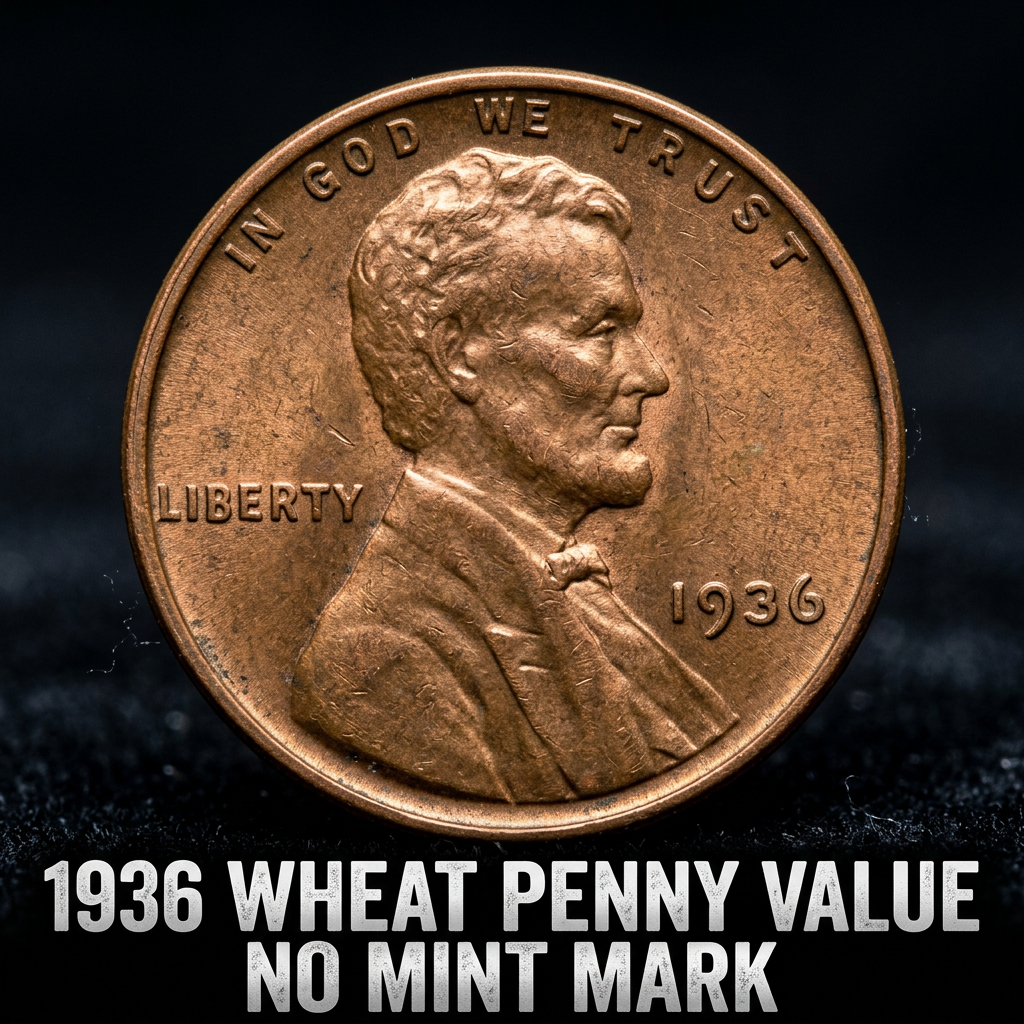
The 1936 Wheat Penny with no mint mark is worth anywhere from $0.10 in heavily worn condition to over $10 in well-preserved circulated grades — and in top mint state condition, certified examples can fetch $50 or more. If you just found one of these little copper coins in an old jar or drawer, you’re in the right place to learn exactly what you’ve got.
What Is the 1936 No Mint Mark Wheat Penny?
The 1936 Lincoln Wheat Penny without a mint mark was struck at the Philadelphia Mint, which traditionally did not add a mint mark to its coins. That year, Philadelphia produced over 309 million of these one-cent pieces, making them fairly common — but don’t let that discourage you.
Common doesn’t always mean worthless. Condition is everything in coin collecting, and even a “common” coin in exceptional shape can surprise you with its value.
If you’re not sure how to evaluate your coin’s condition or identify it properly, a free coin identifier app can be a helpful first step before you visit a dealer or look up auction records.
How Much Is the 1936 Wheat Penny Worth Today?
Value depends heavily on the coin’s grade — the better it looks, the more it’s worth. Here’s a simple breakdown of typical 1936 no mint mark penny values:
| Grade / Condition | Estimated Value |
|---|---|
| Poor / Fair (heavily worn) | $0.10 – $0.25 |
| Good to Fine (circulated) | $0.25 – $1.00 |
| Very Fine to Extremely Fine | $1.00 – $5.00 |
| About Uncirculated (AU) | $5.00 – $12.00 |
| Mint State 63 (MS63) | $15.00 – $30.00 |
| Mint State 65+ (MS65 Red) | $50.00 – $150.00+ |
For the most up-to-date auction results and price trends, you can check out the 1936 Wheat Penny MS-RD price data on CoinHix — it pulls real market numbers so you’re not guessing.
What Makes Some 1936 Pennies Worth More?
Color matters a lot for Lincoln cents in mint state. Coin graders classify uncirculated copper coins into three color designations:
Red (RD) — The coin still has most of its original bright copper luster. These are the most valuable.
Red-Brown (RB) — Some original red remains, mixed with brown toning. Worth less than full red.
Brown (BN) — The coin has fully toned to brown. Still collectible, but the lowest value of the three.
Beyond color, look for sharp details on Lincoln’s portrait, clear wheat stalks on the reverse, and no signs of cleaning or damage. Cleaned coins — even ones that look shiny — are actually worth less to serious collectors because the original surface has been disturbed.
CoinHix makes it easy to compare values across all three color designations in one place, so you can see exactly how color affects your coin’s market price.
How to Check the 1936 Penny Value on Your Own
You don’t need to be an expert to get a solid idea of what your 1936 no mint mark wheat penny is worth. Start by examining the coin under good light. Look for any remaining detail in Lincoln’s hair and beard — if those fine lines are still visible, you probably have a coin in Very Fine condition or better.
Next, check for the mint mark (or absence of one) just below the date on the obverse. No letter means Philadelphia — that’s your 1936 no mint mark penny.
For a detailed breakdown of grades and current retail values, the 1936 penny value guide at CoinValueApp is a reliable resource worth bookmarking.
You can also use CoinHix to scan recent sales and see what collectors are actually paying right now — not just listed prices, but real transaction data.
Should You Keep or Sell Your 1936 Wheat Penny?
Most 1936 no mint mark wheat pennies you find in circulation are worth a few cents to maybe a dollar — they were made by the hundreds of millions. But if yours shows minimal wear, bright color, and sharp details, it could genuinely be worth holding onto or getting professionally graded.
A PCGS or NGC-certified MS65 Red example has sold for well over $100 at auction. That’s not a retirement fund, but it’s pretty exciting for a single penny that might have been sitting in a coffee can for decades.
Even if your coin turns out to be a common circulated example, wheat pennies are a wonderful piece of American history. They were minted during the Great Depression era, and every single one passed through real American hands during one of the country’s toughest chapters.
—
FAQ
Q: How do I know if my 1936 penny has no mint mark?
A: Look just below the date on the front of the coin. If you see no letter there, it was minted in Philadelphia. A “D” means Denver, and an “S” means San Francisco. No letter at all means no mint mark — you’ve got a Philadelphia coin.
Q: Is a 1936 wheat penny with no mint mark rare?
A: Not particularly. Philadelphia minted over 309 million of them in 1936, so most examples are common. However, coins in exceptional mint state condition with full red color are genuinely scarce and can be worth significant money.
Q: What’s the best way to find out exactly what my 1936 penny is worth?
A: Start by checking recent sales on platforms like eBay (sold listings only), or use a tool like CoinHix to pull real market pricing. For a quick identification and grade estimate on the go, a free coin identifier app can point you in the right direction before you reach out to a professional dealer.