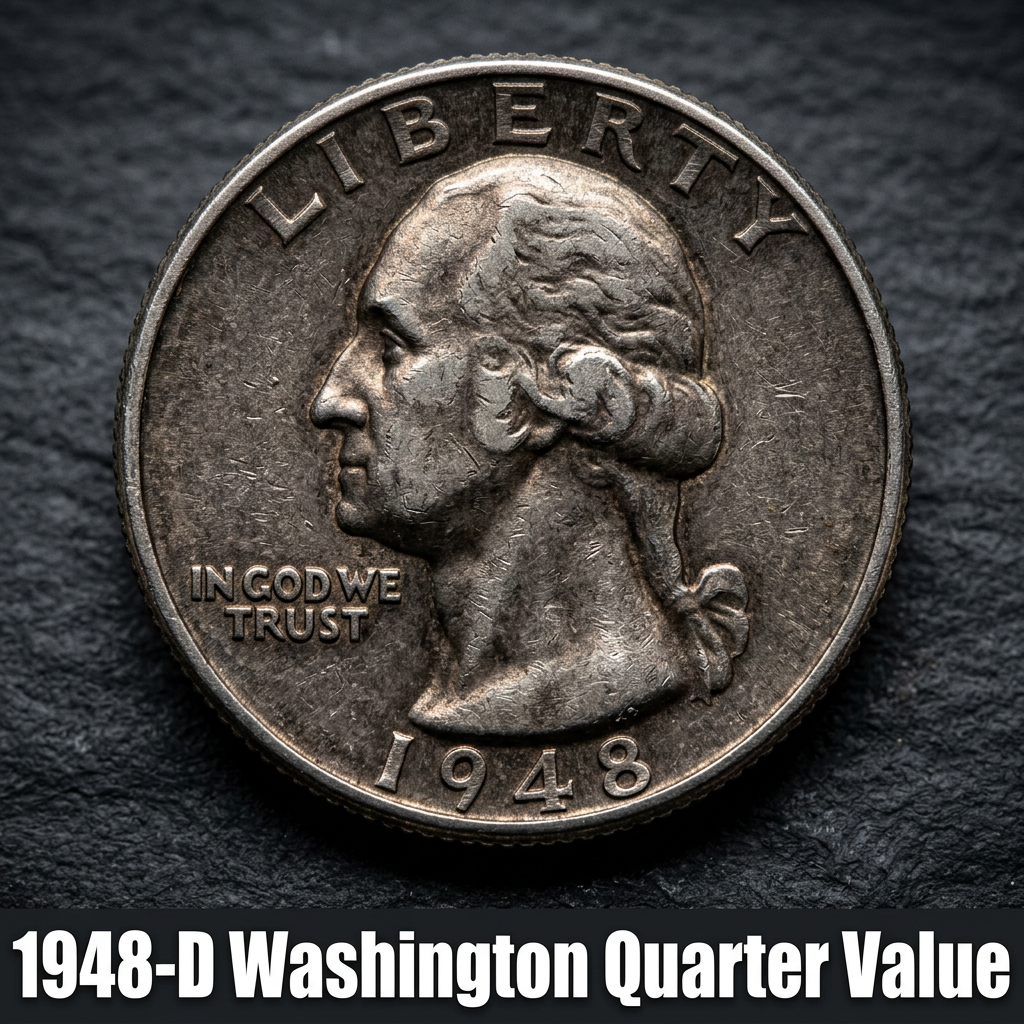
The 1948-D Washington Quarter is worth anywhere from $6 in well-worn condition to over $200 or more in high-grade mint state. If you found one of these coins in an old jar or coin collection, you’re in the right place — let’s break down exactly what it’s worth and why.
What Makes the 1948-D Quarter Special
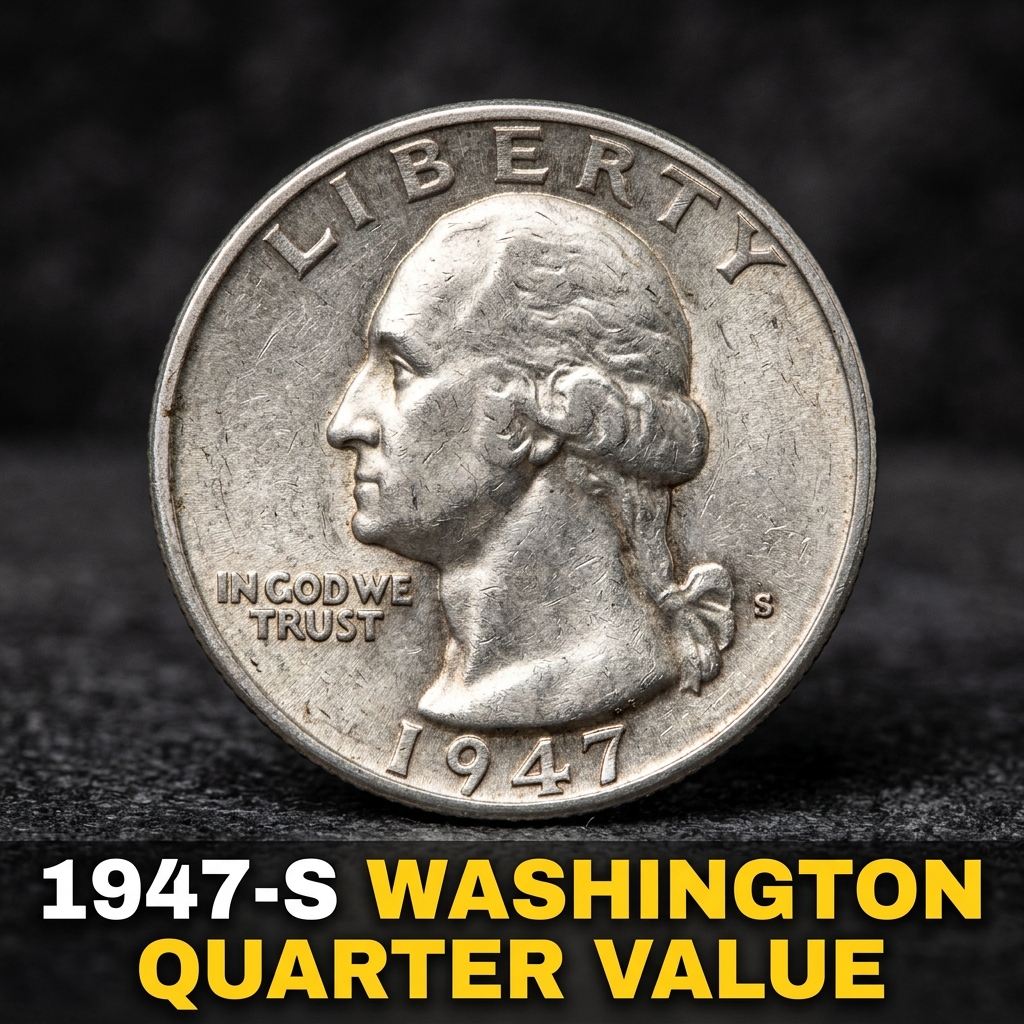
The 1948-D Washington Quarter was minted at the Denver Mint, indicated by the small “D” mintmark found on the reverse of the coin, just above the “R” in “QUARTER.” Denver produced 16,766,800 of these quarters that year, making it a reasonably available coin — but age and condition still play a huge role in value.
Washington Quarters from the late 1940s were made of 90% silver, which gives them an intrinsic metal value beyond their collectible worth. Even a heavily worn example contains about 0.1808 troy ounces of silver, meaning it’s always worth at least its silver melt value regardless of collector demand.
If you’re not sure whether your coin is authentic or want to identify it quickly, a free coin identifier app can help you scan and identify it in seconds right from your phone.
1948-D Washington Quarter Value by Grade
Condition is everything in the coin world. A coin that spent decades in a cash register will look very different from one that was tucked away in a mint roll. Here’s a simple breakdown of what the 1948-D Washington Quarter is worth across different grades:
| Grade / Condition | Description | Estimated Value |
|---|---|---|
| Good (G-4) | Heavily worn, major details visible | $6 – $8 |
| Very Fine (VF-20) | Moderate wear, most details clear | $8 – $12 |
| Extremely Fine (EF-40) | Light wear on high points | $12 – $20 |
| About Uncirculated (AU-55) | Slight friction, near full luster | $25 – $40 |
| Mint State (MS-63) | Uncirculated, minor marks | $45 – $75 |
| Mint State (MS-65) | Gem uncirculated, strong luster | $100 – $225+ |
For a deeper look at real-time 1948-D Washington Quarter prices across mint state grades, it’s worth checking recent auction results and certified coin sales to stay current with the market.
How to Grade Your 1948-D Quarter at Home
You don’t need to be an expert to get a rough sense of your coin’s grade. Start by looking at Washington’s cheekbone and hair above his ear — these are the first areas to show wear. If those details are sharp and clear, your coin is likely in better shape than average.
Next, tilt the coin under a good light source and look for luster — that cartwheel shine that rolls across the surface. If the coin still has that glow, it may be About Uncirculated or better. Scratches, cleaning, and dark spots can all lower value significantly, so handle the coin by its edges and avoid polishing it.
CoinHix is a great tool for comparing your coin visually to graded examples. The app provides side-by-side reference images at different grade levels, which makes it much easier to assess your coin confidently without visiting a dealer first.
Silver Melt Value and Why It Matters
Even if your 1948-D Washington Quarter is too worn to excite a collector, it still has real silver value. With silver prices hovering around $28–$30 per troy ounce in recent years, the silver melt value of a 1948-D quarter comes to roughly $5.00–$5.50 at current rates.
This means that below a certain grade, the silver value essentially acts as a price floor. No matter how worn the coin is, it’s always worth at least that much — and often more to a collector.
For a full breakdown of the 1948 Washington Quarter value including silver content and grade-by-grade price data, dedicated coin value resources can give you a clear picture before you decide to sell or keep.
Should You Get It Certified
If your coin appears to be in MS-63 condition or better, professional certification through PCGS or NGC is absolutely worth considering. A certified MS-65 example can sell for two to three times more than a raw, ungraded coin of the same quality — because buyers trust the third-party grade.
For coins in lower grades, certification fees usually outweigh the added value. In those cases, selling raw to a local dealer or online coin community is a perfectly reasonable option.
CoinHix lets you track certified population reports and recent sale prices for Washington Quarters, so you can see how many high-grade examples exist and whether the market is currently strong before making a decision. It’s one of the smartest free tools available to everyday collectors right now.
—
Frequently Asked Questions
Q: How do I know if my quarter is a 1948-D and not another year?
A: Look at the date on the obverse (front) of the coin — it will clearly read “1948.” Then flip it over and look just above the word “QUARTER” on the reverse. If you see a small “D” mintmark there, it was minted in Denver. No mintmark means it came from Philadelphia.
Q: Is a 1948-D Washington Quarter worth more than its face value?
A: Yes, always. Because it’s made of 90% silver, it’s worth at minimum several dollars even in poor condition. In better grades, it can be worth anywhere from $12 to over $200.
Q: Where is the best place to sell a 1948-D Washington Quarter?
A: Options include local coin dealers, eBay, Heritage Auctions, and coin shows. For higher-grade examples, getting a PCGS or NGC certification first can significantly increase your selling price. You can also use CoinHix to monitor recent sale prices so you know what buyers are currently paying before you list.