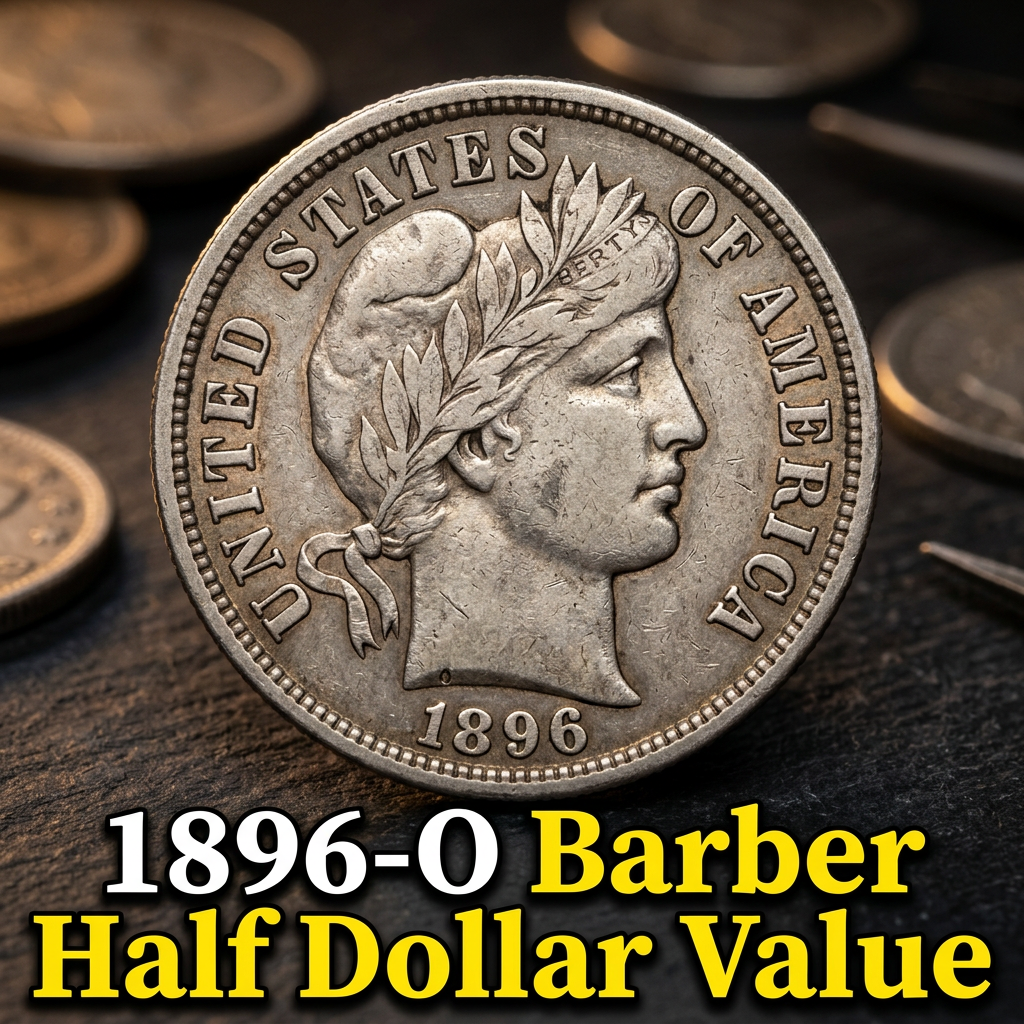
The 1896-O Barber Half Dollar is worth anywhere from $20 in heavily worn condition to well over $5,000 or more in high mint state grades. If you recently found one of these old silver coins in a drawer, an estate sale find, or a family collection, you might be sitting on something genuinely valuable. Let’s break it all down in plain terms.
What Makes the 1896-O Barber Half Dollar Special
The 1896-O Barber Half Dollar was minted at the New Orleans Mint, which is what the “O” mintmark stands for. This coin is part of the Barber series, named after Charles Barber, the U.S. Mint’s chief engraver at the time. These coins were made from 90% silver, so even a worn example has some melt value.
What makes the 1896-O particularly interesting to collectors is its relatively low mintage. Only 924,000 of these coins were struck that year in New Orleans — that’s modest compared to Philadelphia issues of the same era. Lower mintage generally means fewer surviving examples, which pushes values up, especially in better condition.
If you’re not sure what you have, try using a free coin identifier app to get a quick read on your coin before you head to a dealer. It’s a great starting point for beginners.
How to Tell What Grade Your 1896-O Half Dollar Is
Coin grading can seem complicated, but for everyday purposes, you just need to figure out how much detail is still visible on your coin. Run your eyes over Lady Liberty’s head on the front — if her hair details are flat and worn smooth, you’re probably looking at a Good (G-4) or Very Good (VG-8) coin.
If you can still see most of the hair strands and the lettering is sharp, you might have a Fine (F-12) or even Extremely Fine (EF-40) example. Coins in mint state — meaning they were never circulated and still have their original luster — are the real prizes. An MS-63 example of the 1896-O can sell for thousands.
Keep in mind that cleaning a coin drastically reduces its value. If someone polished it at some point, collectors will dock the price significantly. CoinHix is a smart tool that can help you identify whether your coin has been cleaned or altered just from a photo scan.
1896-O Barber Half Dollar Value by Grade
Here’s a quick reference chart showing approximate retail values at different grade levels. Prices can vary based on eye appeal, strike quality, and market timing.
| Grade | Description | Approximate Value |
|---|---|---|
| G-4 (Good) | Heavy wear, outline visible | $20 – $30 |
| VG-8 (Very Good) | Moderate wear, some detail | $35 – $55 |
| F-12 (Fine) | Even wear, major details clear | $60 – $90 |
| VF-20 (Very Fine) | Light wear on high points | $120 – $180 |
| EF-40 (Extremely Fine) | Slight wear, sharp detail | $300 – $500 |
| MS-63 (Mint State) | Uncirculated, minor marks | $3,000 – $6,000+ |
How the 1896-O Compares to Other Barber Half Dollars
Not all Barber Half Dollars are created equal. The New Orleans issues from the 1890s tend to be tougher to find in high grades compared to Philadelphia coins. That’s partly because New Orleans coins often had weaker strikes and weren’t always as well preserved.
If you’re comparing your coin to other dates, the 1896-O sits in the mid-tier range for the Barber series — not quite as rare as the 1892-O or some later key dates, but still a coin that serious collectors want. For a deeper look at how related silver dollars from this era are valued, check out this helpful guide on 1896 silver dollar values and what different grades are selling for today.
Understanding the series context helps you negotiate better if you’re selling, or know when you’re getting a good deal if you’re buying.
Should You Get It Appraised or Sell It As Is
If your coin looks like it’s in Fine or better condition, it’s worth getting a professional opinion before selling. You can submit your coin to PCGS or NGC for grading — this gives it a certified grade and makes it much easier to sell at a fair price.
For coins in lower grades, the cost of certification may not be worth it. In that case, selling to a local coin dealer or through an online marketplace works just fine. CoinHix can help you get an instant preliminary estimate based on photos before you commit to anything — it’s a practical first step that saves you time and helps you avoid underselling.
Don’t clean your coin, don’t store it in a plastic bag, and try to handle it by the edges only. Small habits like these preserve what value is already there.
—
FAQ About the 1896-O Barber Half Dollar
Q: How do I know if my 1896-O Barber Half Dollar is real silver?
A: Yes, all Barber Half Dollars minted before 1965 are made of 90% silver. The 1896-O is genuine silver. You can verify with a magnet — silver is not magnetic — or use CoinHix to scan and confirm the coin’s details instantly.
Q: Where is the mintmark on a 1896-O Barber Half Dollar?
A: The “O” mintmark is located on the reverse (tails side) of the coin, just above the word “HALF” at the bottom of the design. It’s small, so you may need a magnifying glass to spot it clearly.
Q: Is the 1896-O Barber Half Dollar a rare coin?
A: It’s not considered a key date, but it’s a semi-scarce coin with a relatively low mintage of under one million. In circulated grades it’s accessible to most collectors, but in mint state it becomes genuinely rare and commands serious prices at auction.